
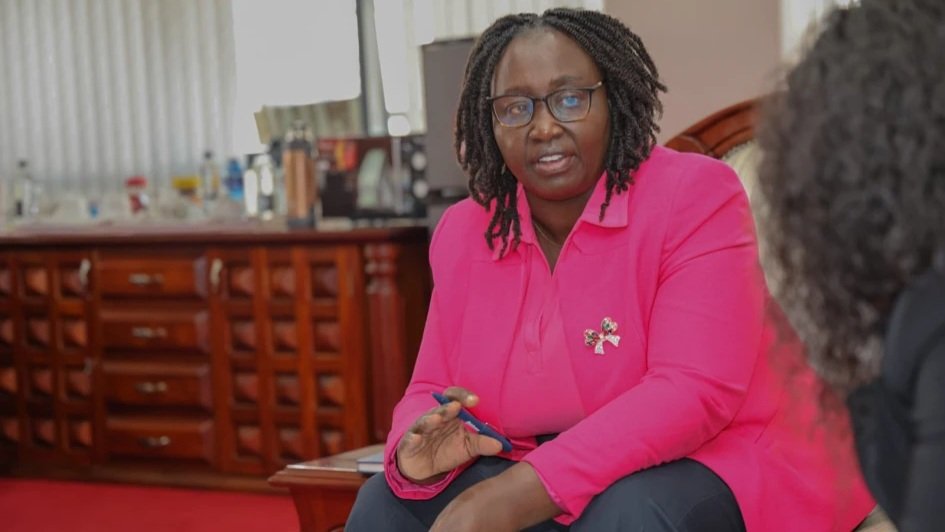

The Ministry of Gender, Culture, the Arts and Heritage (MGCAH) has pledged to ramp up interventions following a steep rise in suicide and gender-based violence (GBV) cases across the Mt Kenya region.
Official records indicate that 680 individuals died by suicide in the area between June last year and April this year, creating a severe public health and social crisis.
Gender Cabinet Secretary Hanna Wendot Cheptumo disclosed the data, pointing out that 531 incidents of domestic and gender-related abuse were also documented over the same ten-month period.
The statistics reveal that Nyeri County is the hardest hit by the suicide wave, losing 127 residents to various methods of self-harm within the specified timeframe.
The escalating metrics have forced a coordinated response between national ministries and regional administrators to halt the damage within local communities.
To counter the trend, the ministry joined operations with the Office of the Regional Commissioner (ORC) for Central Kenya to initiate a targeted resolution framework.
The collaborative state agencies launched their regional intervention program by holding an emergency strategic forum in Nyeri County to address structural breakdown in families.
According to the data provided by the state, young demographics remain highly vulnerable to severe violations, with multiple counties recording high rates of aggressive behavior.
Nyeri County recorded the highest number of physical and psychological offenses against children, documenting 93 separate incidents during the tracking window.
Kiambu County followed closely with 87 reported cases of child abuse, while Murang'a County authorities processed 81 cases involving minors.
Kirinyaga County registered 75 instances of child abuse, whereas Nyandarua County recorded 36 cases, reflecting a widespread regional challenge.
Adult populations also suffered severe violations, with rape and sexual assault remaining major issues in urban and peri-urban zones.
Kiambu County led the adult violence category with 23 documented violations, followed by Nyeri with 17 cases and Murang'a with 16.
Kirinyaga registered 15 cases of adult abuse, while investigators in Nyandarua recorded 10 incidents during the same evaluation period.
Cheptumo explicitly connected the surge in child protection violations across Nyeri, Murang'a, and Tharaka Nithi counties to recent homicide cases involving children under ten years.
The state intends to utilize local administrative structures, including chiefs and village elders, to identify distressed families before situations escalate into violence.
Health departments within the affected counties are expected to integrate mental health support systems into existing community outreach frameworks.
The joint initiative aims to create permanent reporting channels that allow victims of domestic abuse to seek state protection safely.
Comments (0)
Leave a Comment
No comments yet. Be the first to share your thoughts!