
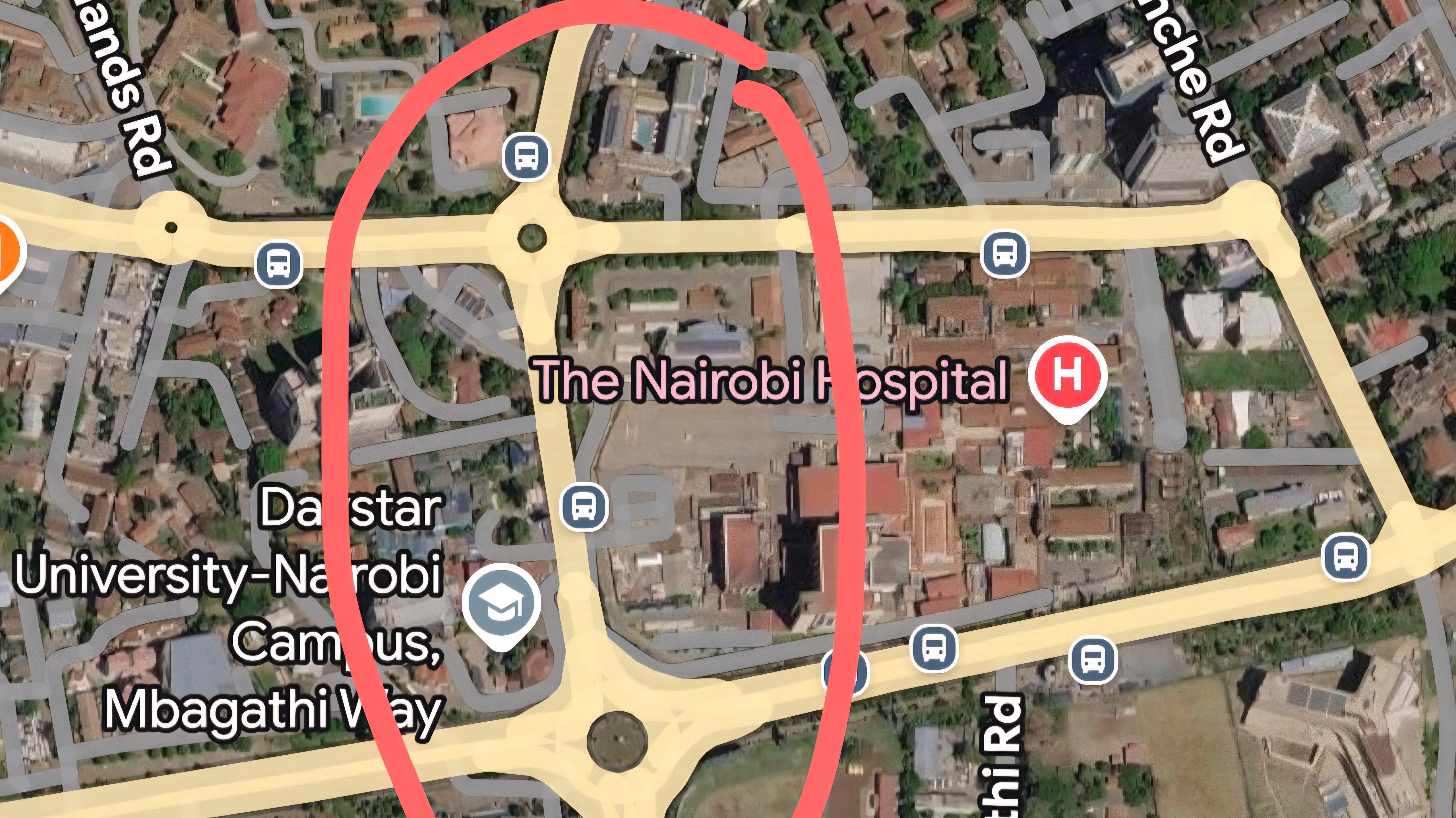

A detailed engineering review indicates that additional structural modifications at critical road junctions are required to maximize the operational performance of Nairobi's latest elevated transport project. The adjustments are intended to ensure that the massive corridor operates at its peak capacity.
According to a professional assessment shared online by Dr. Eng. John Mativo CP³P, it is imperative that specific design elements are altered. He observed that these interventions are necessary to ensure the ongoing viaduct works function better for motorists.
Details of this technical intervention surfaced through internal digital correspondence from the infrastructure planning desk.
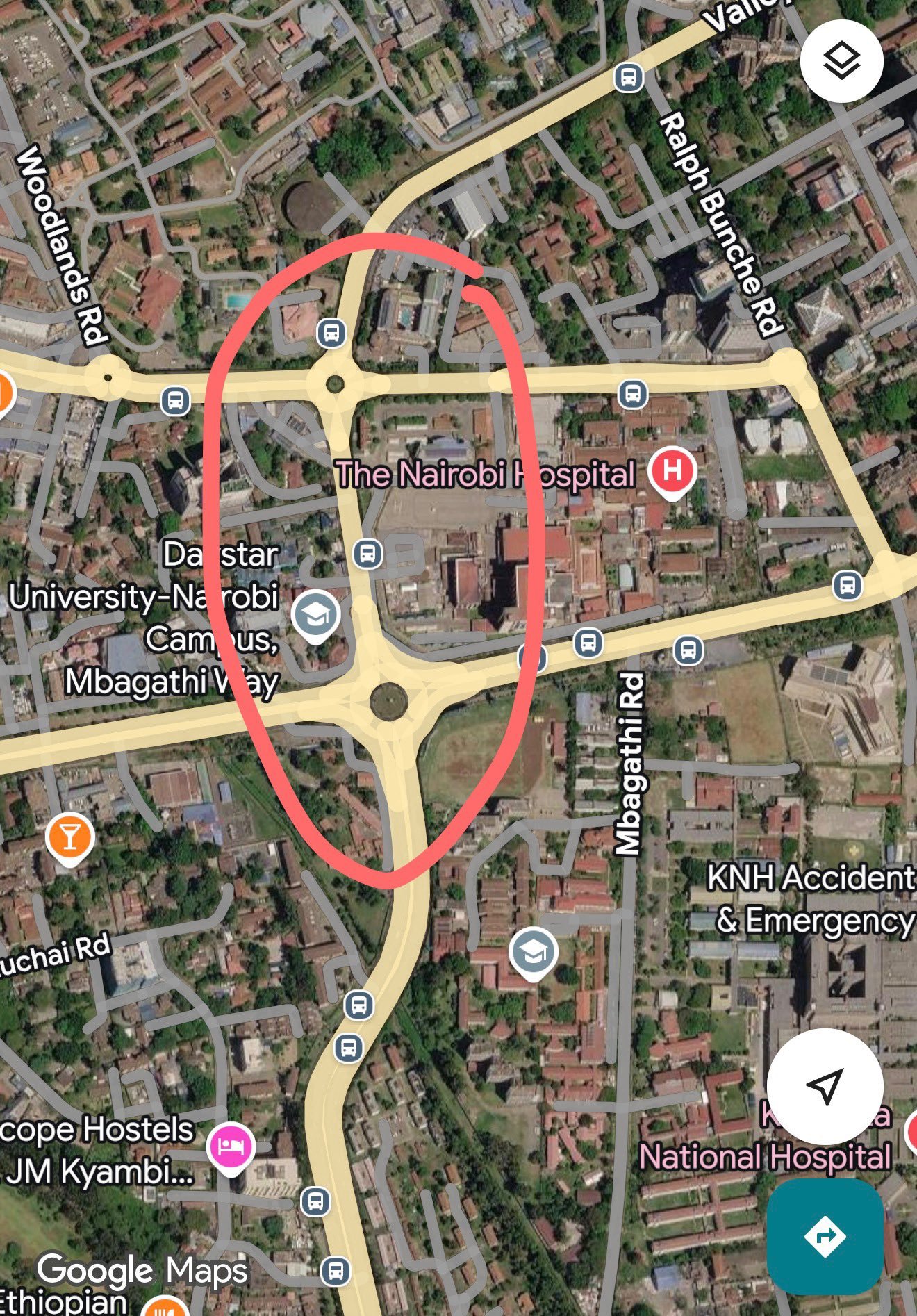
The communication draws focus to localized bottlenecks, which could potentially restrict the flow of traffic moving off the main deck. The structural focus centers on the arterial linkage that combines Kenyatta Avenue, Valley Road, and Ngong Road.
Aerial mapping identifies two busy roundabouts situated near The Nairobi Hospital, which require immediate layout optimization.
The massive civil works project falls under the direct oversight of the Kenya Urban Roads Authority (KURA). The state agency is executing the project to resolve chronic traffic congestion along the busy urban transport network.
The overarching goal is to establish an uninterrupted connection between the Central Business District (CBD) and the expanding financial hub of Upper Hill.
Once the elevated roadway is complete, it will segregate long-distance transit from local distribution traffic.
President William Ruto recently conducted an extensive site inspection of the ongoing construction corridor, which stretches across key parts of the capital. President Ruto stated that sections near the All Saints Cathedral junction should achieve completion before December.
The extensive infrastructure modernization program is valued at approximately Sh3 billion, but its historical progress has been highly inconsistent. Construction originally started in September 2020, but the project stalled for multiple years due to outstanding contractor payment disputes.
The works resumed actively following funding interventions through the road maintenance levy securitization framework.
Chinese road building firms are currently managing the active structural phase, which focuses heavily on the deployment of massive precast concrete components. The current engineering phase involves the systematic installation of heavy precast concrete girders.
Teams are currently casting the reinforced concrete deck across several finished pier caps, which now stand prominently along Valley Road.
The large physical footprint of the construction zone has caused substantial daily disruptions for urban commuters. Severe traffic jams are frequently reported near the Milimani Law Courts junction, where multiple feeder lanes converge abruptly.
Public transport operators have raised serious concerns regarding reduced daily earnings due to gridlocks, but structural planners emphasize that long-term benefits outweigh the temporary pain. The design introduces dedicated lanes for non-motorized transport.
Engineers state that physical separation is the most reliable strategy for managing high-volume urban arterial roads.
By elevating the main carriageway on solid concrete pillars, the road design eliminates the continuous delays usually caused by ground-level intersections.
The recommendations highlighted by Dr. Eng. John Mativo CP³P emphasize that infrastructure components must not be planned in isolation.
Without updating the ground-level junctions, the new viaduct might simply transport gridlock from one intersection to the next.
The technical drawings indicate that the integration of the elevated deck with the existing road network must be seamless. If the ground roundabouts are not re-engineered, the sudden convergence of vehicles will cause severe localized queues.
The Kenya Urban Roads Authority (KURA) continues to track the project metrics closely to ensure the contractor maintains the revised delivery schedules, although the state wants sections open early.
Comments (0)
Leave a Comment
No comments yet. Be the first to share your thoughts!