
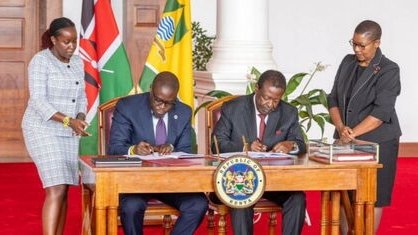

The High Court in Nairobi certified as urgent on February 18 a petition filed the same day contesting the cooperation agreement President William Ruto and Governor Johnson Sakaja signed the previous day at State House. Justice Bahati Mwamuye acknowledged the case's public importance for the capital's residents and set a substantive hearing for March 16.
The petitioners, two private citizens, argue the pact unconstitutionally allows national government intervention in devolved functions without adequate safeguards. They seek conservatory orders halting any implementation and a three-judge bench under Article 165(4) to handle the constitutional issues.
Court orders require service on the national government, Nairobi County, Council of Governors, Auditor General, and other parties by February 20 close of business. Respondents must file appearances and responses by February 27, with further submissions and rejoinders due March 13. The schedule leaves little room for delay, reflecting the judge's assessment of potential prejudice if the matter lingers.
The agreement, formally the National Government-Nairobi City County Cooperation Pact, unlocks an additional Sh80 billion in national funding for priority projects in the city. Reports across Kenyan media outlets describe the figure as four times the county's typical allocation in some contexts, though exact sourcing and disbursement mechanics remain tied to joint oversight. Prime Cabinet Secretary Musalia Mudavadi chairs the steering committee, with Sakaja as vice-chair, including relevant Cabinet secretaries and county representatives.
Key sectors include roads, bridges, and drainage upgrades; housing and related infrastructure; water and sewerage expansion; solid waste management; and Nairobi River regeneration. Specific allocations mentioned in coverage include billions for street lighting completion and new installations, road improvements, sewer lines along the river corridor, and treatment plants. The pact also touches on urban mobility, public safety enhancements like a proposed metropolitan police unit, and sanitation systems.
Both leaders insisted the framework constitutes collaboration under Article 189 of the Constitution and Section 6 of the Urban Areas and Cities Act, not a transfer of functions. Sakaja distanced it from the Nairobi Metropolitan Services experiment of 2020-2023, which he said left Sh16 billion in pending bills and damaged staff morale. Ruto stressed the deal complements county efforts where resources fall short for Nairobi's scale as the national capital.
Critics, including the petitioners and figures like Nairobi Senator Edwin Sifuna, view it as a potential clawback on devolution, risking accountability gaps and repeating past burdens on the county. Sifuna has questioned the Sh80 billion figure's presentation and noted outstanding national obligations to Nairobi exceeding Sh100 billion in unpaid rates. The Law Society of Kenya suggested parallels to NMS structures.
For the construction industry, the funding injection could accelerate tenders in road rehabilitation, drainage works, housing developments, sewer infrastructure, and waste facilities. Nairobi's aging networks—chronic traffic on major arteries, frequent flooding in informal settlements, persistent sewer overflows, and Dandora dumpsite pressures—have long awaited scaled intervention. National backing aims to address those bottlenecks faster than county budgets alone allow.
The petition arrives less than 24 hours after the signing, testing the pact's legal footing early. If conservatory orders issue or the court finds flaws, rollout could pause pending revisions. Otherwise, the joint committee would proceed with project prioritization and execution. The March 16 hearing will likely draw attention from contractors, engineers, and urban planners watching for clarity on how intergovernmental deals shape major works in Kenya's largest city.
Comments (0)
Leave a Comment
No comments yet. Be the first to share your thoughts!