
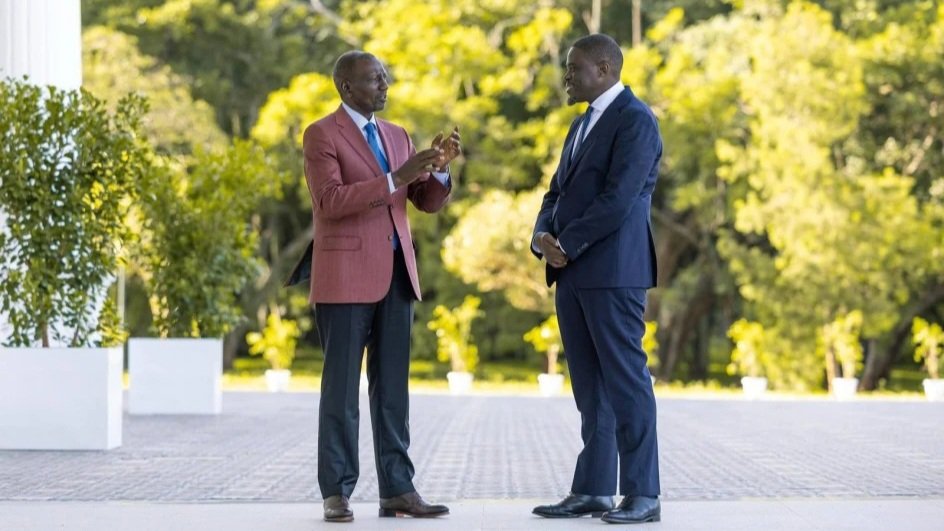

President William Ruto hosted a high-level delegation at State House, Nairobi, on Wednesday to review the status of the Cooperation Agreement between the National Government and Nairobi City County.
The delegation, led by Nairobi Governor Johnson Sakaja, included members of the Cooperation Agreement Implementation Committee. They provided a comprehensive update on the KSh80 billion transformation plan designed to modernize the capital.
The meeting focused on key milestones achieved since the rollout of joint development projects across the city. This partnership aims to synchronize resources from both levels of government to address long-standing infrastructure gaps in Nairobi.
President Ruto emphasized the importance of timely delivery, noting that the cooperation framework is essential for efficient service provision. The report highlighted specific progress in transport, housing, and water management sectors.
Governor Sakaja noted that the implementation committee has been tracking several critical projects that are now reaching advanced stages of completion. The collaboration seeks to eliminate bureaucratic delays that previously slowed down urban development.
A significant portion of the KSh80 billion budget is directed toward the improvement of the road network and the expansion of the city’s sewer systems. These projects are intended to support the growing population in the capital's satellite areas.
The locals have been watching the progress of several road upgrades in informal settlements, which form a pillar of the urban renewal strategy. These interventions are expected to improve accessibility and safety in high-density regions.
Members of the implementation committee confirmed that the funding is being utilized to bridge the gap in affordable housing. This aligns with the national government's broader agenda to provide decent living conditions for urban dwellers.
President Ruto noted that the capital serves as the country’s economic hub, making its infrastructure health a matter of national priority. He urged the committee to maintain transparency and adhere to the project timelines.
The Cooperation Agreement was established to foster a working relationship between the two levels of government, especially in areas where jurisdictions overlap. This includes public health, transport services, and public works.
The meeting at State House underscores the political goodwill behind the Nairobi transformation agenda. Both the President and the Governor expressed confidence that the ongoing projects will meet their intended impact by the next fiscal cycle.
For the construction sector, these developments signify a steady pipeline of work and a renewed focus on large-scale urban engineering. The success of the Nairobi model may influence how other counties partner with the national government on capital-intensive projects.
As the city continues to expand, the focus remains on ensuring that the KSh80 billion investment translates into tangible improvements for the millions who reside in and commute through Nairobi daily.
Comments (0)
Leave a Comment
No comments yet. Be the first to share your thoughts!