
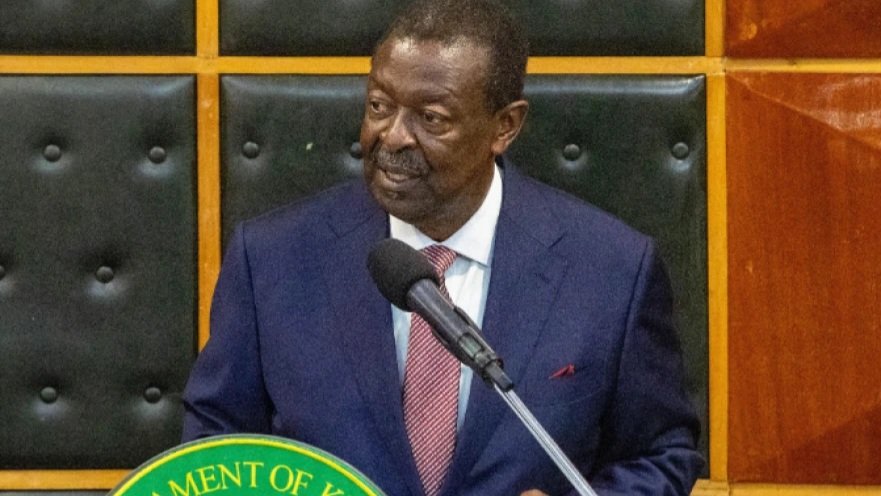

Prime Cabinet Secretary Musalia Mudavadi has presented a comprehensive KSh 47.2 billion blueprint aimed at shielding Nairobi from the destructive impact of seasonal flooding. The Nairobi Flood Resilience Masterplan, which is a collaborative effort between the national government and the Nairobi City County, seeks to address the city’s aging and inadequate infrastructure.
The strategy arrives as a response to the increasingly frequent and severe weather patterns that have left much of the capital’s transport and residential hubs underwater. Speaking on the proposal, Musalia Mudavadi indicated that the project will focus on the systematic upgrade of drainage systems across the city’s primary hotspots.
The funding for this massive undertaking is expected to be sourced through a mix of government allocations and support from international partners. Key entities mentioned in the financing framework include the African Development Bank and the Green Climate Fund, reflecting the climate-adaptation nature of the project.
A critical component of the plan involves the restoration of the Nairobi River basin. This task falls largely under the Nairobi Rivers Commission, which has been mandated to clear riparian land and manage the reclamation of the city’s waterways. Musalia Mudavadi noted that previous neglect has contributed to the current bottlenecking of the city's natural runoff paths.
The Masterplan is the result of a directive from President Ruto, who recently tasked a multi-agency team to find a lasting solution to the city's drainage woes. This directive followed a pact between President Ruto and Governor Sakaja to harmonize county and national resources for urban renewal.
Beyond the immediate engineering works, the plan includes a long-term maintenance framework to ensure that the new drains do not succumb to the same siltation and waste blockage issues that crippled the previous systems. The locals, particularly those living in low-lying areas, have long called for a move away from reactionary measures toward a more permanent solution.
Implementation will occur in phases, with first priority being the areas most prone to flash floods during the rainy season. The government intends to utilize modern hydraulic modeling to ensure that the new infrastructure can handle the projected increase in rainwater volumes over the coming decades.
Musalia Mudavadi emphasized that the success of the project will depend on the cooperation of all stakeholders, including the private sector and property owners. Some aspects of the project may require the relocation of structures built on drainage wayleaves, a process that has historically faced logistical and legal hurdles.
The Nairobi City County government will oversee the local labor requirements, expected to create thousands of temporary jobs for the locals during the construction phase. This project is seen as a cornerstone of the administration’s plan to modernize the capital's backbone infrastructure.
While the budget is substantial, officials argue that the cost of inaction, measured in lost lives, damaged property, and disrupted commerce, far outweighs the investment. The Citizen Digital report highlights that the framework is now moving into the final procurement and site assessment stages.
Comments (0)
Leave a Comment
No comments yet. Be the first to share your thoughts!