
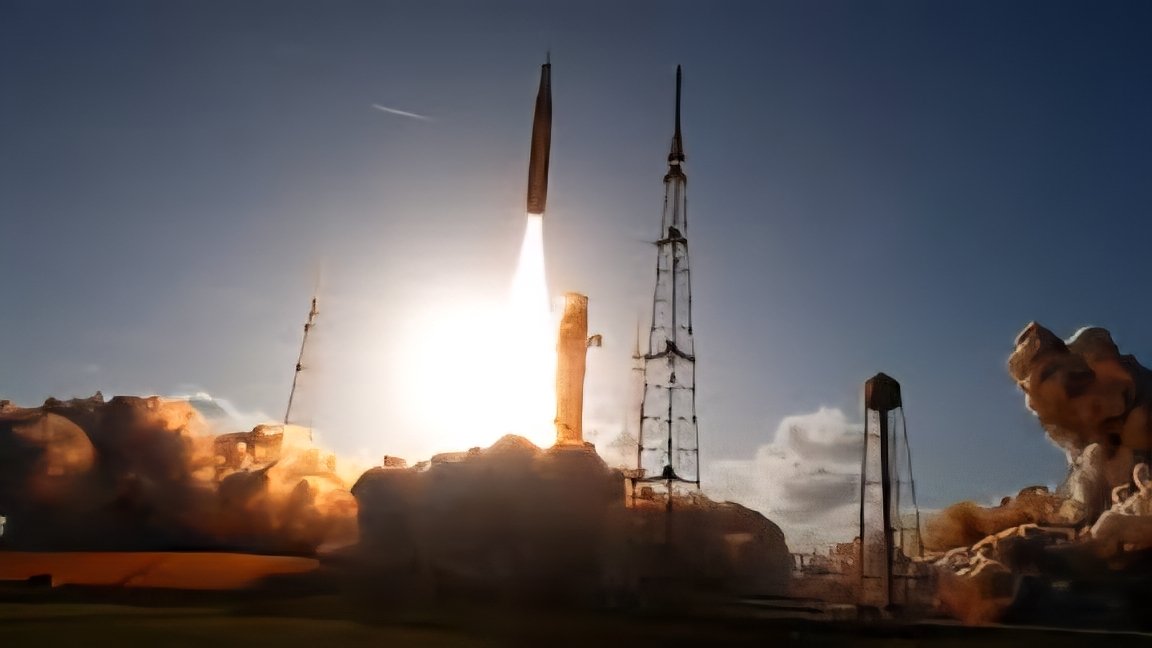

NASA’s Space Launch System rocket ignited at the Kennedy Space Center on April 1, 2026, propelling the Orion spacecraft into orbit and marking the first time humans have traveled toward the Moon in over 50 years. The mission, known as Artemis II, carries a diverse crew of four astronauts who are tasked with validating the spacecraft’s performance during a high-stakes lunar flyby.
The crew consists of Commander Reid Wiseman, Pilot Victor Glover, and Mission Specialists Christina Koch and Jeremy Hansen. Their journey involves a complex trajectory that will see the spacecraft orbit Earth twice to verify on-board systems before committing to a four-day transit to the lunar neighborhood.
Unlike the Apollo missions of the past, Artemis II will not land on the lunar surface. Instead, the Orion capsule will perform a free-return trajectory, using the Moon’s gravity to slingshot the vehicle back toward Earth. This maneuver is expected to take the crew approximately 7,400 kilometers beyond the far side of the Moon, setting a new distance record for human spaceflight.
The Space Launch System, or SLS, utilized for this launch is currently the most powerful rocket in operation, generating 8.8 million pounds of thrust at liftoff. This represents a significant increase in power compared to the Saturn V rockets used during the 20th century. During the initial phases of the flight, the crew is testing the European Service Module, which provides essential water, air, and temperature regulation.
A key technical objective of the 10-day mission is the debut of the Optical Communications system. This technology uses infrared lasers to transmit data at 260 Mbps, a capability intended to allow for high-definition video streaming from deep space. Engineers at mission control are monitoring these data links closely as the craft moves further from Earth.
The mission schedule dictates that the crew will reach the Moon by April 6, 2026. During the flyby, the astronauts will conduct manual piloting demonstrations and capture high-resolution imagery of the lunar far side. These observations are intended to inform future landing missions, including the planned Artemis III mission, which aims to return humans to the surface.
Following the lunar encounter, Orion will begin a 96-hour return trip. The mission is scheduled to conclude with a high-speed reentry into Earth’s atmosphere on April 10, 2026. The capsule is expected to splash down in the Pacific Ocean, where U.S. Navy recovery teams are already positioned to retrieve the crew and the spacecraft.
This flight serves as the final crewed rehearsal before NASA shifts its focus toward establishing a permanent lunar base. By testing the Orion’s integrity and life-support capabilities in the actual environment of deep space, the agency aims to mitigate risks for the longer-duration missions to follow.
Comments (0)
Leave a Comment
No comments yet. Be the first to share your thoughts!