
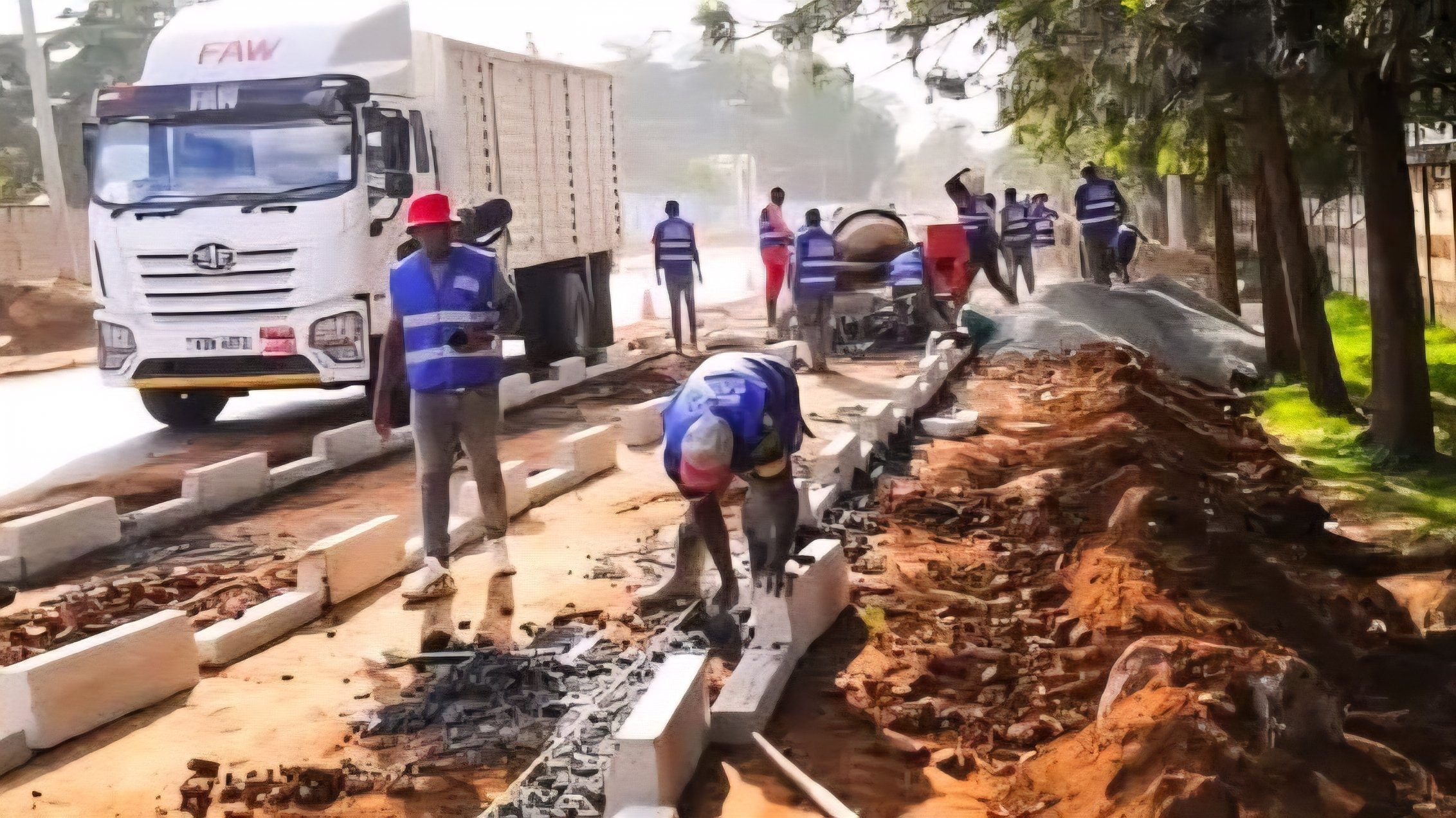

Construction activities along Kasarani-Roysambu-Mwiki road sparked fresh public debate over urban infrastructure priorities in Nairobi County. Local road users expressed sharp criticism, when workers commenced laying dedicated footpaths along the busy transit corridor.
Ongoing site works focus on building two-way pedestrian walkways along both shoulders of the road. Construction crews were seen aligning precast concrete kerbstones, while heavy supply trucks delivered construction aggregate to active work areas.
Reactions intensified online after motorists and commuters questioned the scope of the infrastructure project. Several drivers argued that full carriageway expansion or deep pothole repairs should have taken priority over building pedestrian footpaths.
The Kenya Urban Roads Authority (KURA) oversees major urban road infrastructure within the capital city. Official road design guidelines require Non-Motorised Transport (NMT) facilities to be included, although motorists often demand expanded driving lanes.
Traffic congestion remains a persistent issue for commuters traveling between Kasarani, Roysambu, and Mwiki estates. Drivers frequently encounter extended delays during peak morning and evening hours, because narrow driving lanes bottleneck traffic flow.
Pedestrian safety stays high on the agenda for urban planners managing densely populated suburban corridors. Transport planners maintain that concrete curbs and raised walkways shield walking residents from moving vehicles on busy public roads.
Business operators along the road shoulder previously complained about severe dust and prolonged construction disruptions. Small traders noted that earthworks and temporary mounds of soil hamper access to retail shops along the busy thoroughfare.
Contractors on site continue setting up concrete kerbing along marked boundaries to ensure proper edge alignment. Workers use portable concrete mixers and hand tools, as they install curbing blocks along the unpaved road shoulder.
Public transport operators, including matatu drivers, repeatedly ask state agencies for comprehensive road resurfacing. Transporters report that uneven road surfaces increase vehicle wear and tear, which drives up daily maintenance costs for bus operators.
Foot traffic along the Kasarani-Roysambu-Mwiki link remains consistently heavy throughout daytime hours. Thousands of residents walk daily to reach bus stops, open markets, and neighboring residential developments.
Civil engineers point out that combining pedestrian paths with side drainage channels protects pavement integrity. Proper drainage prevents surface water accumulation, which often degrades asphalt surfaces on suburban roads during heavy rainy seasons.
Previous maintenance drives along this road faced significant delays due to rainy weather and heavy traffic. Area representatives have consistently asked government agencies to fast-track permanent upgrading projects for suburban road networks.
Local residents now look forward to official updates from urban road managers regarding full carriageway works. Community members urge authorities to address underlying base issues, when completing side walkway structures along the corridor.
Field crews remain stationed along active construction stretches to supervise ongoing manual kerb placement. Supervisory officers monitor material quality and site safety, while crews continue working alongside moving vehicle traffic.
The situation reflects broader policy challenges in managing high-density urban transport corridors across Kenya. Modern road design standards require balancing vehicular throughput with safe movement options for pedestrians.
Motorists continue monitoring work progress along the corridor as site operations advance daily. Transport authorities have not yet issued a public response regarding calls for additionallane widening along the route.
Comments (0)
Leave a Comment
No comments yet. Be the first to share your thoughts!