
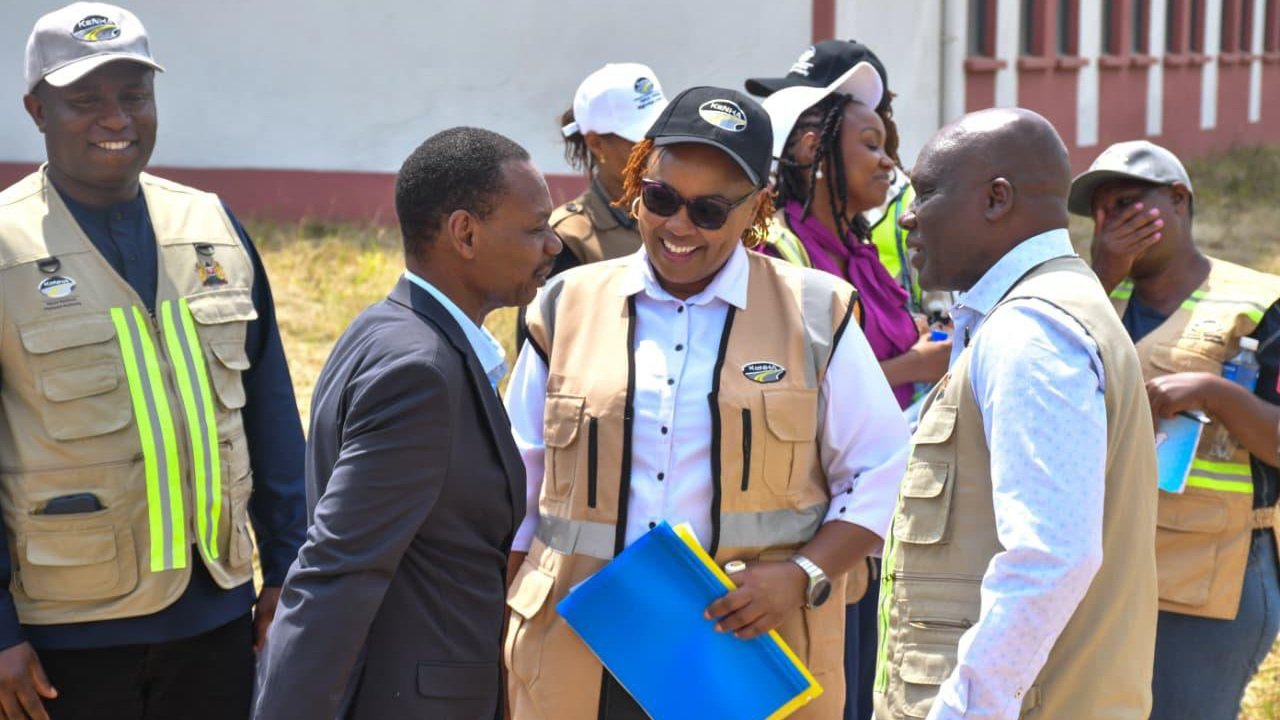

Senior officials from the Kenya National Highways Authority (KeNHA) and the Nairobi Metropolitan Area Transport Authority (NaMATA) conducted a joint inspection of the Bus Rapid Transit (BRT) Line 2 infrastructure project. The tour targeted key facilities along the corridor.
The inspection focused on assessing the current construction progress, including specialized terminals and dedicated lanes. According to agency updates, the site visit serves to reaffirm the commitment of the government to finalizing the delayed public transport system.
Known as the Simba Line, the transport corridor is designed to run from Kenol through Ruiru and the Nairobi Central Business District (CBD), extending to Ongata Rongai. The system aims to alleviate chronic traffic gridlocks.
The initial phase heavily focuses on the busy Thika Superhighway. This section involves modifying ten existing footbridges to integrate boarding and alighting platforms, allowing passengers safe access to high-capacity buses from the center of the highway.
State infrastructure reports show that the project features dedicated lanes to ensure short bus headways. The engineering design isolates these transit lanes from regular vehicular traffic, optimizing transit speeds through congested urban choke points.
Progress on the network involves constructing support facilities like the Kasarani depot and the Ruiru depot. These stations will serve as fleet maintenance hubs, while an additional terminal is planned near the Kenyatta National Hospital.
The infrastructure development encountered funding challenges, causing the main contractor, Stecol Corporation, to halt operations temporarily in recent years. The Chinese firm secured the Sh5.6 billion construction contract originally awarded in February 2020.
To revive the stalled infrastructure works, the National Treasury allocated Sh300 million in the 2025/26 financial year budget. This allocation follows previous state funding phases, which included Sh1 billion provided during the prior fiscal period.
The financial injections aim to deliver ten functional stations and clear the way for a pilot fleet of 100 buses. Transport planners project that the corridor can move up to 15,000 passengers per hour in each direction.
Former President Uhuru Kenyatta established NaMATA in February 2017 to coordinate a comprehensive mass transport plan. The agency covers five counties, including Nairobi, Kiambu, Kajiado, Machakos, and Murang'a, serving millions of commuters.
The broader master plan comprises five distinct corridors across the metropolitan region. Line 2 remains the priority pilot corridor, while Line 3, or the Chui Line, proceeds through advanced planning phases with international development partners.
State plans indicate that the operational BRT network will utilize electronic-powered buses. The green fleet will operate on a cashless fare system and feature intelligent transport systems to assist children, the elderly, and disabled passengers.
The government also secured international support for the transport network. President Ruto signed an Sh8.7 billion agreement with the Millennium Challenge Corporation (MCC) to fund electric bus acquisitions specifically for this transit corridor.
Urban traffic congestion costs the local economy an estimated Sh2 billion annually. The introduction of high-capacity transport corridors seeks to reduce travel times, lower carbon emissions, and streamline the uncoordinated public transport sector.
During the site tour, engineers and administrators reviewed the status of the Pangani underpass automatic traffic signals. These systems are crucial for maintaining uninterrupted bus operations through the busy subterranean junction.
The joint delegation reviewed progress at the Kasarani terminal to ensure compliance with civil engineering standards. Officials emphasized that completing the transit lane isolation remains crucial before commencing any scheduled public trials.
The engineering works also require extensive pedestrian walkways and non-motorized transport facilities. These additions will ensure safe commuter access to the center-running stations without disrupting the flow of general traffic.
Comments (0)
Leave a Comment
No comments yet. Be the first to share your thoughts!