
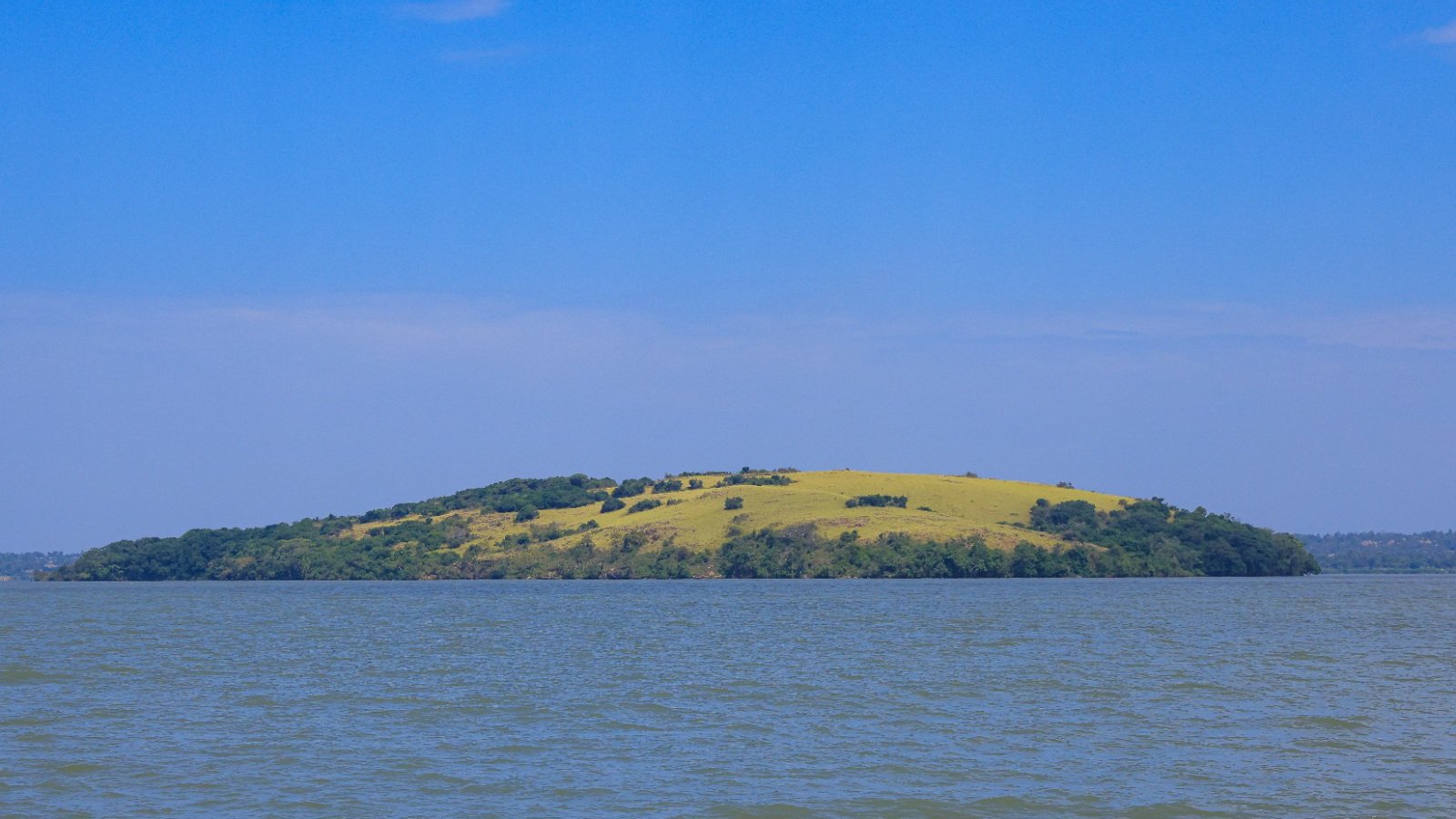

Situated within the Winam Gulf of Lake Victoria, Ndere Island National Park remains one of the most distinctive eco-tourism destinations managed by the Kenya Wildlife Service (KWS).
Covering an area of four point two square kilometers, the reserve serves as a protected sanctuary for regional biodiversity and cultural history.
Locally known as Chula Rabour, which translates to Red Island in the Dholuo language, the terrain is covered predominantly by Themeda triandra grass.
During flowering periods, the vegetation matures into a deep crimson hue across the undulating hills, creating a dramatic visual backdrop against the surrounding lake waters.
The park was officially gazetted in November 1986 primarily to protect local wildlife populations, particularly impalas. Over the years, ecological conservation efforts have allowed diverse animal species to flourish along the protected shoreline and inner grasslands.
Visitors to the island routinely spot hippopotamuses and Nile crocodiles along the water edge, alongside monitor lizards, waterbucks, baboons, and zebras.
Birdwatchers can identify over one hundred recorded species, including the African fish eagle, grey-headed kingfisher, and cormorant.
Beyond its natural resources, the reserve holds historical relevance for local communities. The term Ndere translates to meeting place, referring to Nilotic migration traditions where early settlers rested on the island before moving across the region.
Reaching the sanctuary requires a multi-modal transport route from the mainland. Visitors traveling by road from Kisumu turn off near Kombewa toward Bao Beach or Asat Beach, where local motorized boats ferry passengers across the short channel.
Alternatively, speedboats operate directly from the Kisumu city waterfront, arriving at the park within approximately forty-five minutes.
Inside the reserve, developed walking trails allow visitors to traverse the rolling terrain on foot. The highest points on the island present wide views stretching across to the Homa Hills, Mageta Island, and the broader body of Lake Victoria.
KWS enforces strict environmental regulations on the island to preserve its quiet landscape. Single-use plastics are strictly prohibited, and visitors must clear all waste upon departure to protect fragile habitats.
Park management continues to maintain infrastructural features including designated hiking paths, cleared picnic grounds, and secure campsite locations for overnight stays.
All entry clearance and activity payments are handled through the national eCitizen digital platform prior to arrival.
By offering a non-motorized terrestrial layout, Ndere Island National Park provides a stark contrast to mainland vehicle-based safari parks.
The combination of quiet walking trails, cultural folklore, and aquatic wildlife positions the reserve as a key asset within western Kenya natural heritage portfolio.
Comments (0)
Leave a Comment
No comments yet. Be the first to share your thoughts!