
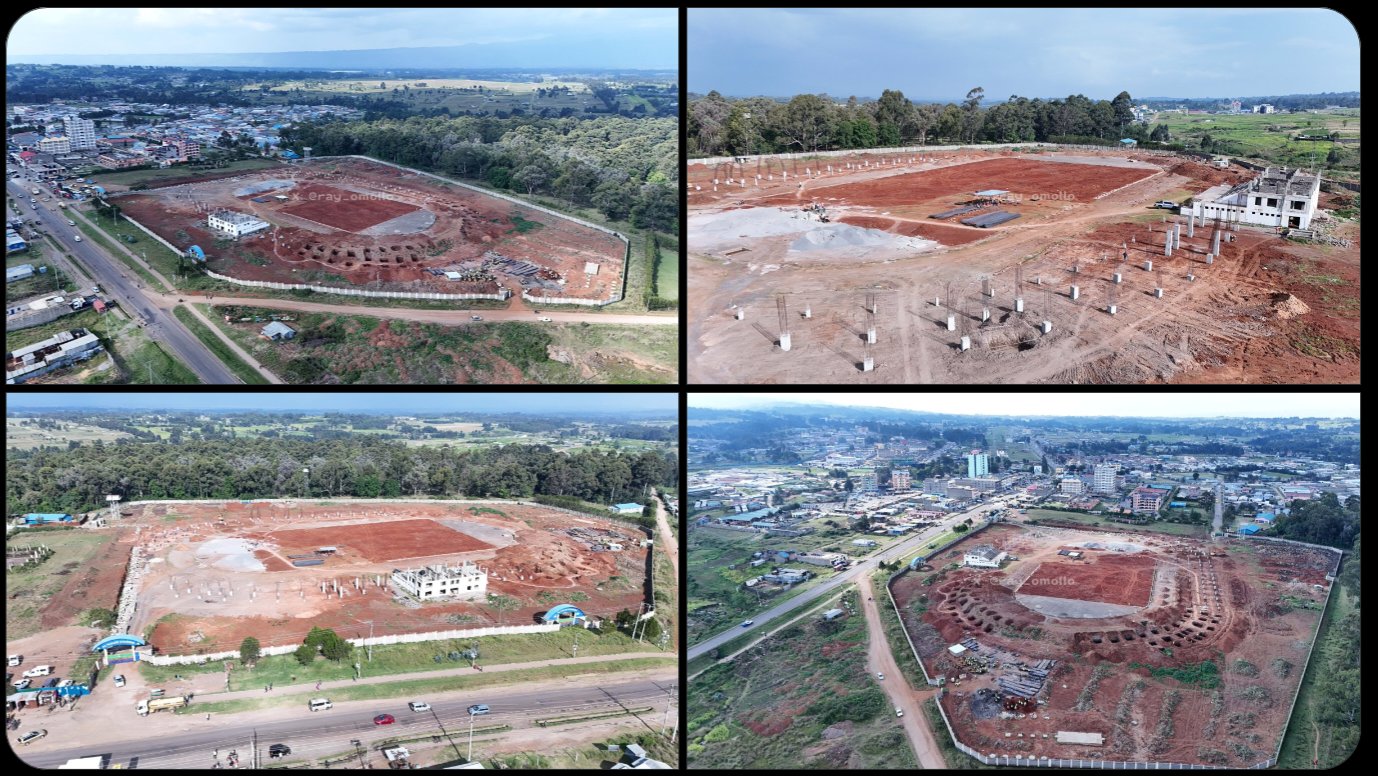

The ongoing construction of Ol Kalou Stadium in Nyandarua County is expected to position the highland region as a premier destination for high-altitude training, according to a status update from government officials.
Situated at an altitude of over 2,400 metres above sea level, the sports facility offers a prime geographical setting for elite athletic endurance training.
The national government is prioritizing the multi-million shilling arena as part of its wider strategy to upgrade regional sports infrastructure. This initiative is designed to ensure counties outside major cities can host and benefit from large continental tournaments.
These international competitions include the upcoming 2027 Africa Cup of Nations (AFCON), which Kenya will co-host alongside other East African nations.
To ensure timely completion and strict adherence to quality, President William Ruto assigned the Kenya Defence Forces (KDF) under the Ministry of Defence (MoD) to oversee the construction work.
This administrative move brings military engineering discipline and project management structures directly to the civilian site, helping to keep physical work on schedule and within budget limits.
The State Department for Internal Security and National Administration (SDISNA) is also actively coordinating with various inter-agency committees.
This enhanced administrative supervision is intended to eliminate past bureaucratic bottlenecks and coordination delays that have slowed the project down during its initial development phases.
When complete, the arena will house a modern 10,000-seat capacity facility featuring an eight-lane, 400-metre tartan athletics track.
The central arena will feature a standard football pitch equipped with advanced underground drainage and automated irrigation systems to maintain the turf in all weather conditions.
Additionally, the main pavilion of the stadium will be fully equipped with modern changing rooms, dedicated medical suites, media broadcast spaces, and VIP lounges.
These modern amenities aim to support both domestic leagues and international sporting fixtures, ensuring standard compliance.
For years, local sports enthusiasts and county representatives have closely monitored progress on the site, which has faced intermittent delays and funding challenges since initial ground works commenced under previous county administrations.
The current collaboration between national security organs, military engineers, and county coordinators represents a major effort to deliver the long-delayed sports venue to the public.
By leveraging the unique high-altitude conditions of Ol Kalou, regional planners intend to establish a comprehensive sports hub for athletic training.
Beyond football and athletics, the complex is projected to attract local and international athletic teams, offering a major boost to regional hospitality and sports tourism.
The engineering branch of the MoD has already mobilized resources on-site, overseeing foundational concrete work and superstructure erection.
This hands-on management approach by the military has been increasingly deployed by the executive for key public works to ensure strict budget discipline and professional delivery.
The facility is currently progressing through structural phases, with the main pavilion framework and track preparations taking shape under watchful supervision.
Government teams continue to conduct routine inspections to monitor construction quality before the final phases of pitch seeding, track laying, and the internal itting of the main pavilion can begin.
Comments (0)
Leave a Comment
No comments yet. Be the first to share your thoughts!