
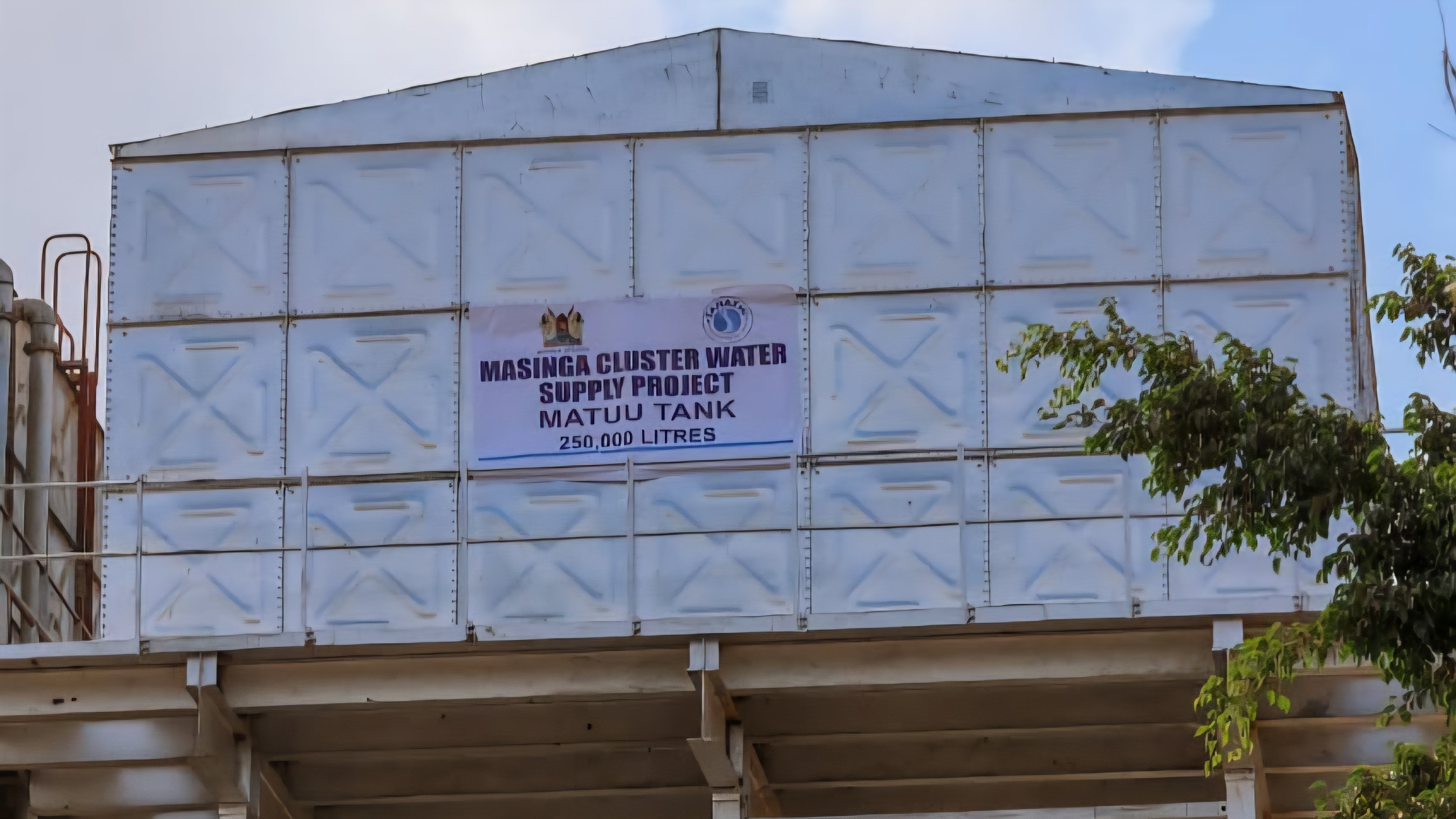

Cabinet Secretary for Water, Sanitation and Irrigation, Engineer Eric Mugaa, accompanied by Yatta Constituency Member of Parliament, Robert Basil, has officially launched construction works for the Kitui-Matuu Towns Last Mile Connectivity Water and Sanitation Project.
The launch took place in Yatta Constituency, which is located within Machakos County.
The infrastructure initiative is designed to upgrade and expand water and sanitation systems, with the targeted goal of serving 60,000 people across several regions.
Benefitting areas include Kitui, Matuu, Wote, the National Youth Service (NYS) camp, Kithimani, Sofla, Ndalani, and surrounding communities.
Engineering specifications for the project detail the construction of an intake chamber situated on the Yatta Canal.
Civil works will also include a new water treatment plant at the NYS facility.
Contractors will lay a 33.5-kilometer pipeline, build two storage tanks, and install 1,000 consumer connections within Matuu town.
Beyond the initial pipeline, the work scope covers the rehabilitation of existing sewage pump stations.
This phase will establish 500 new sewer connections in Kitui town.
In Wote, engineers will construct a reinforced concrete weir on the Kaiti River.
The Wote site will feature a 400-cubic-meter sump, infiltration galleries, submersible pumps, a 20-kilometer distribution pipeline, and 1,000 household connections.
State officials noted that this project aligns with the Bottom Up Economic Transformation Agenda (BeTA).
The policy framework focuses on improving grassroots access to clean water to enhance public health, minimize waterborne diseases, and support local businesses.
Comments (0)
Leave a Comment
No comments yet. Be the first to share your thoughts!