
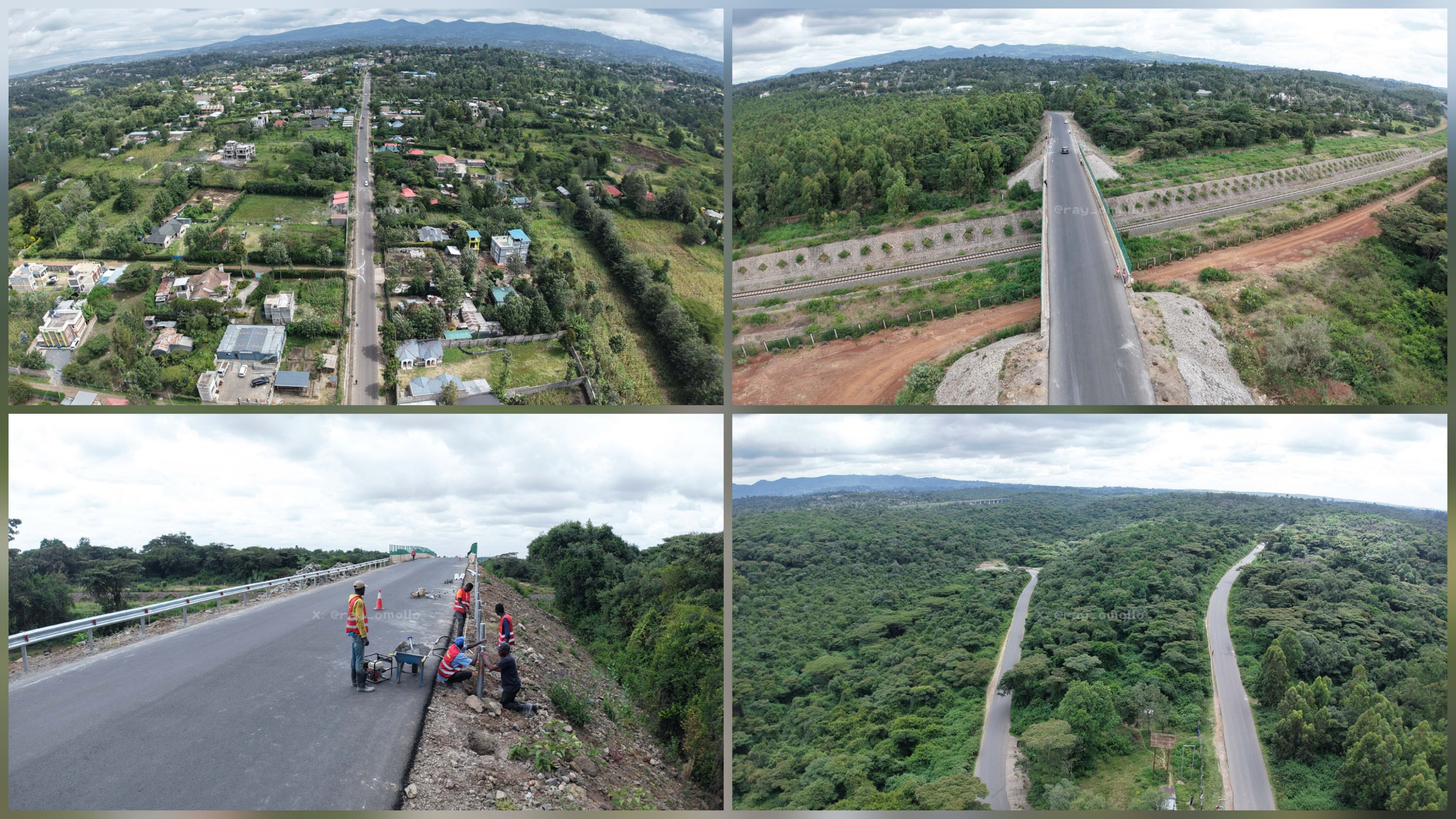

Construction of the Olkeri Road network project in Kajiado North has entered its final phase, as workers upgrade key links within the local infrastructure network to bitumen standard. The engineering development forms part of a larger 65-kilometre regional road upgrade scheme.
Principal Secretary for the State Department for Internal Security and National Administration (SDISNA), Dr. Raymond Omollo, confirmed the latest progress. He noted that engineering teams are now finalizing the critical links to enhance regional connectivity.
According to officials, the modern infrastructure will provide an all-weather alternative transportation corridor linking Matasia, Kiserian, and Ngong. This alignment directly bypasses the heavily congested central business district of Ngong Town, although it remains well connected to key transit routes.
Commuters moving between Nairobi and the expanding residential areas in Kajiado County often experience massive delays on the main arteries. The new bitumen road offers relief, when it distributes traffic away from traditional bottlenecks.
Economic growth in these satellite towns depends heavily on reliable infrastructure. The completion of the Olkeri routes is expected to open up fresh opportunities for trade, investment, and settlement, although it requires sustained maintenance over time.
Beyond commercial benefits, the improved road surfaces will enhance safety for everyday motorists. Better civil engineering designs help reduce vehicular wear and tear, when drivers navigate the sub-county.
The SDISNA gains direct operational advantages from the upgraded road network. High-quality asphalt ensures that national administration officers can move swiftly through the area, if they need to maintain law and order.
Emergency responders will also see reduced turnaround times across the region. Ambulance and fire services frequently face delays on unpaved roads, but the new bitumen surface allows for rapid deployment during crises.
Security operations in Kajiado North require dependable access routes for law enforcement. Enhanced accessibility allows emergency vehicles to navigate between Matasia and Kiserian, when they respond to urgent calls.
The broader 65-kilometre engineering contract had previously faced local infrastructure challenges before national interventions. The revival of the paving works has brought relief to residents, who endured dusty conditions for years.
Property developers have already begun targeting areas adjacent to the Olkeri network. Improved access to Nairobi makes these locations highly attractive for settlement, but it also drives up land values.
Local traders have expressed optimism regarding reduced transit costs for goods. Transporting agricultural produce from Kajiado farms to local markets will become significantly cheaper, if the final links open on schedule.
Structural engineers on-site are focusing on drainage systems alongside the main paving works. Proper drainage is essential to protect the new bitumen standard roads, when heavy seasonal downpours hit the area.
The project aligns with national urban renewal goals for commuter hubs. Modernizing infrastructure ensures that rapid population growth does not lead to complete gridlock, although it creates temporary disruptions during construction.
Signage and safety barriers are being installed as part of the finishing works. These final details are critical for guiding motorists safely, when they use the newly configured intersections.
Public transport operators are planning to introduce new routes through the Olkeri network. Passengers will enjoy shorter travel times, if they switch to these alternative links.
The collaboration between national security agencies and infrastructure departments highlights an integrated approach to development. Safe roads are increasingly viewed as a foundation for stability, but they also foster trade.
Comments (0)
Leave a Comment
No comments yet. Be the first to share your thoughts!