
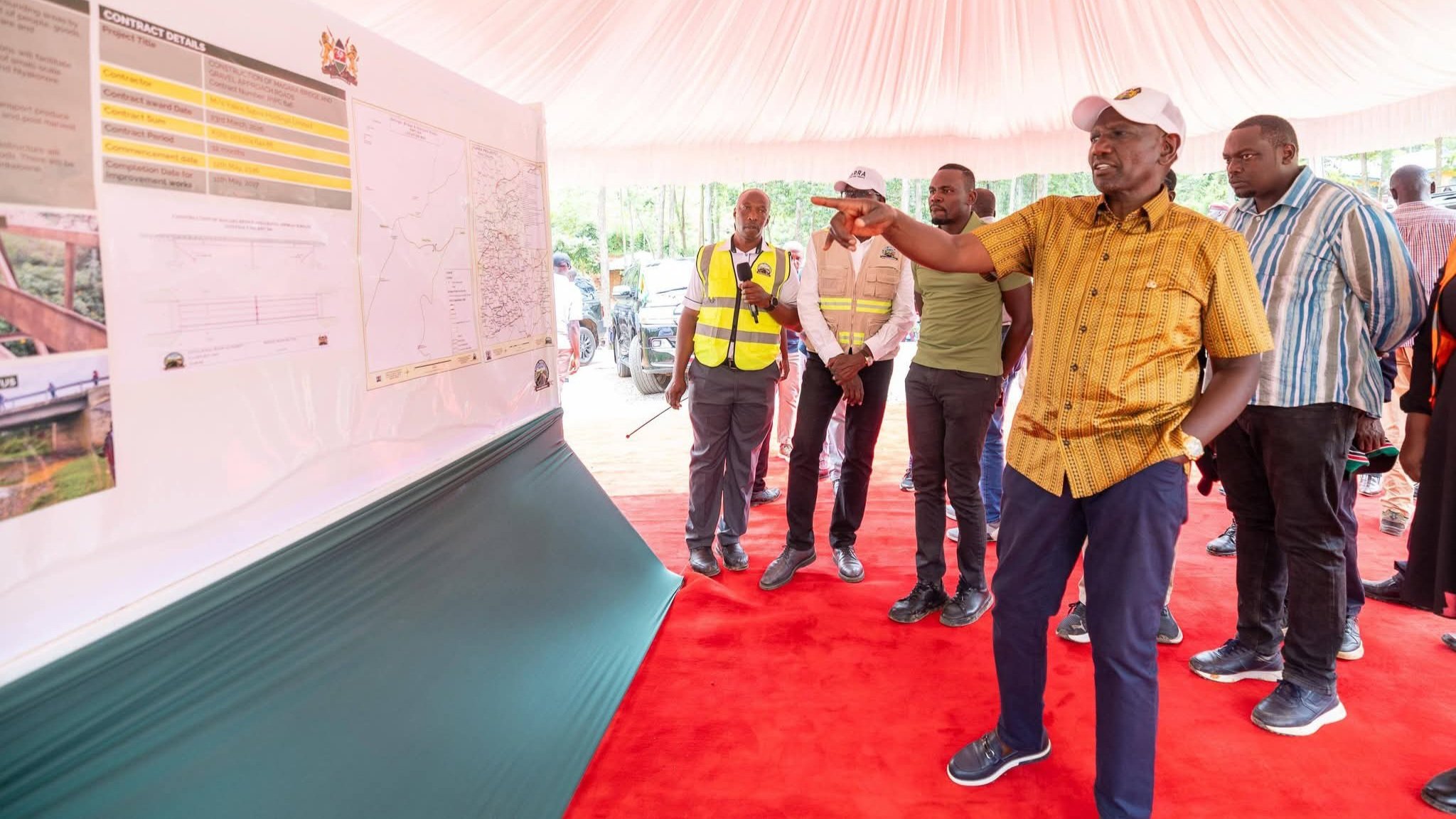

President William Ruto on Wednesday afternoon presided over the official launch of a 25-kilometer road upgrading project in Kisii County. The project will see the transition of several key rural stretches to bitumen standards.
The infrastructure work covers the Nyabigena, Matangamano, Esaka, and Mocheng o sections. It also extends through Ayora, Moticho, and Nyansembe, terminating at the Moticho, Maroo, and Otendo ELCK Primary Roads.
During the event, President Ruto inspected the project designs and current road conditions. He was accompanied by officials from the State Department for Roads and local leadership from the Kisii region.
The upgrade is part of a broader government effort to improve the quality of the national road network. Moving from gravel to bitumen is expected to reduce maintenance costs over time.
Technical teams on-site demonstrated the planned alignment of the 25-kilometer stretch. The project addresses long-standing transit challenges in these specific sub-locations, where weather often impacts road reliability.
The State Department for Roads confirmed that the works will focus on high-quality surfacing. This specific network serves several schools and agricultural zones within the county.
Contractors have been mobilized to the site, with heavy machinery already visible during the presidential visit. The launch signifies the formal commencement of the earthworks and drainage preparation phases.
President Ruto emphasized the importance of timely completion and adherence to engineering standards. He noted that the connectivity provided by these roads is vital for local trade and accessibility.
The residents gathered to witness the commissioning, which included the unveiling of a commemorative plaque. The President also took time to review the project map with engineers.
The roads under this project are essential for linking remote areas of Kisii to main transport arteries. This project follows several other infrastructure commitments made for the Nyanza and South Rift regions.
Funding for such projects typically comes from the national development budget, managed through the Ministry of Roads and Transport. The government continues to prioritize paving in high-productivity areas.
The 25-kilometer stretch is one of the larger contiguous rural road upgrades currently active in the county. It forms a loop that connects multiple primary social and economic hubs.
Engineers at the site indicated that the terrain will require specific drainage interventions. Proper culverting is necessary to ensure the new bitumen surface survives heavy seasonal rainfall.
The project is expected to support the movement of tea and other agricultural products from the region. Better roads generally lead to lower vehicle operating costs for local transporters.
The Ministry of Roads remains the lead agency in supervising the contractor's progress. Regular audits are expected to ensure the 25-kilometer target is met within the stipulated timeframe.
Comments (0)
Leave a Comment
No comments yet. Be the first to share your thoughts!