
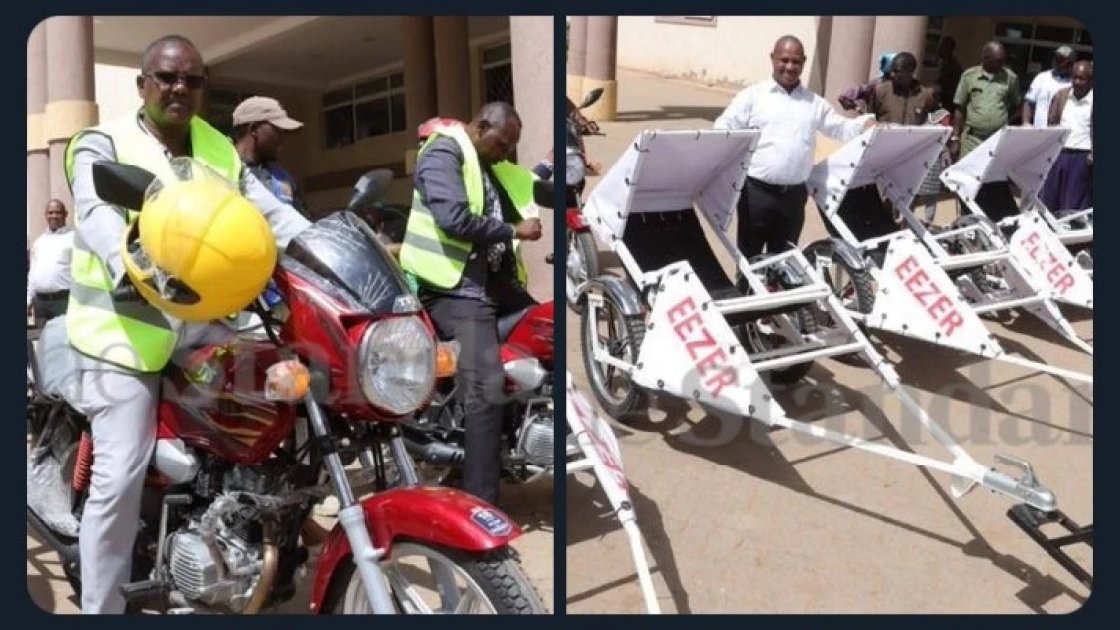

Laikipia County government unveiled a fleet of motorcycle-based ambulances on February 5, 2026, at Nanyuki County Referral Hospital, targeting expectant mothers in hard-to-reach parts of the county. The initiative, launched by County Health Executive Albert Taiti, features standard boda bodas fitted with sidecar extensions resembling wheelbarrow-style carriers. Each unit includes a stretcher, first aid kit and space for a medical attendant to ride along.
Governor Joshua Irungu defended the move at the event, explaining that pregnant women and other patients in isolated areas like Laikipia North and Laikipia West often die before reaching hospitals due to poor roads and long distances. "These motorcycle ambulances are designed to navigate terrains where conventional ambulances cannot reach," he said. The county plans to station the units at identified hotspots for quicker response during labour emergencies.
The project is a pilot in partnership with the Eezer Initiative, a Swedish-backed organisation that has run similar programmes in Burundi, completing over 24,000 pregnancy-related transports with 71 motorcycle ambulances between 2021 and 2023. Dr Alfred Sadera, Eezer's coordinator for Laikipia, described the effort as addressing core access challenges in regions with rugged landscapes and limited infrastructure.
Within hours of the launch, social media erupted in criticism. Kenyans called the setup "primitive," "dangerously unsafe" and a "mockery" of public health services. Many questioned the suitability of transporting heavily pregnant women on modified motorcycles over rough terrain, especially with potentially high-speed or reckless riders. Posts highlighted the discomfort, risks of falls or jolts, and the perceived insult of using such contraptions in 2026.
One widely shared comment on X read: "Kwani, what's wrong with Laikipia leaders? ... An ambulance costs between 5m to 10m ... With 200m the county can have 20 to 40 ambulances instead of this mkokoteni to serve our women!" Another user wrote: "It is 2026. We are taxed to our fingertips. ... 'Bodabodas' shouldn't be used to ferry sick people, much less pregnant mothers." Critics argued that billions in county funds should buy proper ambulances rather than what they described as "rickety mobile organs hurriedly cobbled up."
The backlash reflects frustration over healthcare delivery in rural Kenya, where maternal mortality remains tied to transport barriers. Conventional ambulances struggle on unpaved tracks during rainy seasons or in dusty conditions, leaving communities reliant on informal boda bodas or walking long distances. The county positions the motorcycles as a pragmatic, low-cost bridge to fill that gap until better roads or more vehicles become available.
For the construction and infrastructure sectors, the controversy underscores ongoing rural access issues. Poor road networks in counties like Laikipia limit not only emergency transport but also delivery of materials for health facility upgrades, water projects and other builds. While the boda boda ambulances require minimal new infrastructure—just rider training and basic modifications—they highlight the need for sustained investment in all-weather roads to support standard vehicles.
The county has not detailed how many units are in the initial fleet or exact rollout timelines beyond the pilot phase. If successful, the model could expand within Laikipia or inspire similar efforts elsewhere in Kenya's arid and semi-arid regions. For now, the initiative has ignited debate over innovation versus adequacy in public health solutions.
Comments (0)
Leave a Comment
No comments yet. Be the first to share your thoughts!