
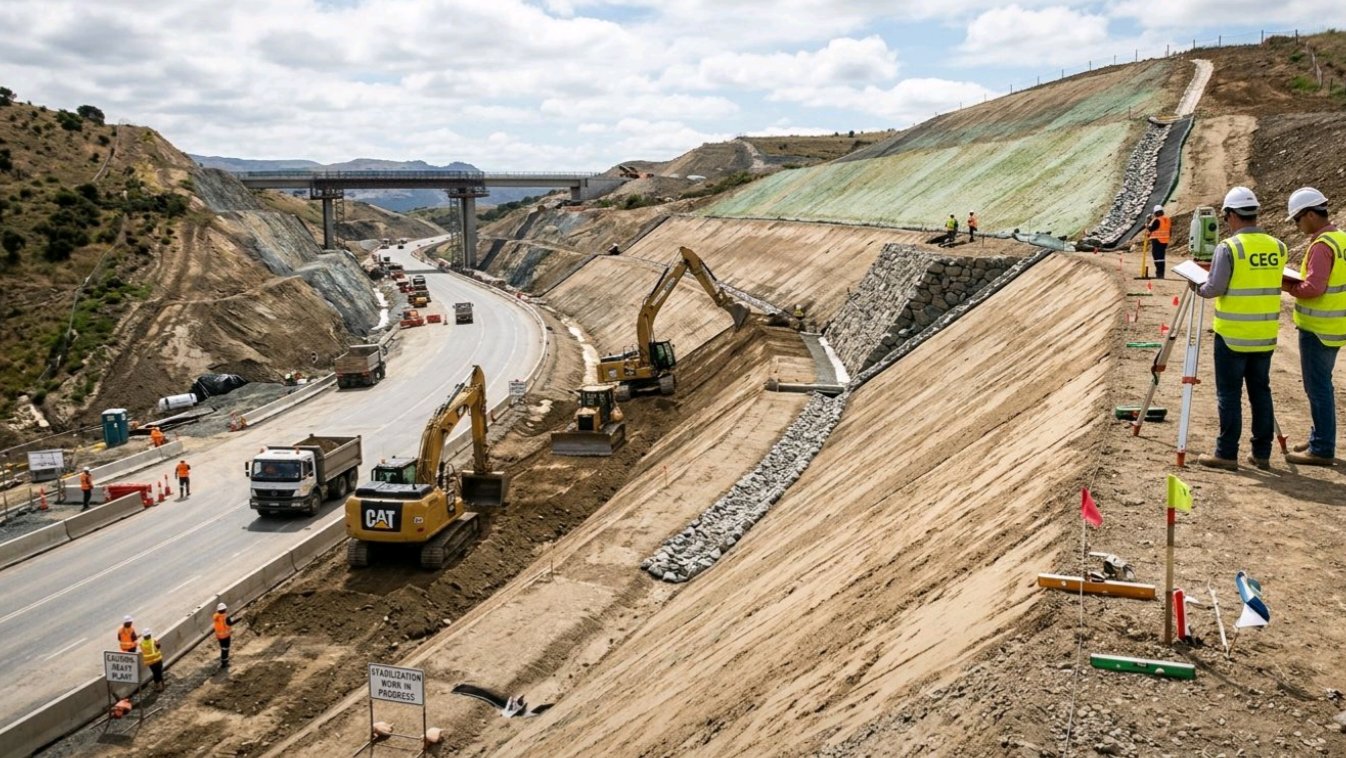

The stability of any major infrastructure project, from the vast highway expansions across Kenya to deep foundation trenches in urban centers, depends on the calculation of batter slopes. These gradients are provided to the sides of a soil mass or structure to prevent the sudden and often catastrophic failure of earthworks.
According to technical specifications shared by Er. Aryan Dipak Raut, a civil engineer and estimator, these slopes serve as the primary structural safeguard during both the cut and fill phases of a project. Without these calculated angles, the risk of soil sliding increases significantly, which can halt work and endanger personnel on-site.
The geometry of a batter slope is typically expressed as a ratio of horizontal distance to vertical rise. A 1:1 ratio creates a 45-degree angle, which is often a baseline for many stable soil types. However, engineers frequently opt for a 2:1 ratio, which creates a gentler slope that is less prone to movement.
Engineers emphasize that the importance of these ratios extends beyond mere appearance. The primary function of a batter slope is to ensure the stability of soil, particularly in deep excavations and high embankments. By reducing the steepness, the lateral pressure on the soil is managed, which effectively reduces the risk of landslides.
Erosion control remains another vital benefit of implementing gentle gradients. Steep embankments allow rainwater to gain high velocity as surface runoff, which quickly strips away topsoil and creates deep rills. In projects like the construction of canals and highways, controlled slopes reduce water velocity and preserve the integrity of the earthwork.
Safety during the construction phase is perhaps the most immediate concern for site managers. Trenches that lack proper battering are prone to sudden collapses, which remain a leading cause of workplace accidents in the construction sector. Providing a clear slope offers a safer working environment for laborers and machinery operating within the excavation zone.
While many projects in Kenya utilize various shoring methods, the batter slope remains the most cost-effective way to secure a site where space allows. It removes the need for complex bracing systems by relying on the natural angle of repose of the soil.
Failure to adhere to these engineering gradients can lead to massive cost overruns if a slope fails post-construction. Repairing a collapsed embankment is significantly more expensive than the initial cost of earth-moving required to create a stable, gentler slope.
Professional valuators and designers continue to advocate for these standards as a non-negotiable part of site preparation. As infrastructure demands grow, the discipline of proper soil grading remains a cornerstone of durable and safe construction practices.
Comments (0)
Leave a Comment
No comments yet. Be the first to share your thoughts!