

A version of this article appeared on LinkedIn by Mercy Ndanu.
To many people, electricity is simple. You switch on the light, and power is there.
However, behind that simple action is a highly coordinated power system.
Electrical engineers are managing increasingly complex infrastructure, which requires constant monitoring.
National grid stability depends on modernizing Supervisory Control and Data Acquisition (SCADA) systems.
Automation remains a key priority for the Kenya Electricity Transmission Company (KETRACO).
Engineers use advanced tools to supervise high-voltage distribution networks, which prevent large-scale blackouts.
Substation automation has completely changed how electrical infrastructure is run, and monitored.
The transition from manual control to automated intelligent systems ensures grid reliability, and safety.
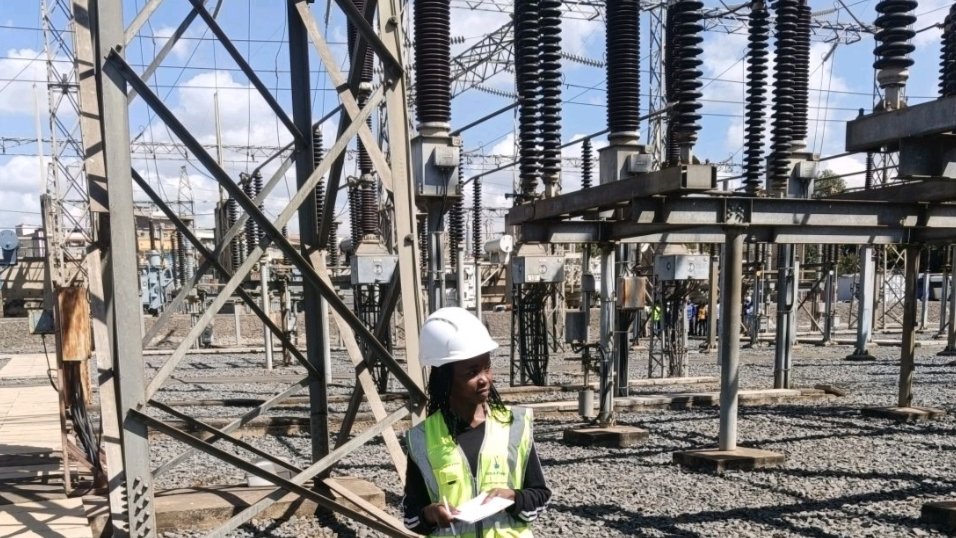
The engineer is conducting assessments on massive transformer units, and structural steel gantries.
Contemporary substation automation incorporates complex control algorithms, and real-time data processing.
These layers of intelligence turn standard substations into active nodes, which optimize power delivery.
Centralized control rooms rely on infrastructure updates, which connect individual nodes to a broader network.
The Kenya Power and Lighting Company (KPLC) continues to integrate specified distribution substations.
This integration requires new Remote Terminal Units (RTU) to capture real-time electrical parameters.
Engineers must install specialized control panels, cubicles, and enclosures inside indoor substations.
Fiber optic communication networks provide the reliability, and performance necessary for these mission-critical applications.
These networks support multiple communication protocols, which offer electromagnetic immunity within harsh environments.
Technical teams at site must manage system disturbances, if unexpected power fluctuations occur.
Staff apply safe working procedures, when handling electrical permits to work.
Engineers review contractor designs, while supervising configuration, testing, and commissioning phases.
Data engineering ensures that substation databases are fully prepared, before integration to central control software.
Modern systems use Intelligent Electronic Devices (IED) to combine protection, monitoring, and control functions.
These platforms provide the computational power required for sophisticated, next-generation analytical capabilities.
Automated demand response capabilities can shed non-critical loads during peak demand periods, although critical services are maintained.
Power quality monitoring systems automatically detect disturbances, but keep voltage within acceptable limits.
Load forecasting algorithms predict future demand patterns, if sudden weather changes affect consumption.
These predictive capabilities enable proactive resource allocation, which prevents dangerous equipment overloads.
Maintaining high system availability requires tightly coordinated scheduled, and corrective maintenance at site.
As urban centers expand, the demand for stable electricity transmission forces deeper technological integration.
Behind the scenes, engineers maintain the balance, that keeps the lights on across Kenya.
Comments (0)
Leave a Comment
No comments yet. Be the first to share your thoughts!