

A version of this article appeared on X by Surajit.
Images from the recent disaster in South America show a stark contrast in structural survival.
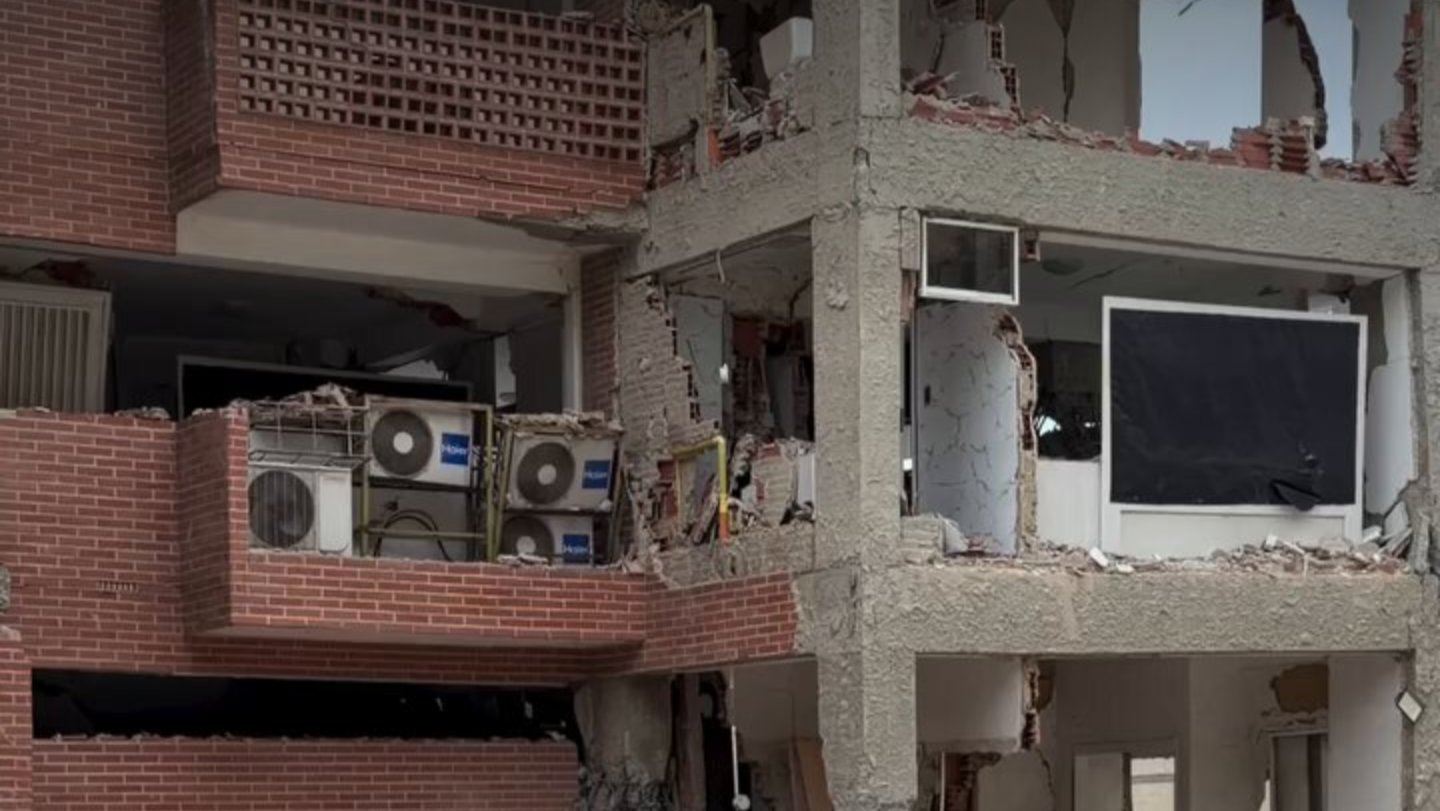
A specific building frame remains standing, although it lost its entire masonry facade during the tremors.
The document displays concrete columns and beams perfectly intact, while brick infill walls lie completely shattered on the ground.
Local observers noted that the structural performance proves the engineer designed the entire building with severe earthquakes in mind.
Industry experts point to this specific case as a real-world demonstration of what happens when structures follow modern capacity codes.
A powerful magnitude 7.5 earthquake struck Venezuela, causing widespread panic and devastating structural failures across major urban centers.
According to data compiled by seismologists, the mainshock occurred just seconds after a powerful foreshock.
This rapid sequence put immense lateral strain on local real estate, flattening older structures that lacked modern engineering detailing.
In many traditional developments, columns failed under the intense horizontal shaking, resulting in catastrophic pancake collapses that trapped occupants.
However, the building captured successfully resisted the immense kinetic forces due to its highly robust reinforcement.
The structural framework relies on a specialized engineering methodology known as the strong-column, weak-beam principle.
This approach dictates that vertical columns must possess significantly more structural strength than the horizontal beams supporting the floor slabs.
By ensuring columns remain rigid, the building can sway during a seismic event without experiencing a total progressive collapse.
The design intentionality targets controlled failure, allowing non-structural elements like brick walls to blow out, which releases internal kinetic energy.
As a result, the internal skeletal frame survives, preserving the global stability of the building and protecting human life.
Engineers emphasize that adequate steel reinforcement inside the concrete columns prevents brittle failure, when horizontal ground acceleration peaks.
Without proper transverse ties and longitudinal steel rebars, columns quickly buckle under the alternating lateral cycles of an earthquake.
The performance of this building serves as a vital case study for developers across East Africa and the globe.
As urban development accelerates in regions near tectonic rifts, adherence to stringent seismic building codes becomes a non-negotiable priority.
Regulatory agencies like the National Construction Authority (NCA) continue to advocate for strict inspection of structural steel placement during construction.
Contractors often face criticism for cutting corners on steel reinforcement to save on immediate structural material costs during procurement.
The Venezuelan disaster demonstrates that proper initial investment in structural engineering remains the only safeguard against future natural disasters.
While the cost of high-yield reinforcement bars increases initial budgeting, the long-term protection of human life justifies the expense.
Seismic waves are often amplified by local soil conditions, such as the saturated alluvial soils found in parts of Caracas.
These soft soils increase the amplitude of the shaking, matching the natural frequency of mid-rise reinforced concrete structures.
When resonance occurs, buildings experience extreme lateral displacement, testing the limits of structural ductility and joint detailing.
Structures that lack sufficient transverse confinement steel in their joints suffer immediate shear failure at the beam-column interface.
The building shown indicates that the structural joints were detailed correctly to withstand these cyclic reversals.
The surviving frame stands as proof that rigorous engineering saves lives, even when surrounded by total urban destruction.
Comments (0)
Leave a Comment
No comments yet. Be the first to share your thoughts!