
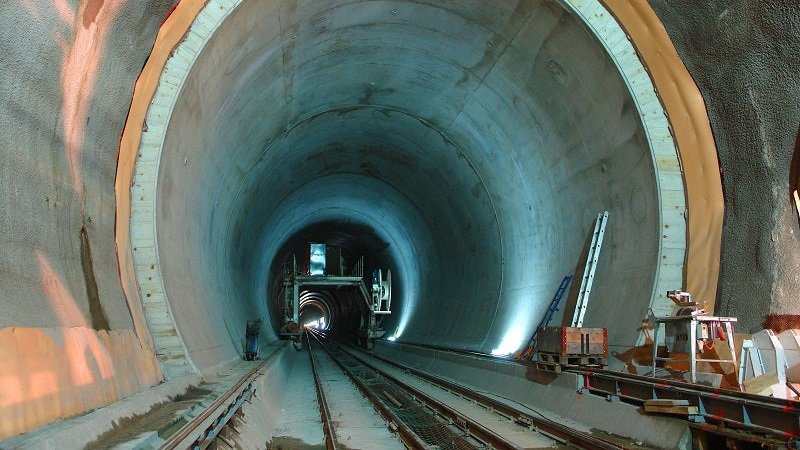

Construction teams at the second Gotthard Road Tunnel in Switzerland are working to free a massive tunnel boring machine (TBM) after it became wedged in unstable rock. The machine, named Paulina, had progressed less than 200 metres from the southern portal when it encountered a zone of highly fractured loose rock and cavities.
The blockage occurred when the face of the tunnel collapsed, preventing the cutter head from turning. According to project officials, the torque of the machine is insufficient to overcome the pressure of the debris. Engineers are now forced to excavate a separate access tunnel to reach the front of the machine and clear the obstruction manually.
This setback is expected to cost approximately 20 million Swiss Francs, or 25 million US dollars. The total budget for the critical infrastructure project currently stands at just over 2.7 billion US dollars. Despite the financial and technical strain, the Swiss Federal Roads Office maintains that the 2030 completion date remains the target.
To stay on schedule, the contractor, Marty Group, is shifting back to conventional drill and blast methods for the 500 metre problem zone. This older technique, while slower, allows for immediate stabilisation using anchor bolts and shotcrete. Crews have moved to a 24-hour, seven-day work schedule to recover lost time.
The second tunnel is being built parallel to the existing 17-kilometre tube, which has carried the A2 highway since 1980. The primary purpose of the new crossing is to allow the original tunnel to close for essential maintenance without cutting off the vital north-south transport corridor.
Once both tubes are operational, traffic will be split so that each tunnel handles a single direction. However, Swiss law prohibits increasing road capacity in the Alpine region, meaning each tunnel will only operate a single lane. The remaining space will serve as a hard shoulder for emergency use.
Geological data used for the project is based on the original analysis from the 1970s. While experts anticipated challenging conditions, the specific location and severity of this loose rock zone were not fully realised until the TBM hit the fault.
Excavated material from the site, totalling 7.5 million tons, is being repurposed. Half of the rock is destined for Lake Lucerne to create shallow water habitats, while the remainder is being recycled into concrete and road surfaces for the project itself.
Comments (0)
Leave a Comment
No comments yet. Be the first to share your thoughts!