

Civil engineering across complex terrains involves a calculation that goes far beyond measuring the shortest physical distance between two points. While a straight line appears to be the most logical path on a flat map, forced straight alignments through steep, mountainous areas often create insurmountable safety and financial hazards.
Infrastructure designers rely on winding, longer routes, which are frequently the safer, more economical, and more sustainable choices for long-term operations.
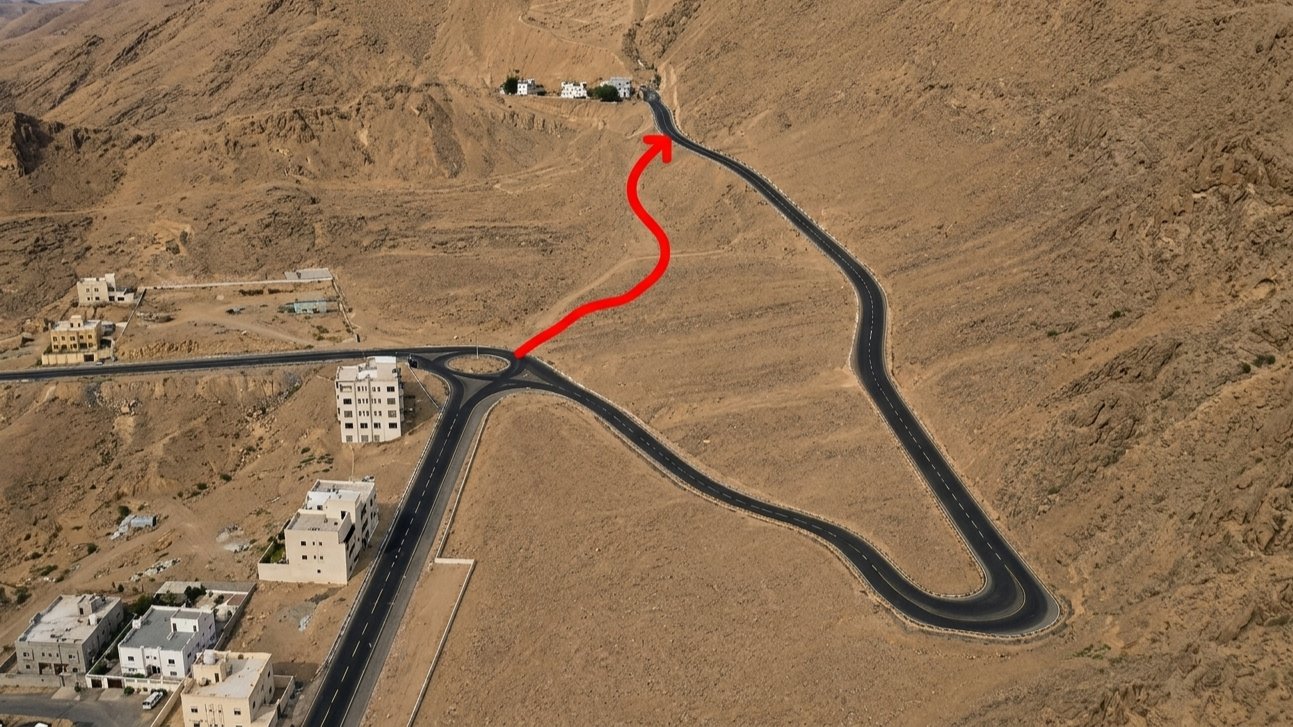
One primary reason for extending a road length is reducing the road gradient, which ensures safer driving conditions for motorists. Steep slopes compromise braking efficiency, particularly for heavy commercial vehicles, which increases the likelihood of catastrophic accidents.
Engineers also prioritize minimizing excavation and earthworks during the initial phase of alignment selection. Cutting through solid rock or shifting massive volumes of soil exponentially inflates project budgets, although advanced earth-moving machinery is readily available to modern contractors.
Altering the route helps in improving vehicle maneuverability on steep terrain. Winding curves allow vehicles to maintain a steady operational speed, which reduces fuel consumption and engine strain.
Strategic detours are highly effective for avoiding unstable slopes or geological hazards, such as active landslide zones and weak rock formations. Building directly over a geologically volatile area leads to frequent structural failures, which require costly, perpetual maintenance.
Adhering to these design adjustments is critical for meeting design standards for speed and safety set by international and local regulatory bodies. These strict engineering codes dictate permissible slope percentages, which forces planners to lengthen the alignment to distribute elevation gains gradually.
By choosing a longer, calculated route, planners manage to preserve the surrounding environment, which prevents severe soil erosion and minimizes the destruction of natural habitats along the alignment corridor.
The image featured image demonstrates this engineering concept clearly, showing a winding asphalt highway that bypasses a steep, direct path in a mountainous desert region.
Comments (0)
Leave a Comment
No comments yet. Be the first to share your thoughts!