

A version of this article appeared on LinkedIn by Edward Maina.
In modern structural engineering, the integration of horizontal components is vital for building stability. A slab beam represents a fundamental application of this principle, where a reinforced concrete beam is cast together with a slab to form a single, unified structural entity.
This traditional casting method, known as monolithic construction, eliminates independent joints between the horizontal elements. By removing these seams, the design ensures that the entire system responds uniformly under external environmental or live loads, reducing localized structural stress.
The primary function of a slab beam is to provide rigid support for the floor or roof system. Because the assembly is continuous, it increases the overall rigidity of the floor, which helps the framework handle heavy loads without bending.
Beyond basic support, these integrated units excel at carrying imposed loads across large open spans. Imposed loads include people, furniture, equipment, and any temporary forces that a building must withstand during its operational lifecycle, which requires a durable load-bearing mechanism.
Deflection control is another critical reason why engineers specify this design. Concrete structures naturally experience small amounts of sagging over time, but the deep section of an integrated beam significantly reduces this downward movement, protecting delicate ceiling finishes below.
The path of weight distribution relies heavily on this configuration. The slab receives direct surface impacts, and it transfers those forces directly into the embedded beam, which safely routes the accumulated stress downward into columns or supporting walls.
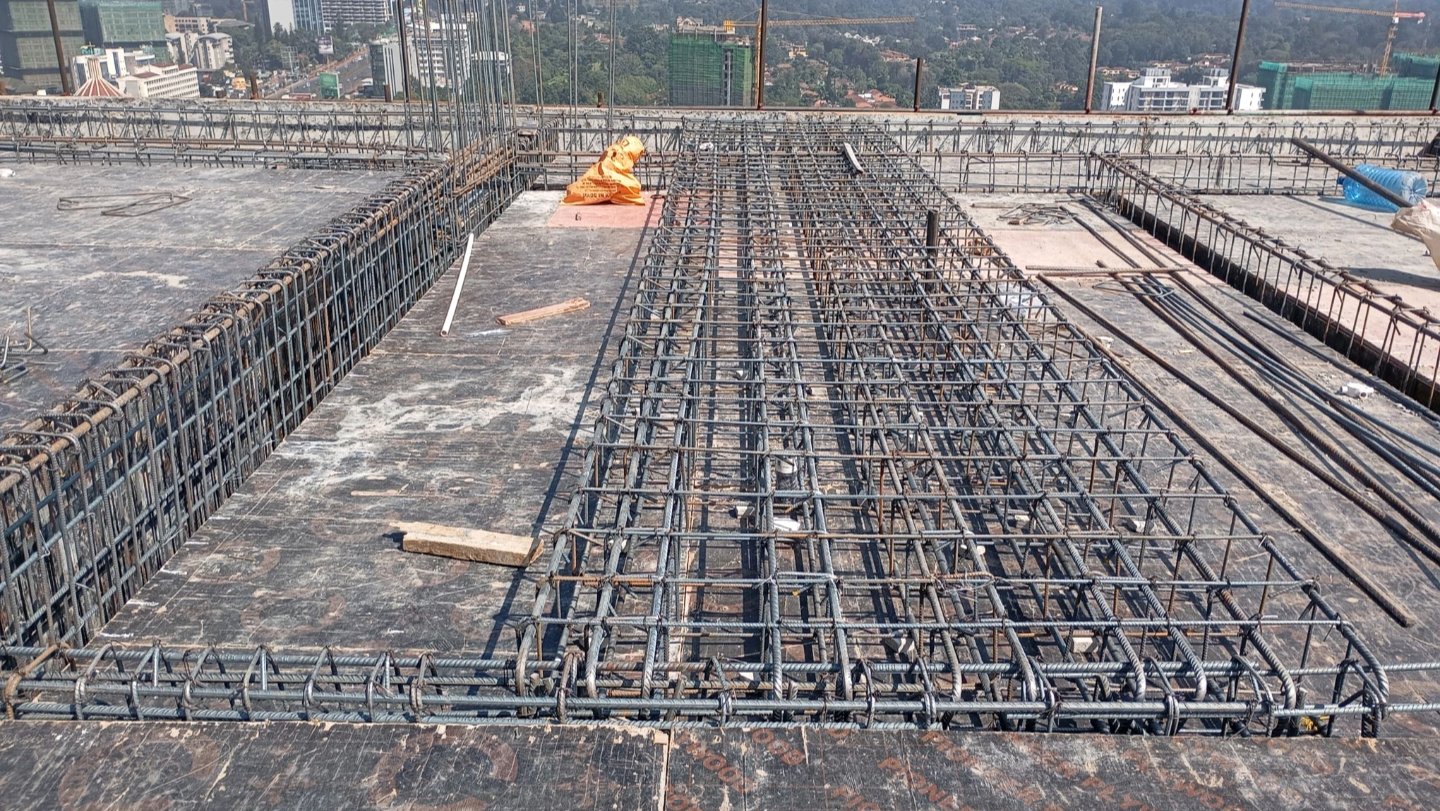
For site supervisors, the execution of this layout requires precise formwork preparation. Temporary wooden or steel shutters must be constructed simultaneously for both the beam channel and the flat floor area, which prevents any separation during the concrete pouring phase.
Reinforcement detailing requires equal precision before any concrete arrives. High-tensile steel rebars are woven into a continuous network, linking the dense cage of the beam directly with the thinner mesh of the slab, which binds the steel skeleton together.
When the concrete pour begins, teams must work continuously to avoid cold joints. Pouring the beam and the slab in a single operational window guarantees a truly monolithic structural unit, although this demands strict coordination among material delivery trucks.
Once the pour finishes, the curing process must be managed with care. Maintaining adequate moisture on the wet concrete surface ensures proper hydration, which allows the unified member to achieve its full intended compressive strength over twenty-eight days.
This technique remains highly popular in residential, commercial, and high-rise developments due to its long-term cost-efficiency. While the initial formwork setup can be labor-intensive
Comments (0)
Leave a Comment
No comments yet. Be the first to share your thoughts!