
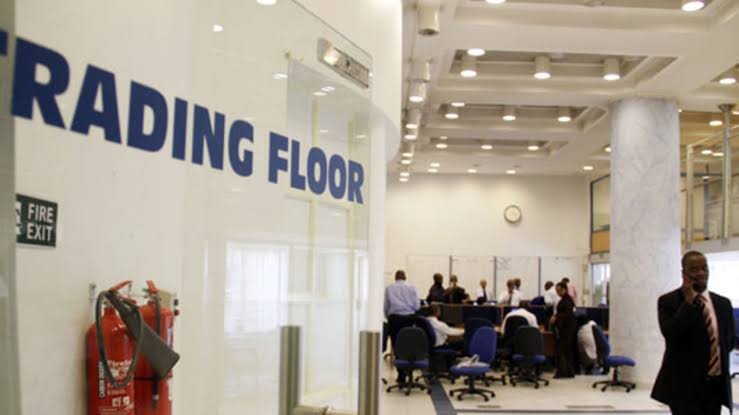

A review of the most valuable publicly traded companies in Kenya reveals a corporate landscape heavily dominated by commercial banks, raised concerns about capital distribution for local technological innovation.
Aside from the telecommunications giant Safaricom, which maintains a market capitalization of Sh1 trillion, the top tiers of the Nairobi Securities Exchange (NSE) are occupied almost exclusively by tier-one financial institutions.
Equity Bank leads the banking cohort with a market valuation of Sh188 billion, followed closely by KCB Bank at Sh148 billion.
East African Breweries Limited (EABL), a manufacturing staple, breaks the financial monopoly at Sh147 billion, but the banking sector quickly resumes dominance with Standard Chartered Bank Kenya at Sh114 billion.
Absa Bank Kenya stands at Sh107 billion, while Co-operative Bank of Kenya (Co-op Bank) and NCBA Bank hold market valuations of Sh103 billion and Sh100 billion, respectively.
This heavy concentration of capital in traditional financial institutions contrasts sharply with global markets like the United States, where technology firms command the highest valuations.
While the local private startup ecosystem is vibrant, the public exchange remains structured for mature, capital-intensive businesses.
This structural layout means that local innovation remains largely underfunded and invisible within the country's public capital markets.
The current environment continues to reward institutional stability over high-growth innovation, meaning that the local stock market functions more as a reflection of historical corporate strength than a conduit for future technological growth.
To shift this trajectory, observers note that capital markets require deliberate reforms to lower listing barriers, alongside targeted tax incentives for firms operating within innovation-heavy sectors.
Comments (0)
Leave a Comment
No comments yet. Be the first to share your thoughts!