
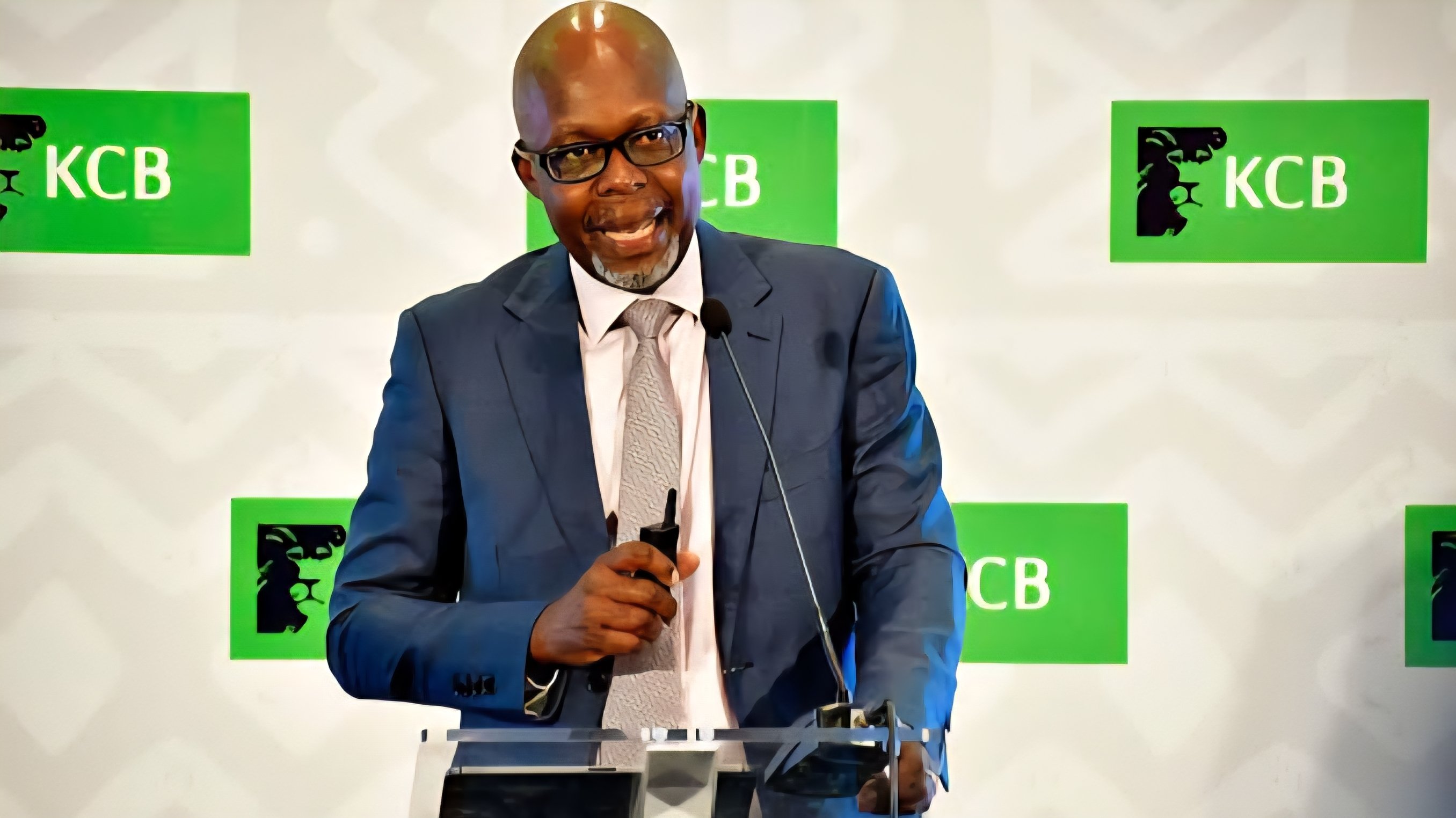

KCB Group has formally assumed the lead role in the Sh42 billion Public-Private Partnership (PPP) for the rollout of Kenya's second-generation smart driving licences. The transition occurs as Access Bank Plc expressed uncertainty regarding the commercial viability of the infrastructure project, which aims to overhaul the National Transport and Safety Authority (NTSA) licensing ecosystem.
The announcement was detailed during the KCB Group 2025 full-year financial results presentation in Nairobi. Lawrence Kimathi, the Group Finance Director, confirmed the shift in a briefing that also highlighted the lender's 11 percent rise in pre-tax profit to Sh90.9 billion. The project, which was originally anchored through the National Bank of Kenya (NBK) before its acquisition by Access Bank, has now returned to the KCB fold as a strategic infrastructure and digital services initiative.
The smart driving licence project is a 21-year PPP agreement involving the NTSA and the Pesa-Print consortium. It is designed to modernize driver licensing through the issuance of chip-based cards and the installation of an extensive digital enforcement network. The project scope includes:
Design and supply of second-generation smart driving licences.
Installation of over 1,000 surveillance cameras across the national road network.
Implementation of an instant fine infrastructure.
Development of a mobile driving licence wallet.
Creation of a driver merit and demerit point system to track road behavior.
Access Bank, which recently completed the acquisition of NBK from KCB, reportedly hesitated to proceed with the deal. The Nigerian-headquartered lender raised questions about the long-term returns on the Sh42 billion investment, given the logistical challenges and the pace of digital adoption within the local transport sector. KCB’s decision to take over the contract ensures that the infrastructure development, which has seen persistent delays since its conceptualization in 2017, remains on track.
The digital system is expected to automate traffic enforcement, reducing the need for manual police intervention on Kenyan highways. By integrating surveillance cameras with the smart licence database, the authorities aim to issue automated fines for speeding and other traffic violations. The demerit system will allow the NTSA to temporarily suspend or revoke licences of repeat offenders, a move intended to curb the high rate of road accidents in the country.
During the financial briefing, Kimathi noted that KCB’s involvement is part of a broader strategy to participate in underserved sectors and large-scale public infrastructure projects. The bank's total assets have now grown to Sh2.15 trillion, providing the balance sheet depth required to support the substantial capital expenditure of the licensing project.
The NTSA has struggled to scale the issuance of smart licences in recent years, reaching only about 2.1 million drivers against a target of 5 million by mid-2025. With KCB now providing the financial backing and the government approving a new PPP framework in December 2025, the rollout is expected to accelerate. This shift to private-sector participation is intended to eliminate operational bottlenecks and reduce the direct burden on public finances for road safety technology.
Comments (0)
Leave a Comment
No comments yet. Be the first to share your thoughts!