

A version of this article appeared on Business Daily.
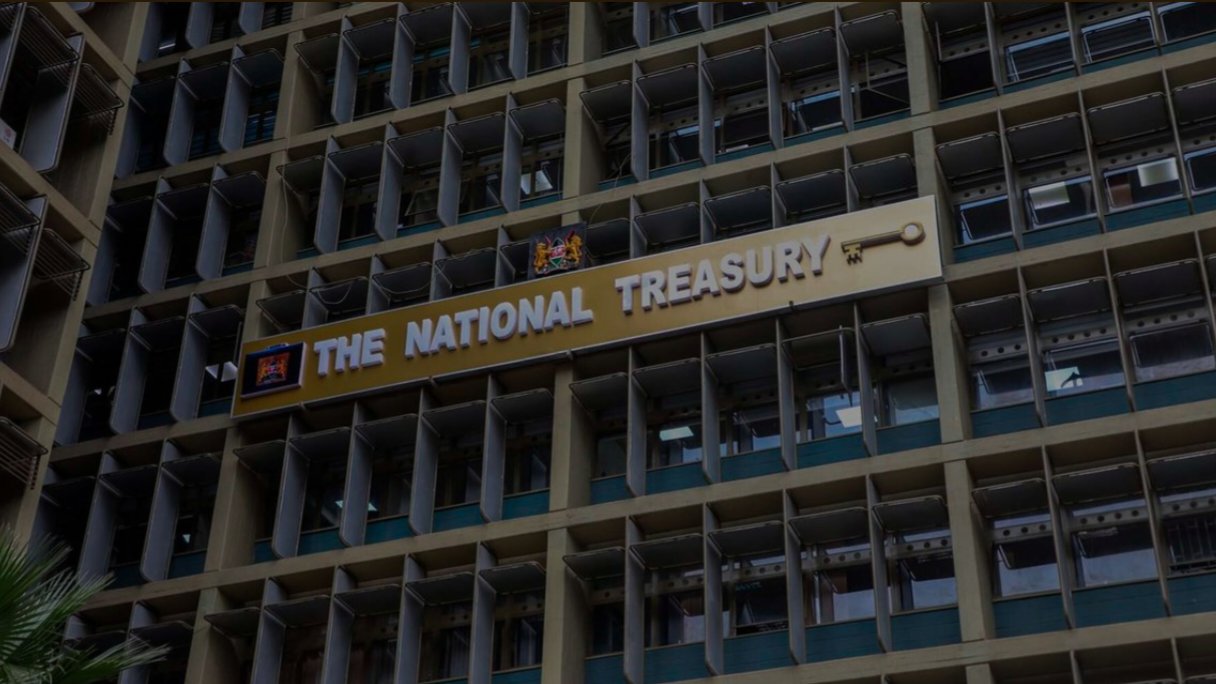
The National Treasury (TNT) is seeking a new structural framework for external borrowing, which links credit costs directly to environmental performance.
Government officials are negotiating financing packages where interest rates drop as the nation achieves specific targets, particularly in power connectivity and forest restoration.
This strategic shift comes at a time when traditional debt obligations are weighing heavily on the national budget, forcing a search for cheaper capital.
Under the proposed terms, international lenders will evaluate Kenya based on tangible metrics within specified infrastructure and conservation sectors.
The first primary metric centers on expanding electricity distribution across rural and peri-urban locations, which requires heavy infrastructure investment.
Energy infrastructure remains a capital-intensive sector, but securing performance-linked financing could lower the long-term interest burden substantially.
The Kenya Power and Lighting Company (KPLC) continues to expand grid infrastructure, although stabilizing the distribution network requires sustained capital injections.
Concurrently, the state aims to fulfill its ambitious green agenda by linking fiscal incentives to national tree planting campaigns.
The Ministry of Environment, Climate Change and Forestry (MECCF) is tasked with driving the national tree cover to fifteen percent.
President Ruto has consistently advocated for global financial reforms that reward developing nations for climate mitigation and adaptation efforts.
By aligning sovereign debt with conservation goals, Kenya hopes to pioneer a model for sustainable infrastructure financing in East Africa.
Financial analysts indicate that sustainability-linked loans provide an innovative pathway for fiscal management, if the state maintains rigorous verification standards.
Independent auditors will be required to verify the progress made in both forest conservation and electricity connection before any interest rate reductions take effect.
This mechanism ensures accountability, because failure to meet the agreed milestones would result in the interest rates remaining at standard market levels.
The Central Bank of Kenya (CBK) has previously encouraged commercial banks to adopt green financing frameworks to attract international climate funds.
Now, the national government is adopting this exact approach on a much larger scale with multilateral lenders and bilateral development partners.
Infrastructure projects, including rural roads and water supply networks, often face delays when funding models rely solely on expensive commercial debt.
By integrating these projects with environmental outcomes, the state can access specialized credit lines reserved strictly for green development.
The current negotiations reflect a broader global trend where development finance institutions prioritize projects that demonstrate clear environmental benefits.
Several European development partners have expressed interest in the framework, although final agreements depend on establishing transparent reporting mechanisms.
For Kenya, reducing the cost of servicing public debt is vital for creating fiscal space to fund other essential public services.
The TNT expects to finalize the initial rounds of talks with multilateral institutions before the end of the current fiscal period.
The country faces strict timelines to unlock these concessionary rates, meaning execution at the local government level must improve significantly
County governments must actively participate in tree planting, while regional offices must facilitate grid connection logistics to hit national milestones.
The Kenya Forest Service (KFS) will play a central role in tracking reforestation data, which must be presented to lenders annually.
Domestic energy generation is already highly reliant on renewable sources, including geothermal, wind, and hydro power plants across the country.
However, the challenge has always been the transmission network, which requires upgrading to handle the growing volume of clean energy.
Linking loans to these specific updates means the engineering and construction sectors will see targeted project allocations over the coming years.
The success of this financing model will ultimately depend on bureaucratic efficiency, transparent record-keeping, and steady project implementation.
Comments (0)
Leave a Comment
No comments yet. Be the first to share your thoughts!