
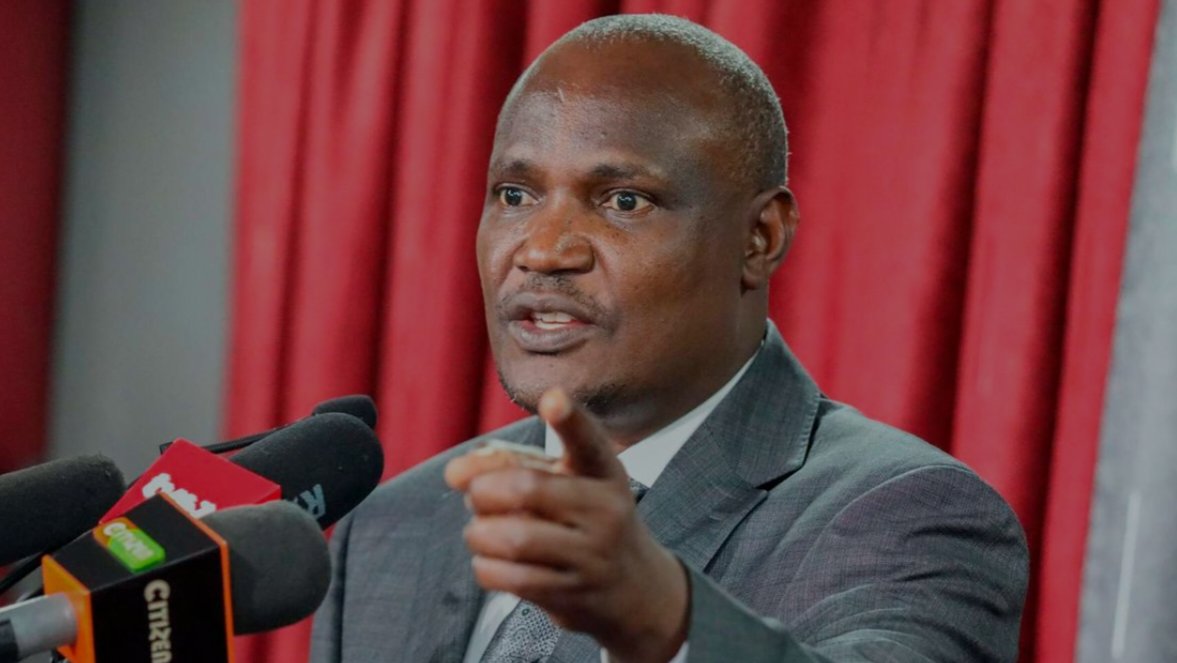

Kenya is facing a major slowdown in revenue collection, as individual income tax expansion drops to its lowest rate in four years.
Data from the national treasury indicates that the Kenya Revenue Authority (KRA) is encountering severe headwinds in pulling resources from salaried workers.
This deceleration comes at a time when citizens face a high cost of living, which has severely compressed disposable income across the board.
For the infrastructure and building sectors, this drop in direct tax collection presents immediate budgetary implications, if the government maintains its fiscal consolidation strategy.
Public works depend heavily on predictable tax streams, but the current trajectory means development allocations could face re-evaluation.
State corporations like the Kenya Urban Roads Authority (KURA) rely heavily on exchequer releases to fund ongoing civil works in major urban centers.
When personal income tax growth cools down, the state often prioritizes recurrent expenditures over capital infrastructure investments.
Contractors executing national road projects may face prolonged payment delays, if domestic revenue mobilization continues to underperform against set treasury targets.
The economic strain affecting households is also reflected in the private building sector, where residential project approvals have experienced a visible slump.
With less money left after taxation, individual developers are scaling back on construction projects, directly lowering the demand for building materials.
Cement manufacturers and steel fabricators have already adjusted their market projections, because local consumption depends on stable household purchasing power.
Policy discussions overseen by President Ruto have highlighted the critical balance between aggressive revenue generation and maintaining a stable environment for local businesses.
The Kenya National Highways Authority (KeNHA) is currently managing several multi-billion shilling corridors, but these rely heavily on external debt and matching local funds.
If local matching funds diminish due to sluggish revenue growth, international development partners might delay disbursements for joint civil engineering initiatives.
Analysts note that the performance of Pay As You Earn (PAYE) serves as a reliable barometer for the formal employment index.
A four-year low implies that job creation in the formal sector has stagnated, or corporations are reducing taxable allowances for their workers.
The construction industry remains one of the largest employers of casual and contractual labor, but it needs consistent public tenders to thrive.
Without a recovery in national tax revenues, the roll-out of new affordable housing units and urban upgrade programs could face significant delays.
Treasury officials are exploring alternative financing mechanisms, including public-private partnerships, to insulate critical infrastructure assets from these volatile tax shortfalls.
To curb the deficit, the tax authority is expanding its digital tracking systems into transport sectors, aiming to capture untaxed informal revenue streams.
However, structural changes in the tax environment take time to deliver results, leaving immediate infrastructure commitments vulnerable to cash flow hitches.
Local civil engineering firms are already feeling the pressure, as commercial banks tighten lending terms amid broader macroeconomic uncertainty.
The high cost of imported construction inputs, coupled with weak local demand, further complicates the recovery path for domestic builders.
Industry leaders urge the state to streamline pending bills, which would pump liquidity back into the economy and support struggling households.
For now, the focus remains on how the state intends to recalibrate its budget, balancing infrastructure ambitions against a shrinking tax base.
Comments (0)
Leave a Comment
No comments yet. Be the first to share your thoughts!