
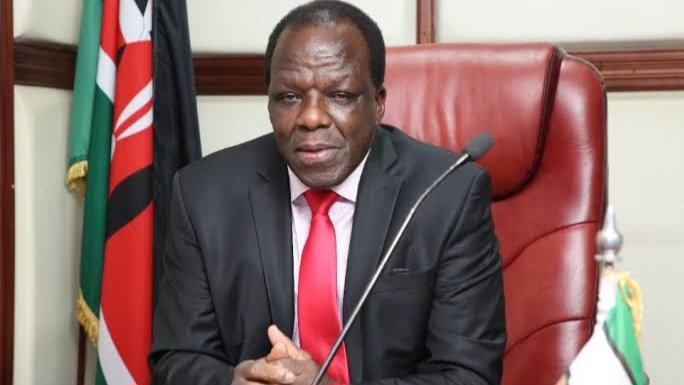

Cabinet Secretary for Cooperatives and MSMEs Development, Wycliffe Oparanya, has confirmed that the multi-billion shilling National Youth Opportunities Towards Advancement (NYOTA) project is funded through a World Bank loan that will ultimately be repaid by Kenyan taxpayers. The announcement, made during a development tour in Western Kenya, addresses recent public discourse regarding the financial structure of the nationwide youth empowerment initiative.
The NYOTA project, which represents a Sh33 billion investment, is designed to enhance youth employability and support small-scale enterprise development across all 47 counties. While the program provides critical capital grants and infrastructure support for young entrepreneurs, Oparanya emphasized that the funding is not a gift from external partners but a formal sovereign obligation.
According to the CS, the initiative belongs to the government and forms part of the national debt portfolio. He noted that the credit, secured from the World Bank, is a strategic investment in the country’s human capital. The project aims to reach over 800,000 vulnerable youth, providing them with the resources to start or scale up businesses, particularly in sectors requiring technical skills and light construction work.
Under the current framework, beneficiaries receive starter capital of Sh50,000, typically disbursed in two installments. This financial support is coupled with mandatory business development training and mentorship. The project also focuses on the recognition of prior learning, allowing young artisans and tradespeople to receive formal certification for skills acquired in the informal sector.
The disclosure of the repayment terms has sparked significant debate regarding the sustainability of debt-funded social programs. Critics have raised concerns about the long-term impact on the national exchequer, while government officials maintain that the economic stimulus generated by the program will outweigh the cost of the loan.
Oparanya reiterated that the project includes strict digital monitoring to ensure every shilling is utilized for its intended purpose. The government has integrated a savings component through the Haba Haba scheme, encouraging beneficiaries to build financial resilience as they execute their business plans. This structured approach is intended to prevent the misuse of funds and ensure the project meets its objective of creating sustainable livelihoods.
The NYOTA project serves as a successor to the Kenya Youth Empowerment Project (KYEOP), scaling up the reach of previous interventions. As the rollout continues, the emphasis remains on transparency and direct disbursement to eliminate intermediaries. For the construction and technical sectors, the project provides a pipeline for certified labor, though the financial burden of these advancements remains a point of national fiscal discussion.
Comments (0)
Leave a Comment
No comments yet. Be the first to share your thoughts!