
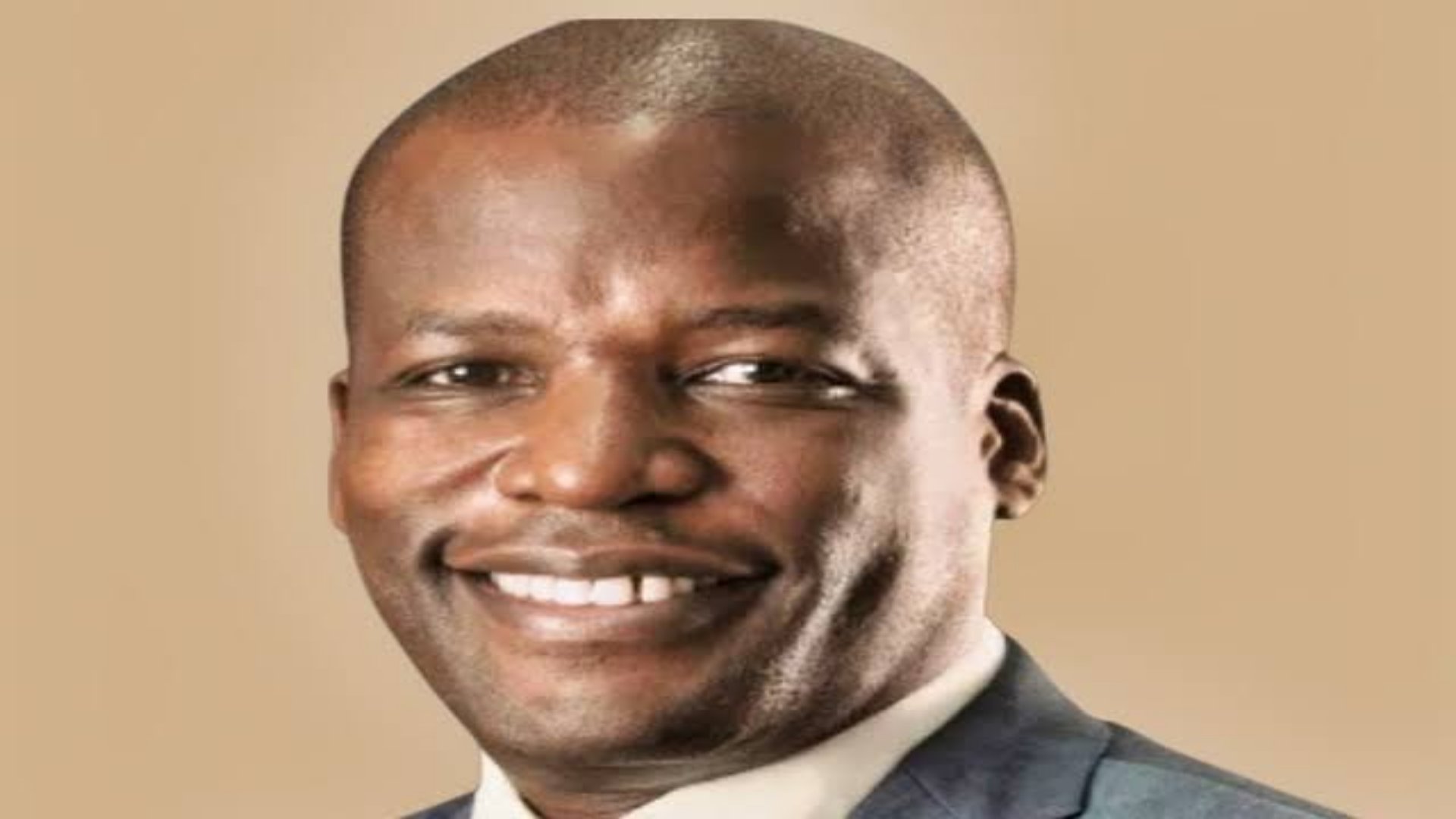

Geoffrey Ndugwa started his career doing structural calculations. Three weeks ago, he became the most powerful person in East Africa's cement industry.
Bamburi Cement Plc, the largest cement manufacturer in the region, confirmed the appointment as Chief Executive Officer effective April 1. He takes over a company that is no longer coasting. It is building, literally, and at a scale it has never attempted before.
The backstory matters. In December 2024, Tanzania's Amsons Industries completed its acquisition of 96.54 percent of Bamburi's shares, ending the company's long relationship with Swiss giant Holcim. What followed was a stabilisation phase under outgoing CEO Mohit Kapoor, who the board says guided the business through one of its most complex transitions. Kapoor is now done. Ndugwa is what comes next.
And Ndugwa is not a stranger walking through the door. He previously served as Commercial Director and General Manager of Bamburi Special Products, meaning he knows this company's bones in a way most incoming CEOs never do. That familiarity, combined with what came after, is precisely why his appointment reads as deliberate rather than routine.
His career is a continent-wide story. He joined Lafarge in Uganda in 2001 as a structural engineer, worked his way through technical and commercial roles, briefly crossed into banking as Head of Business Support at Barclays, then returned to cement in 2007. By 2012, he was leading marketing and corporate sales at Lafarge Cement WAPCO Nigeria. By 2019, he was running Lafarge's country operations in Malawi, then Zimbabwe, then South Africa. His most recent role before stepping into Bamburi's top job was Mergers and Acquisitions Projects Director for the Holcim Group's Middle East and Africa region.
That last role is telling. The transaction that brought Amsons into Bamburi's ownership structure was exactly the kind of deal he had spent years executing for others. He now runs the business that the deal created.
Board Chairman Dr. John Simba described him as a leader with a track record of driving sustainable profitability and building rigorous governance frameworks. He also made a point of acknowledging Kapoor, saying the outgoing CEO had stabilised the business and provided leadership at a unique phase of its turnaround.
What Ndugwa inherits is a company already mid-stride in its most ambitious chapter. Late last year, Bamburi signed a US$250 million Engineering, Procurement and Construction contract with China's Sinoma CBMI Construction Co. Ltd for a turnkey clinkerisation plant in Matuga, Kwale County. The plant will produce 1.6 million tonnes of clinker per year and is being built with carbon-neutral technologies integrated into the design.
The production numbers tell the story plainly. Bamburi currently produces one million tonnes of clinker and 1.8 million tonnes of cement annually. Once the Kwale plant is operational, those figures jump to 2.6 million tonnes of clinker and four million tonnes of cement. The company is effectively doubling down on the assumption that Kenya's construction and infrastructure pipeline will keep growing and keep demanding more.
That assumption is not unreasonable. Road construction, affordable housing programmes, commercial development and large-scale public projects continue to drive cement demand across the country. But the sector is also more competitive than it has ever been, with multiple manufacturers fighting for the same market and input costs still elevated.
Ndugwa holds a Bachelor of Engineering with Honours in Civil Engineering from the University of East London, an MBA from Edinburgh Business School at Heriot-Watt University, and a postgraduate diploma in Marketing from the UK Chartered Institute of Marketing. He trained at INSEAD through the Lafarge University executive programme. He is a member of both the Uganda Institute of Professional Engineers and the UK Chartered Institute of Marketing.
That blend of engineering and commercial credentials is unusual at the top of the cement industry. Most leaders come from one side or the other. Ndugwa appears to have spent his career building both deliberately.
His first real test is already underway. The Kwale clinkerisation plant is under construction, the ownership transition is fresh, and the market is watching. Whether he delivers on the scale of what has been promised will define what kind of CEO he turns out to be.
Comments (0)
Leave a Comment
No comments yet. Be the first to share your thoughts!