
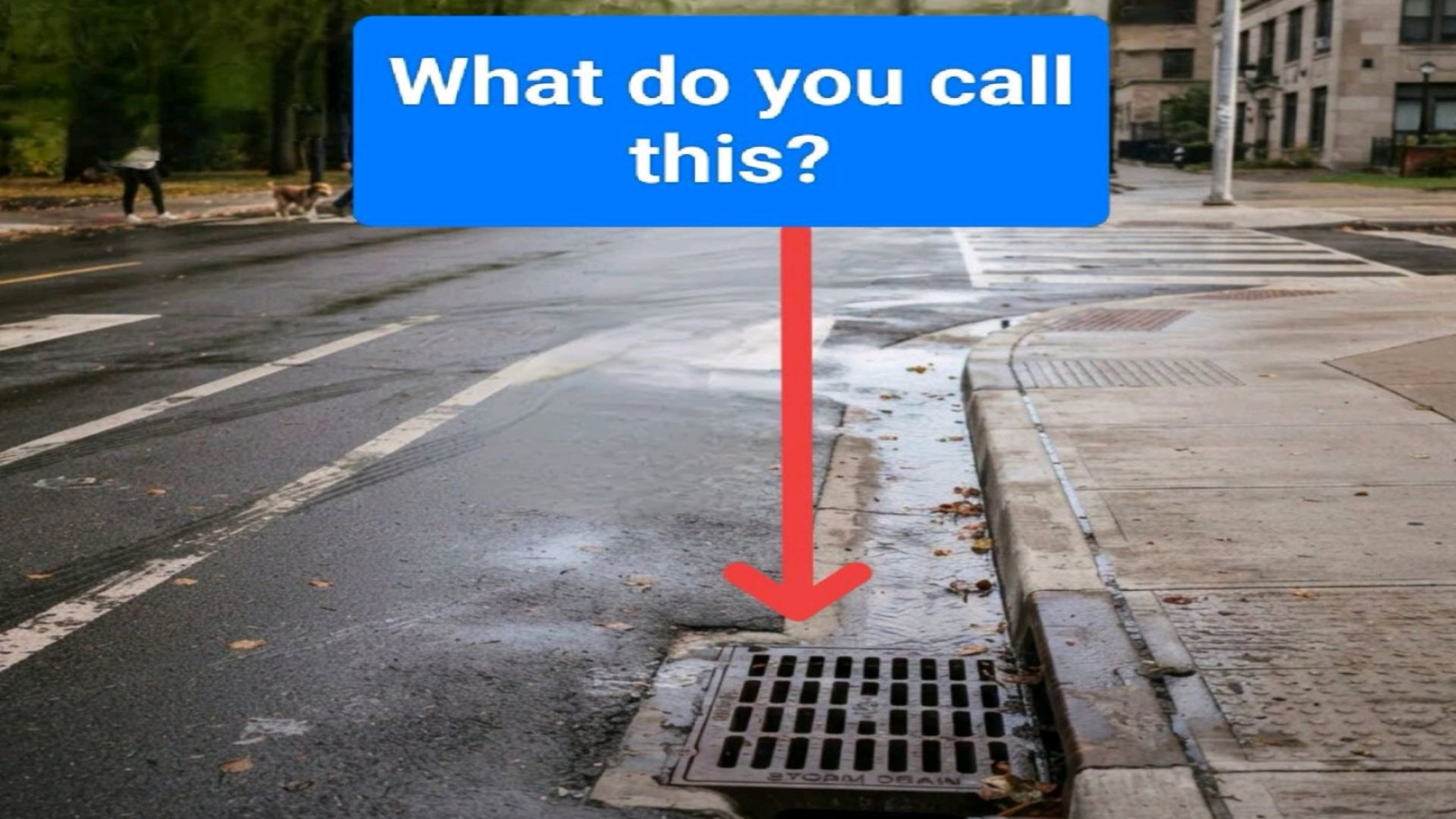

Stormwater management remains a core focus for municipal planning and civil engineering. The image highlights a standard storm drain, an essential fixture embedded in asphalt paving along urban curb lines to collect surface runoff during rainfall.
These drainage points prevent localized surface flooding, which can severely disrupt traffic flow and weaken pavement subgrades if water ponds on the roadway for extended periods.
The main components shown include a heavy-duty cast iron grate positioned over a subterranean catch basin. Grated inlets allow stormwater to enter the municipal underground piping network while keeping larger urban debris from entering the system.
The structure functions through a simple gravity mechanism:
* Storm drain inlet
* Road drain grate
* Street drain channel
* Catch basin sump
Below the metal grate lies a catch basin sump designed to collect heavy sediment and small debris before water flows into municipal trunk lines. Regular maintenance by municipal authorities using vacuum trucks is necessary to clear accumulated silt and ensure continuous hydraulic capacity.
Engineers position these catch basins at low points along urban streets and near pedestrian crosswalks. Proper placement ensures that stormwater runoff flows away from walkways and into discharge outlets, including retention ponds, nearby watercourses, or specialized treatment facilities.
In modern urban design, failure to maintain storm drain inlets often leads to severe street flooding and costly structural damage to asphalt surfaces. Consequently, local authorities continuously inspect these surface grates to prevent blockages caused by leaves, litter, and mud, ensuring road safety during major storm events.
Comments (0)
Leave a Comment
No comments yet. Be the first to share your thoughts!