

A visual post circulating on social media platform X, shared by popular science account Massimo (@Rainmaker1973), has highlighted the vast quantity of steel reinforcement required in modern wind turbine foundations.
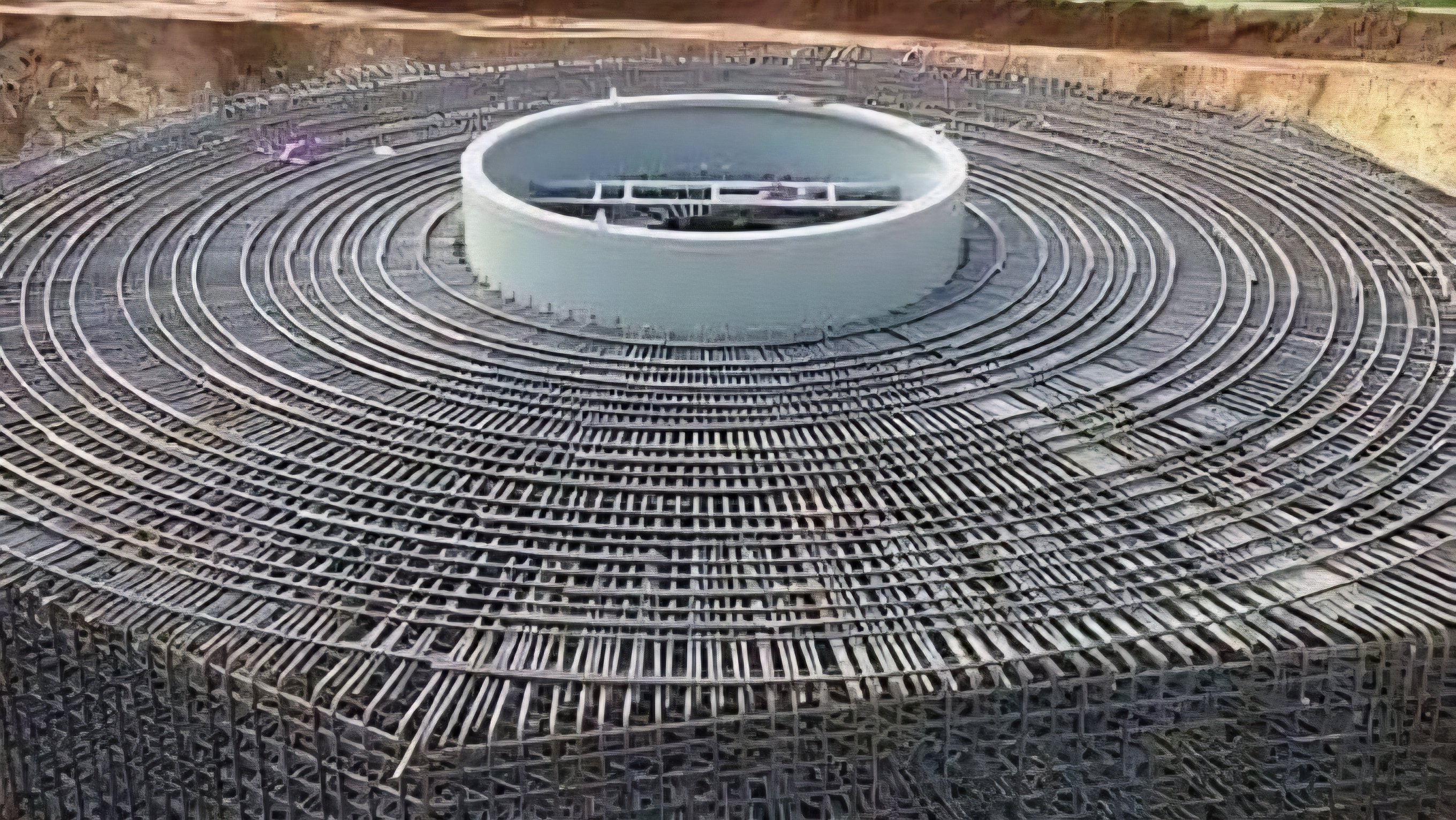
The image showcases a intricate, multi-layered mesh of steel rebar assembled across a wide, circular excavation pit prior to concrete placement.
Onshore wind turbines require substantial subterranean support structures to maintain vertical stability, withstand dynamic bending moments, and resist powerful wind shear forces acting on tall towers and heavy rotors.
Engineering designs for these massive gravity-based foundations typically demand tens of tonnes of high-strength steel rebar, meticulously tied together to form a dense structural cage.
The circular rebar layout features radial and concentric steel bars arranged around a central anchor cage, where the turbine base ring will interface with the tower structure.
This complex configuration ensures that tension and compression stresses generated by operational loads are evenly distributed throughout the surrounding reinforced concrete pad once the pour takes place.
Depending on local soil parameters, bearing capacities, and machine dimensions, onshore wind turbine footings can incorporate upwards of 50 tonnes of reinforcement steel embedded within hundreds of cubic metres of concrete.
Ground conditions that lack solid rock often dictate these heavily reinforced shallow raft bases, offering a cost-effective alternative to deep piling systems while securing long-term structural integrity.
Comments (0)
Leave a Comment
No comments yet. Be the first to share your thoughts!