

A version of this article appeared on LinkedIn by Mary Gichaga.
Drivers usually judge a road by its smooth black surface. However, civil engineers view roads as complex, multi-layered structures built to distribute heavy traffic weights down to the earth below.
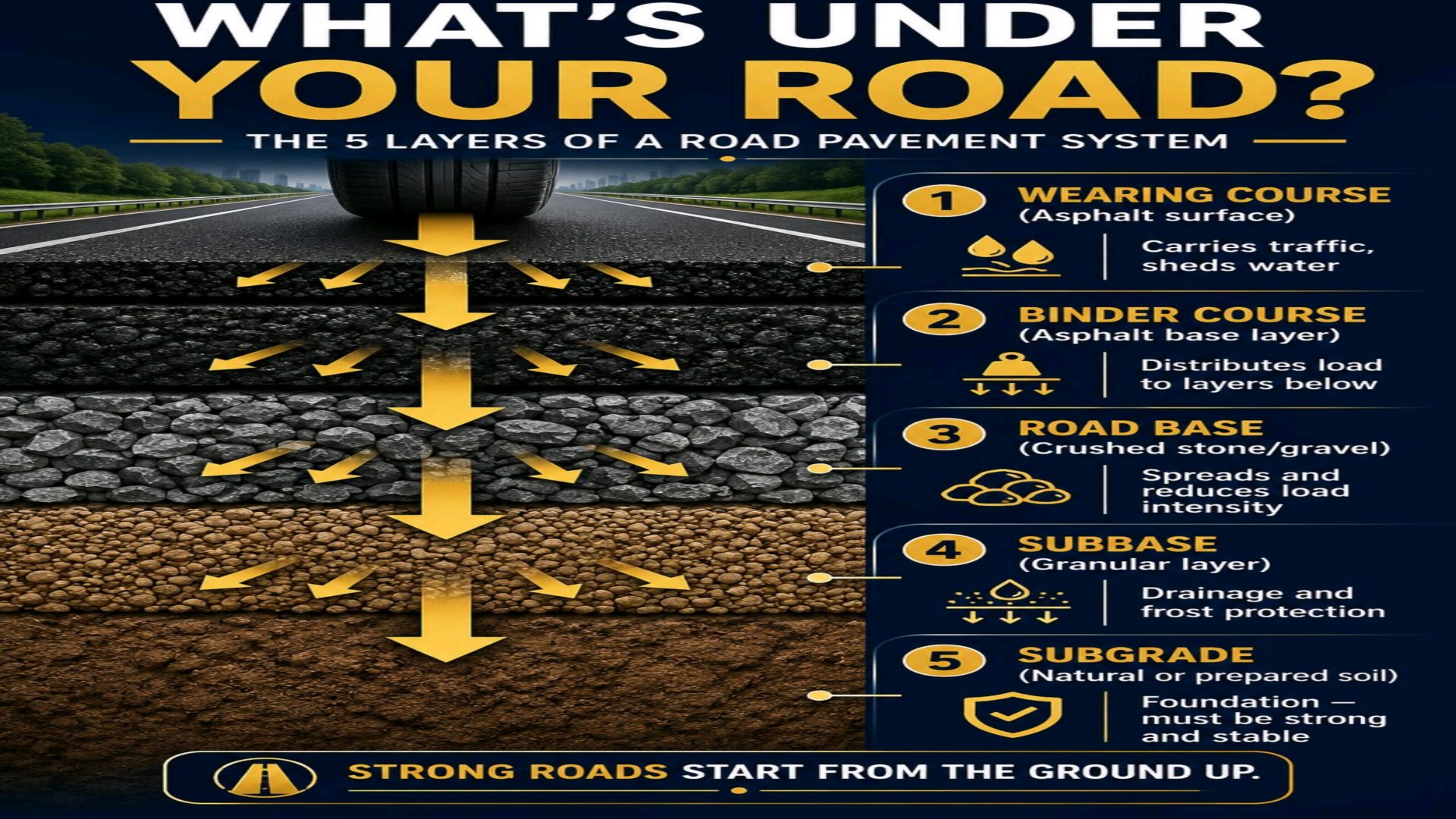
A standard flexible pavement consists of five distinct engineered layers. Each layer serves a specific structural purpose.
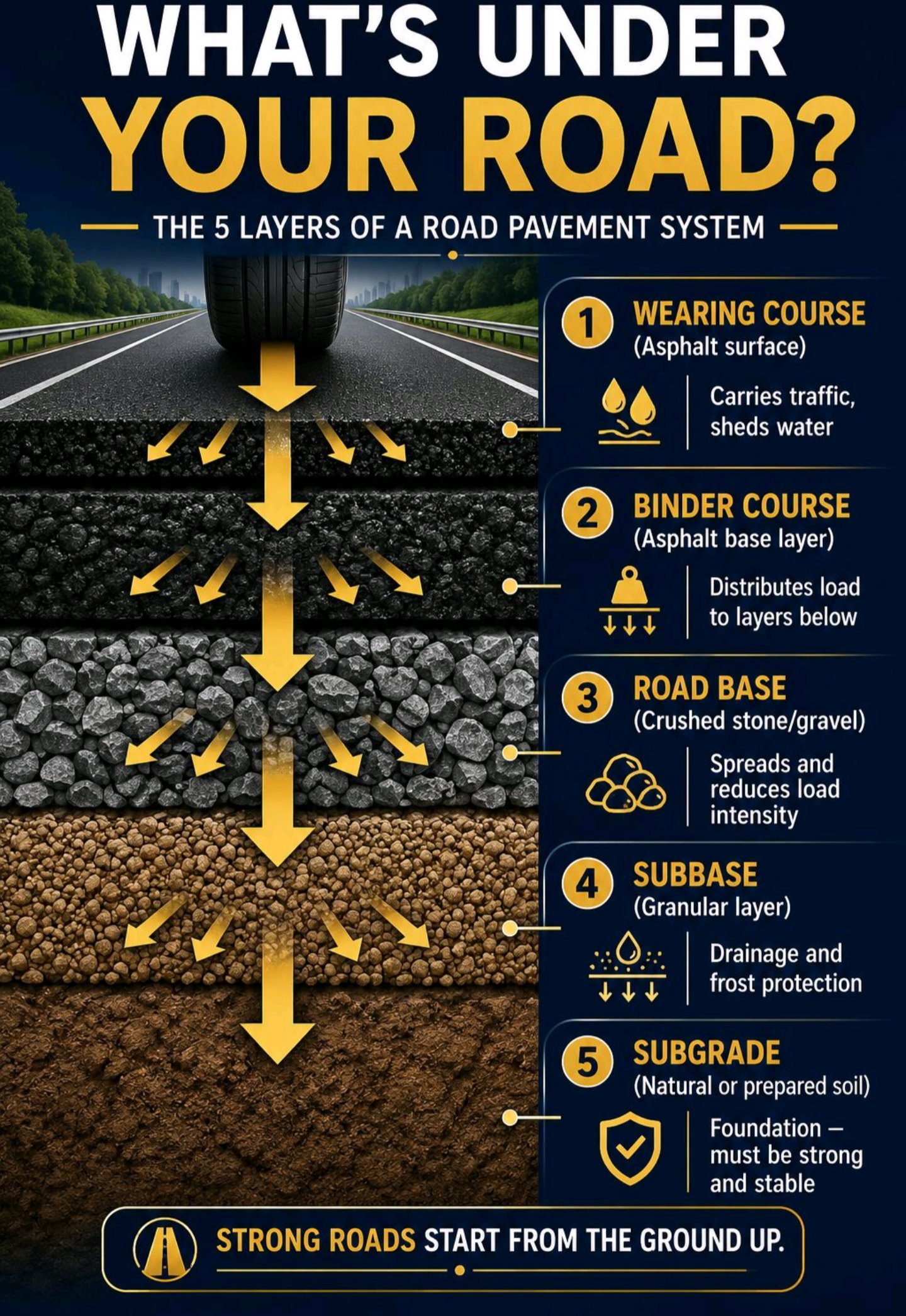
Without this subterranean framework, the asphalt surface would quickly fail under heavy vehicle axles. The topmost layer is the wearing course, which forms the actual asphalt surface that motorists interact with directly.
This layer must resist direct wear from vehicle tyres.
It also seals the road from water infiltration, which can destroy the lower structural foundations. Directly below the surface is the binder course, another specialized asphalt base layer.
The primary job of this second layer is to distribute the intense weight from the surface evenly to the deeper elements of the pavement structure.
Next comes the road base, which typically consists of tightly compacted crushed stone or gravel. This layer spreads the load over a wider area.
By spreading the weight, it significantly reduces the overall intensity of the load before it reaches the softer ground below. Beneath the road base sits the subbase, a granular layer that plays a vital dual role in the pavement lifespan.
It provides structural support, but it also acts as a critical path for sub-surface drainage. In colder regions, this granular subbase offers essential frost protection to prevent structural shifting.
The entire pavement system rests upon the subgrade. The subgrade is the natural or prepared soil foundation at the very bottom of the construction trench.
Engineers must ensure this natural foundation is incredibly strong and stable. If the subgrade is weak, the entire road above it will eventually collapse.
In Kenya, agencies like the Kenya National Highways Authority (KeNHA) enforce strict compaction standards for this foundation layer. The Kenya Urban Roads Authority (KURA) also follows these specific engineering principles during urban road expansions.
The five layers of a standard road pavement system are:
1. Wearing Course: The visible asphalt surface that carries traffic and sheds rainwater.
2. Binder Course: An asphalt base layer designed to distribute weight downwards.
3. Road Base: A crushed stone or gravel layer that reduces load intensity.
4. Subbase: A granular layer providing essential drainage and foundation support.
5. Subgrade: The natural soil foundation that must remain strong and completely stable.
Building these layers properly requires precise calculations. Contractors must test the soil conditions of the subgrade before laying any stone or asphalt.
Moisture levels in the granular layers must be carefully monitored during compaction. If a contractor rushes the subbase or road base compaction, the road will develop deep ruts within months.
Potholes often look like surface failures, but they usually start much deeper down. When water penetrates a cracked wearing course, it washes away the fine particles in the road base.
This creates a void beneath the asphalt. The next heavy truck that drives over the void breaks the unsupported asphalt surface.
This is why proper drainage design is just as important as the thickness of the asphalt itself. Modern pavement engineering ensures that highways can endure decades of heavy freight traffic.
Every time a heavy vehicle moves along a highway, the stress is transferred sequentially through all five layers. Strong roads literally start from the ground up.
Comments (0)
Leave a Comment
No comments yet. Be the first to share your thoughts!