
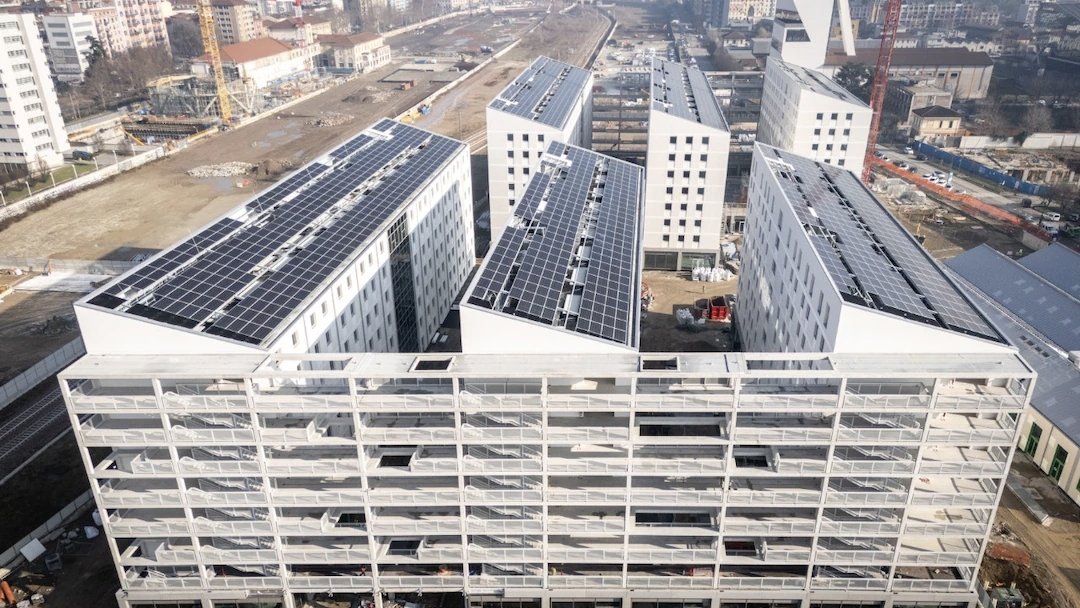

The closing ceremony of the Milano Cortina 2026 Winter Olympics barely had time to end before Milan's athletes' village began its next life.
Built on a former 19th century rail yard in the city's Porta Romana district, the complex hosted 1,300 athletes during the February Games. Within four months of the closing ceremony, the same buildings will open as Italy's largest publicly supported student housing development, offering 1,700 beds in time for the 2026/27 academic year. Bookings are already open.
The project was designed by Skidmore, Owings and Merrill (SOM) and developed by Italian real estate firm COIMA. Construction took 30 months and was completed in June 2025, one month ahead of schedule.
The site includes six new mass timber residential buildings and the restored shells of two historic railway structures, the former Squadra Rialzo locomotive workshop and the Basilico building, both converted into communal spaces. Forty thousand square metres of green space surround the complex.
Student rents will sit below Milan's market average. Of the 1,700 beds, 450 will be offered at subsidised rates averaging around €430 per month, roughly 25 percent below comparable accommodation in the city. The project meets approximately six percent of Milan's estimated student housing need.
The buildings were designed with the conversion in mind from the start. Ground floor spaces that served athletes during the Games are being reorganised into three zones for student use: a media and culture hub, a coworking and social space, and a fitness and wellness area. The Olympic Village Plaza becomes a permanent public square with retail, dining and weekly markets.
On sustainability, the project achieved Nearly Zero Energy Building (NZEB) standards and holds both Leadership in Energy and Environmental Design (LEED) Gold and WiredScore Platinum certifications. Heat pumps, a one megawatt photovoltaic system, stormwater reuse and electric vehicle charging are all built in. Mass timber construction and prefabricated facade panels reduced embodied carbon during the build.
The Porta Romana village is one of six athlete villages used during the Games. It is the only one designed as a permanent urban neighbourhood from the outset. The broader Scalo Romana masterplan will eventually deliver 320 additional affordable housing units and commercial spaces across the wider 19-hectare former rail yard.
Olympic host cities have a long and expensive history of venues sitting idle after the Games. Milan made a different decision early, and the building shows it.
Comments (0)
Leave a Comment
No comments yet. Be the first to share your thoughts!