

A version of this article appeared on the professional platform LinkedIn by construction firm Pro-Konstruct.
Prospective homebuilders in Kenya are being warned against deceptive social media posts, which claim houses can be built for unrealistically low budgets.
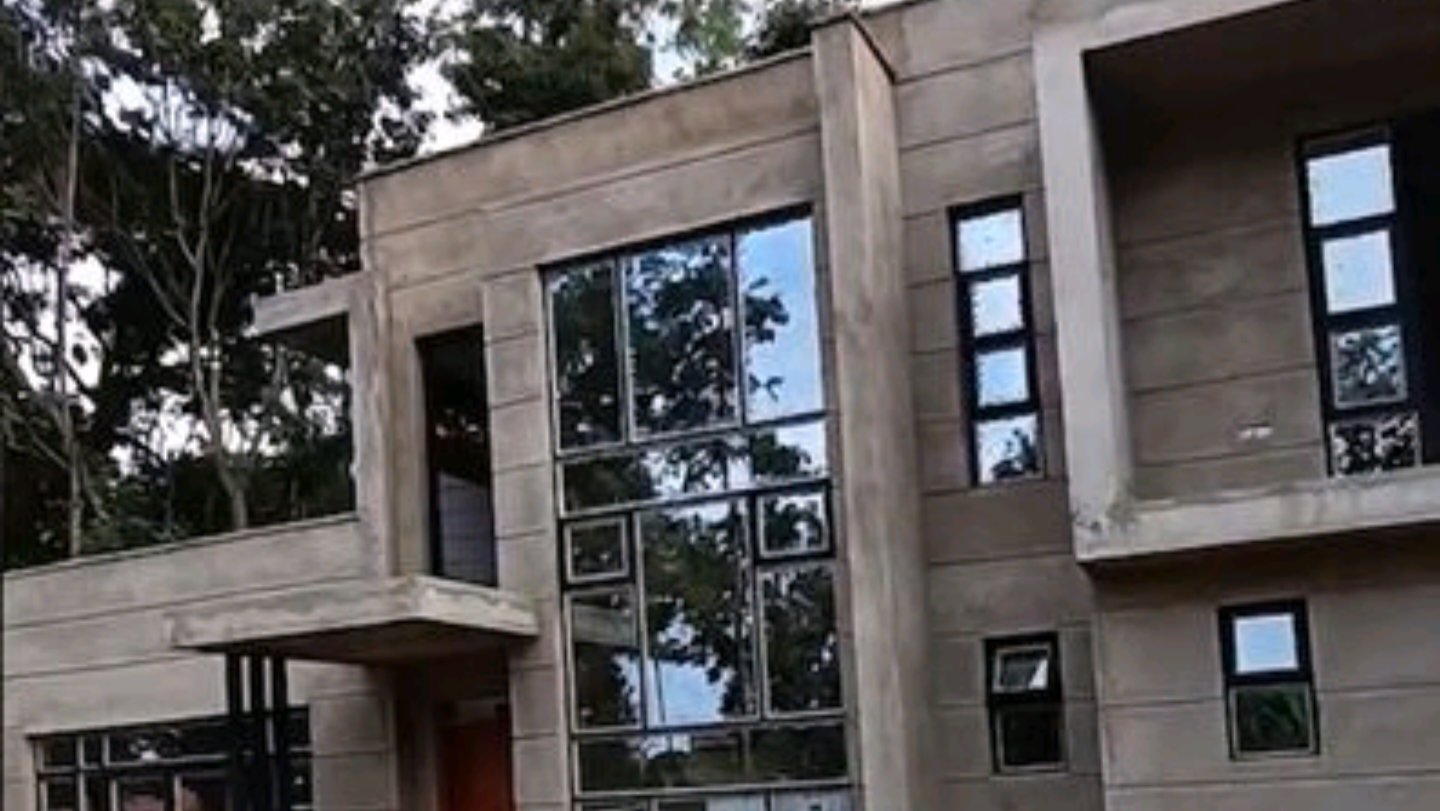
A recent viral video showcased a modern, two-story maisonette featuring large glass windows, with text claiming a total cost of KES 2.5 million.
As documented in the file 259801.png, the clip claimed this figure covered all necessary materials, and labor.
According to the post, the project utilized 1,200 feet of foundation stones, 72 tonnes of hardcore, and 2,200 machine-cut stones.
The uploader listed 72 tonnes of ballast, 72 tonnes of dust, 72 tonnes of plaster sand, alongside 250 bags of cement.
A closer inspection of the structure in the file 259802.png reveals an extensive concrete and plaster facade, but the internal status remains unclear.
However, experienced project managers warn that believing these figures is equivalent to gambling with your hard-earned money, if you expect similar results.
To counter these viral claims, industry experts broke down the numbers using standard Kenyan Shilling (KES) baseline market rites.
As shown in the mathematical breakdown within the file 259803.png, the total built-up area for a house of this profile is approximately 190 Square Metres (SQM).
Data from recent construction industry cost indexes shows that building a maisonette in Kenya ranges between KES 61,000, and KES 94,000 per SQM.
These rates vary extensively depending on the quality of the final finishes, but even basic finishes require a minimum investment of KES 61,000 per SQM.
Applying this basic baseline to a 190 SQM house means the realistic total stands at KES 11,590,000.
Even if a developer only completes the structural shell, which typically consumes 40 percent of the budget, the cost is KES 4,636,000.
This structural shell cost alone is nearly double the entire viral claim, which demonstrates the level of misinformation online.
Because of this discrepancy, anyone planning a build should verify claims, if they want to avoid severe budget overruns mid-project.
The advisory compiled in the file 259804.png outlines the exact checklist that prospective owners must consider before believing online budget claims.
Experienced evaluators recommend asking critical questions whenever an incredibly low price is quoted online, but many people ignore these steps.
To protect your capital, you must establish the exact building technology, and know the specific qualifications of the team doing the actual construction.
You must also evaluate the expected finishes, the type of roof, the total size, the site conditions, and the geographical location.
Construction is not guesswork, but what works for one site may fail completely on another.
Many viral videos serve purely as engagement bait, which is designed to accumulate views rather than offer accurate advisory services.
Instead of trusting unverified online metrics, Kenyans should hire registered, integrous professionals, who provide realistic estimates based on actual structural designs.
Certified experts assist developers by implementing smarter material selection, which ultimately saves money safely.
Relying on professional quantity surveyors ensures that material quantities match structural requirements, but amateur lists often omit crucial hidden expenses.
Omitting items like site clearance, hoarding, excavation machinery, and municipal approvals can create an illusion of affordability, which vanishes once work starts.
Ultimately, accurate financial forecasting remains the cornerstone of successful infrastructure development, whether building a small residential home, or executing large commercial projects.
Comments (0)
Leave a Comment
No comments yet. Be the first to share your thoughts!