
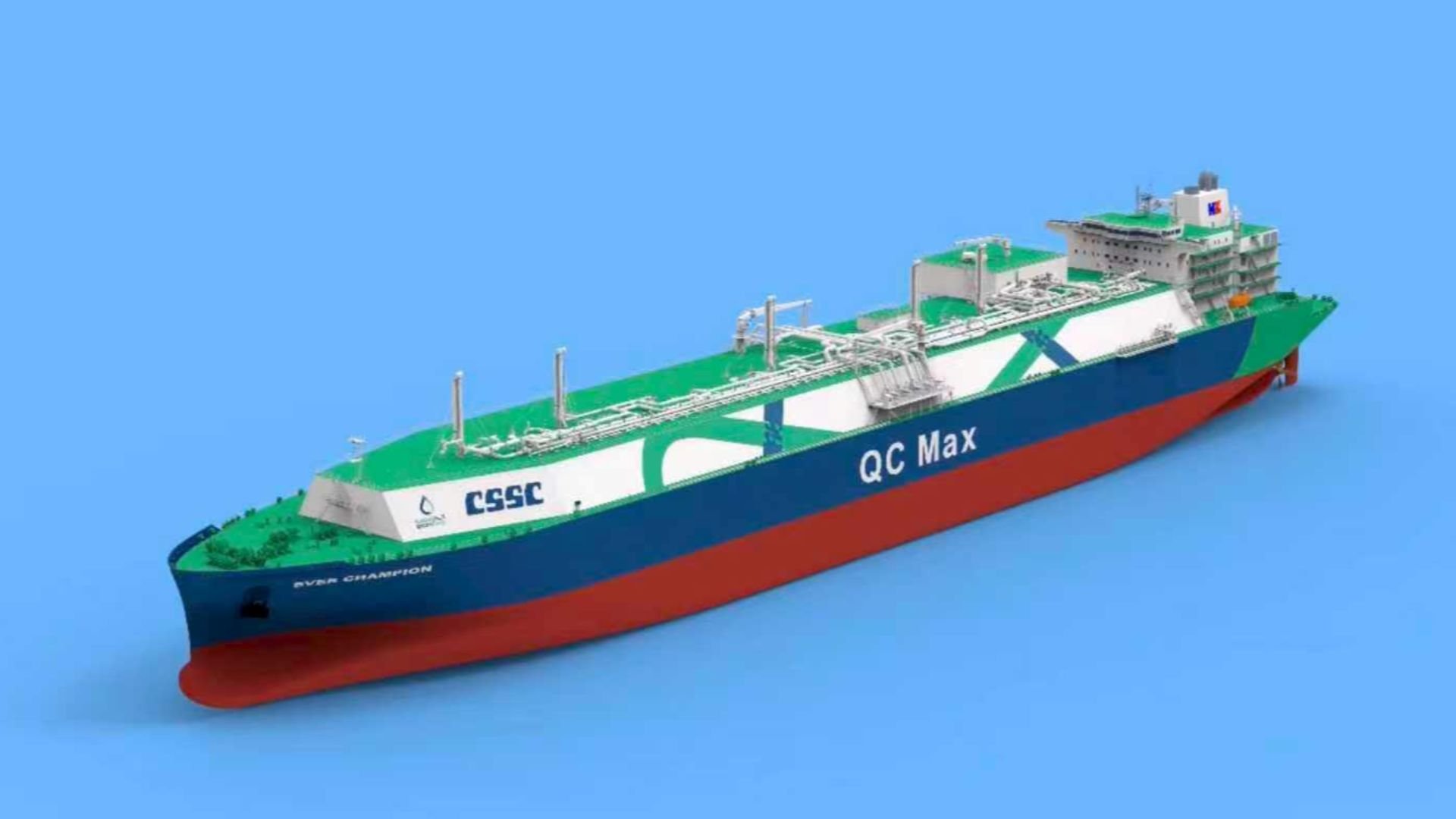

China State Shipbuilding Corporation (CSSC) has officially commenced construction on what is recognized as the world's largest liquefied natural gas (LNG) carrier.
The initial steel-cutting work for the premier vessel took place at the facility of Hudong-Zhonghua Shipbuilding, a major shipyard subsidiary based in Shanghai.
Known as the QC-Max class, the ultra-large vessel measures 1,129 feet in length, which translates to approximately 344 meters, with a beam width of 53.6 meters and a design draft of 12 meters.
This vessel is designed to hold a total cargo volume of 271,000 cubic meters of liquefied gas.
Compared to the conventional 174,000-cubic-meter ships that currently dominate international transport routes, the new design delivers a 57 percent increase in total cargo capacity.
A single voyage of this vessel can move 155 million cubic meters of natural gas, an amount capable of supplying millions of urban households for an entire month.
The manufacturing process represents a notable shift in the specialized maritime construction market.
Building these massive containment vessels is historically considered a complex engineering feat due to the specialized supply chains and high technology barriers involved.
The hull is integrated with an advanced dual-fuel propulsion engine and an optimized hydrodynamic line intended to minimize overall fuel consumption.
To manage cargo containment, the builders are utilizing the NO96 Super+ membrane system, which minimizes boil-off rates during long-distance open-ocean transit.
Engineers indicate that the configuration allows the vessel to fully meet Tier III environmental regulations established by the International Maritime Organization (IMO).
Despite its unprecedented size, the hull dimensions are engineered to ensure the ship can safely dock and unload at approximately 70 percent of existing major LNG terminals globally.
This current project is part of a broader, historic shipbuilding program valued at over 56 billion yuan, equivalent to roughly 8 billion dollars, to deliver 24 of these specialized mega carriers.
The shipyard currently maintains an extensive backlog of nearly 60 LNG transport orders, keeping its production slots fully committed through 2030.
Delivery of this initial flagship QC-Max vessel is scheduled to take place within the first half of 2028.
Comments (0)
Leave a Comment
No comments yet. Be the first to share your thoughts!