
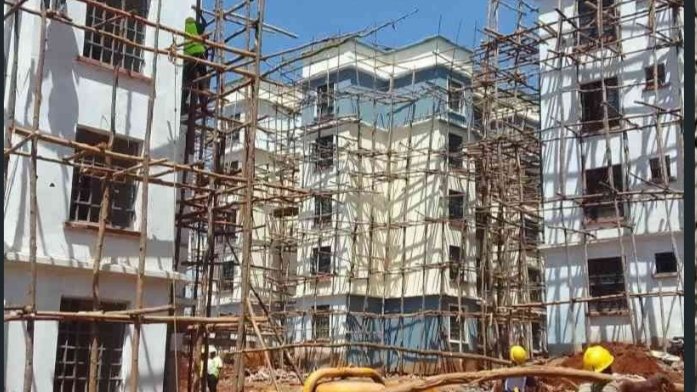

Court Halts Naivasha Affordable Housing Project Over Stadium Land Dispute
The Naivasha Affordable Housing Project, which was slated to deliver over 1,000 units under the national Affordable Housing Programme (AHP), has hit a significant legal bottleneck. The Environment and Lands Court in Naivasha, presided over by Justice Mary Oundo, recently issued conservatory orders suspending all site activity on the 27-acre parcel located off the Nairobi-Nakuru Highway. This site, historically known as the Naivasha Stadium land, was donated in 1996 by the Delamere family specifically for the development of a public sports complex.
The legal standoff began when petitioner Davis Kamau Njuguna challenged the government’s move to repurpose the land. The petition argues that converting a site gazetted for public recreation into residential housing constitutes an illegal appropriation of public land and a fundamental breach of public trust. For the construction industry, this case highlights a critical risk factor: Land Use Conflict. Njuguna’s petition specifically points to violations of zoning regulations, asserting that the social purpose of the land cannot be unilaterally altered without following strict legal frameworks.
Community pushback has been a central pillar of the dispute. Residents claim a total lack of public participation, a constitutional requirement that is increasingly becoming the "Achilles' heel" of major infrastructure projects in Kenya. Local leaders, including former Lakeview MCA Simon Wanyoike, noted that the community has a history of successfully defending this land from private encroachment. This track record suggests that the current suspension is not just a minor delay, but a determined effort to preserve communal "green spaces" and social infrastructure.
Justice Oundo’s orders have grounded all equipment, barring the Ministry of Lands, the National Land Commission (NLC), the State Department of Housing, and the Nakuru County Government from any further interference with the parcel. With the respondents given 14 days to file their formal replies, the site remains in a state of "construction limbo." This ruling serves as a stark reminder that even high-priority national projects are not immune to the scrutiny of the Environment and Lands Court.
For developers and contractors, this case is a textbook example of why due diligence must extend beyond title deeds to include historical donor intent and community alignment. From an industry perspective, such delays are costly; they disrupt supply chains, inflate labor costs, and affect the internal rate of return (IRR) for project financiers. While the AHP is a flagship initiative designed to bridge Kenya’s housing gap, this case proves that overlooking the "Social" in ESG (Environmental, Social, and Governance) criteria can lead to expensive litigation and project stagnation.
Beyond the brick-and-mortar implications, the dispute touches on the vital balance between urban density and public amenities. As towns like Naivasha grow, the demand for housing is high, but so is the need for social hubs like the Naivasha Stadium. Such facilities are essential for youth engagement and civic health. Replacing them with residential blocks, without providing a viable alternative, risks creating "concrete jungles" devoid of the very social fabric that makes a community livable.
As the court deliberates, the land remains a contested symbol of the deeper tension between rapid urban development and the safeguarding of public resources. The final verdict will likely establish a major precedent for how the government identifies, acquires, and repurposes land under the Affordable Housing Programme in the years ahead. This outcome could influence dozens of similar initiatives in fast-growing counties such as Kiambu, Kajiado, Machakos, and beyond, where historical land designations increasingly collide with modern housing ambitions.
For the mjengo community, developers, policymakers, and civil society, the lesson is unmistakable and urgent: sustainable development cannot succeed in isolation. It must be firmly anchored in legal clarity, unwavering respect for historical donor intent, proactive public participation, and authentic community buy-in from the earliest stages. By embedding these principles upfront through comprehensive stakeholder mapping, transparent zoning reviews, and inclusive consultations, future projects can avoid costly halts, preserve social cohesion, and deliver housing that truly serves both present needs and long-term communal well-being. In the end, Kenya’s housing revolution will only endure if it builds not just homes, but trust.
Comments (0)
Leave a Comment
No comments yet. Be the first to share your thoughts!