
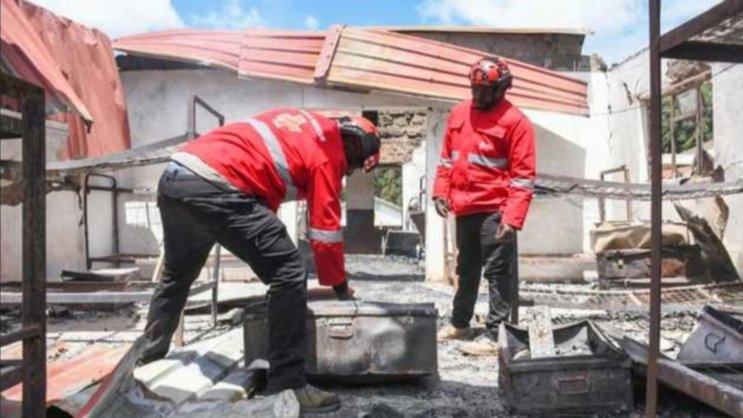

Student dormitories remain the focal point in Kenya's repeated school fire incidents. A new study examined 155 fires reported between January 2020 and June 2026.
Dormitories accounted for 78 percent of affected structures. Classrooms followed at 5.1 percent, with stores and administration blocks recording even lower shares.
The research by OdipoDev found that 95 percent of incidents took place in boarding schools. Over 99 percent of cases involved boarding institutions, 96 percent of them public.
Ninety percent of the fires were confirmed as arson. Investigators established deliberate ignition in the majority of cases.
Fifty-five percent of the fires broke out during the second academic term. This pattern repeated across years, with 2021 recording the highest number at 54 incidents.
Kisii, Meru and Nairobi counties reported the most fires. The analysis covered 275 schools across 38 counties in the period.
At least 42 students died and 294 sustained injuries in these incidents. Fatalities and serious harm concentrated in a few major events.
Auditor-General reports and other reviews highlighted widespread safety shortcomings. Many dormitories featured inward-opening doors and metal grilles on windows, contrary to guidelines.
Overcrowding compounded the risks. Double and triple-decker beds violated recommended spacing in several schools.
The study linked dormitory vulnerability to inadequate funding for safety measures. Ninety-seven percent of surveyed secondary schools cited insufficient resources to match enrolment growth.
Public boarding schools face particular pressure from the 100 percent transition policy. This increased student numbers without matching infrastructure upgrades.
Experts pointed to lax enforcement of safety standards. Inspections often failed to address known hazards in sleeping quarters.
Recent incidents, including fires in Nakuru and other counties, renewed focus on building design and maintenance. Dormitories with highly flammable contents such as mattresses and blankets proved especially dangerous at night.
The findings align with calls for better compliance in school construction and retrofitting. Proper exits, ventilation and fire-resistant materials could limit damage when fires start.
Authorities continue to face questions about implementation of past directives on school safety. Progress on converting some boarding facilities or improving existing ones has remained uneven.
This data offers a clear picture of where vulnerabilities lie. Dormitory conditions stand out as a repeated factor in the pattern of destruction.
Comments (0)
Leave a Comment
No comments yet. Be the first to share your thoughts!