
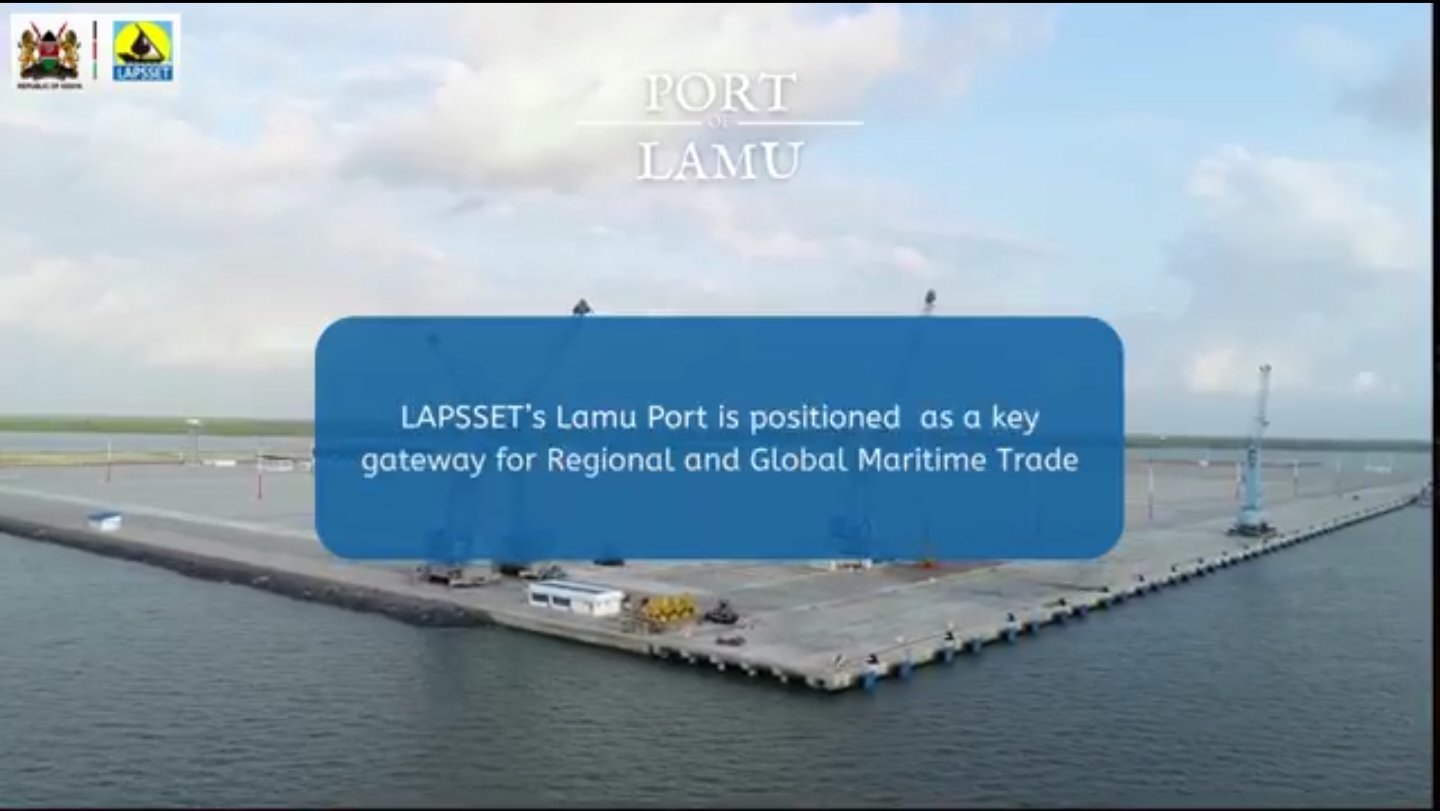

The Government of Kenya (GoK) leveraged a natural maritime advantage to build Lamu Port, utilizing a deep-water channel that significantly altered the financial landscape of the infrastructure asset.
Data from the Lamu Port-South Sudan-Ethiopia Transport (LAPSSET) Corridor Development Authority indicates that the main channel possesses a natural depth of 17 metres.
This seabed characteristic allowed engineers to implement a minimal initial dredging program, deepening the waterway by only 0.5 metres to achieve a draft of 17.5 metres.
By limiting early dredging requirements, the state capitalised on substantial cost savings, which made it feasible for public coffers to bear the initial development expenditure without external commercial debt.
Financing the first three berths entirely from public revenue effectively derisked the broader transport corridor project, attracting international shipping lines to the Manda Bay facility.
Engineering assessments show that the natural shelter of Manda Bay offers depths of up to 60 metres within certain inner sections, protecting the port from heavy open-ocean siltation.
Low siltation levels mean that the facility does not require the construction of expensive breakwaters, or regular maintenance dredging to clear sediment traps.
According to project documentation, the long-term design parameters for the shipping channel dictate that the harbour will be dredged to 21.5 metres below chart datum during future expansion phases.
The planned depth of 21.5 metres is expected to eliminate regional competition, as few ports along the eastern African coastline can accommodate ultra-large container vessels without massive capital works.
The Kenya Ports Authority (KPA) currently oversees operations at the facility, which has recently handled large vessels including the 369-metre container ship MV Baltimore Express.
That vessel possesses a structural draught of 16.5 metres, meaning it requires the deep-water access provided by the current 17.5-metre channel configuration to dock safely.
Initial construction of the first three berths involved a 478.9 million dollar contract executed by China Communications Construction Company (CCCC), establishing a footprint for a planned 32-berth layout.
While the state funded the opening phase to anchor the corridor, subsequent berths are structured for concessioning to private sector investors under a public-private partnership framework.
National planning agencies integrated the coastal infrastructure hub into the Kenya Vision 2030 strategy, aiming to establish an alternative trade gateway to the landlocked countries in East Africa.
The logistical network connects Lamu with inland towns, creating a path towards Ethiopia and South Sudan, although the realization of the full regional rail and pipeline infrastructure remains ongoing.
Maritime experts note that modern global shipping trends favor ultra-large container ships, which lower unit transport costs for international trade lines but require deeper berthing facilities.
Ports requiring constant mechanical dredging face high operational overheads, giving the natural depth at Manda Bay a clear competitive position in the Western Indian Ocean maritime market.
Though recent groundings of large vessels raised brief operational questions, KPA maintained that the harbor characteristics compare favorably with advanced global transshipment hubs like Singapore and Rotterdam.
The authority continues to procure modern container-handling apparatus, including new cranes and terminal tractors, to match the physical depth advantages with efficient quayside cargo clearance rates.
Future terminals at the site are slated to include specialized liquid-bulk and agri-bulk facilities, adjusting to projected regional energy and agricultural demands through the next two decades.
By maintaining full public ownership of the initial three berths, the state retains the flexibility to negotiate favorable long-term terms with global port operators for the remaining footprints.
Comments (0)
Leave a Comment
No comments yet. Be the first to share your thoughts!