
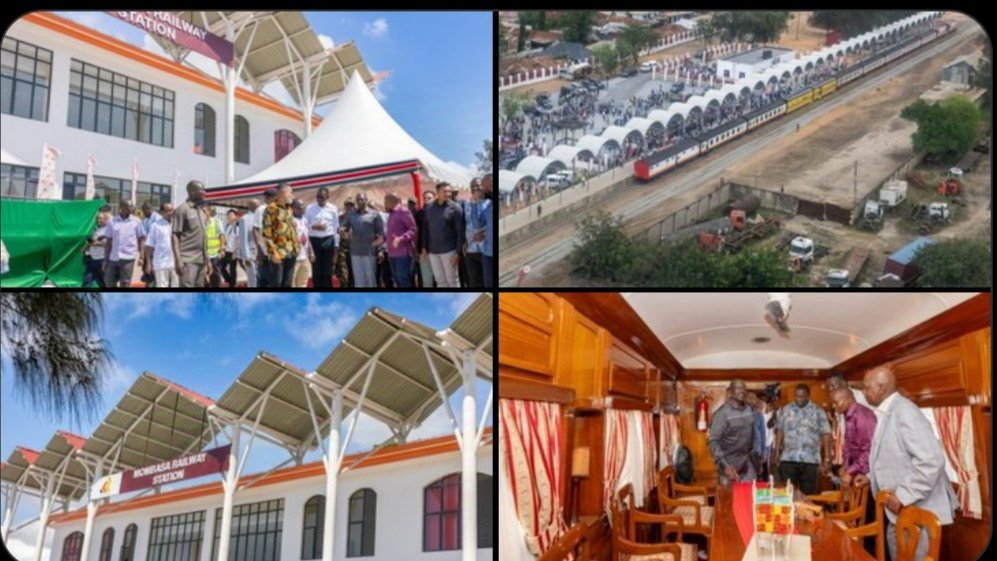

The landscape of urban transport in Mombasa is set for a dramatic shift. Following President William Ruto's official commissioning of the new Mombasa Commuter Rail Service, the city is embracing a modern, affordable, and efficient mode of transport. This development promises to transform daily commutes and disrupt long-standing sectors.
President Ruto’s announcement highlighted the core purpose of the project: to “transform transport by linking the city centre with the SGR terminus at Miritin thus easing congestion and offering Kenyans a faster, safer, and more reliable transport system.” His words capture the essence of what this new service is designed to achieve and that is a redefinition of how Mombasa moves.
At the heart of this shift is the fare. The 16.6-kilometer line, which includes rehabilitation of a metre-gauge track and a new link to the SGR terminus, will ferry passengers from Miritini to the Central Business District for just Ksh 50. For years, this “last-mile” journey from the SGR station into the city was dominated by taxis and ride-hailing services, with passengers often paying Ksh 300 or more for the short trip. The new train presents a formidable challenge to that model. With a fare six times cheaper, commuters now have a clear and compelling alternative. For the public, this is a win. For taxi and ride-hailing businesses, it demands a rethink of their strategies and pricing.
The ripple effects extend to matatus as well. Mombasa’s public transport system has long relied heavily on them, but traffic congestion and unpredictable travel times have made daily commuting a frustrating experience. The commuter rail, capable of carrying up to 5,000 passengers a day, offers a scheduled and reliable alternative. This will likely reduce the number of vehicles on key roads and ease congestion, but it could also cut into the revenues of matatu operators working the same routes. For a city battling gridlock, however, the benefits to commuters outweigh the drawbacks.
Despite its promise, the project was not without challenges. Launched in 2022, it faced delays caused by land acquisition issues. Its eventual completion, however, signals determination to modernize Kenya’s rail network. The success of this project will now hinge on consistent reliability, regular maintenance, and effective integration with other forms of transport. Public awareness campaigns will also be crucial in ensuring that residents fully embrace the service.
For the communities along its route that is Miritini, Changamwe West, Changamwe East, Shimanzi, and Mazeras, the new line is more than just a transport solution. It opens doors to new economic opportunities. Businesses near stations are likely to see increased foot traffic, and property values in surrounding areas may rise. Tourists and business travelers arriving via the SGR will also find their journeys into the city easier, boosting Mombasa’s competitiveness as a destination.
This development stands as a symbol of progress. It shows how well-planned infrastructure projects can solve long-standing problems, fuel economic growth, and change the daily realities of thousands of people. The Mombasa Commuter Rail Service is about redefining the possibilities of urban transport, easing the burden on strained systems, and laying down tracks for a future where movement is faster, fairer, and more connected. Mjengo Hub will be on the ground for updates on its efficiency.
Comments (1)
Leave a Comment
Joshua
Sep 24