
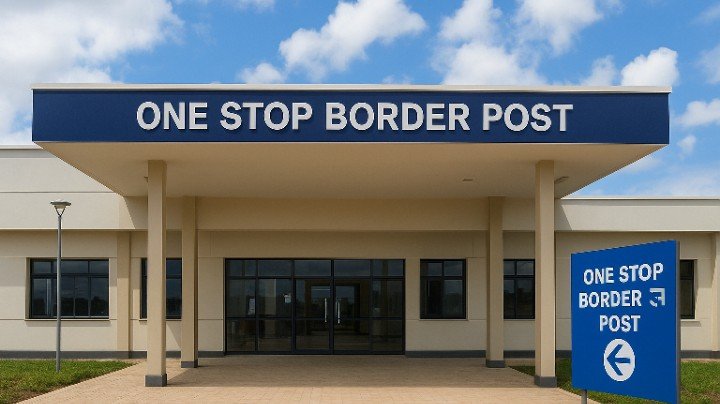

East Africa’s push to streamline regional trade has taken a major leap forward through the rollout of One-Stop Border Posts (OSBPs). These are modern facilities where two neighboring countries share immigration, customs and security operations under one roof.
Designed to replace the old system of duplicated checks on both sides of the border, OSBPs have become one of the region’s most effective tools for reducing delays, improving efficiency, and strengthening cross-border cooperation.
An OSBP allows travelers and cargo transporters to stop only once instead of undergoing separate clearance procedures in each country. Officers from both states work side by side using harmonized systems, shared data and synchronized procedures.
This model has transformed major border crossings such as Busia and Malaba (Kenya-Uganda), Namanga (Kenya-Tanzania), Rusumo (Tanzania-Rwanda), and Mirama Hills/Kagitumba (Uganda-Rwanda) into faster and more predictable gateways for commerce.
Clearance times at some border points have dropped from days to hours, transport costs have fallen, and the reliability of regional supply chains has improved.
For example, at Busia and Malaba borders, which handle the majority of cargo moving between Kenya and Uganda, the introduction of OSBPs helped decongest the Northern Corridor, allowing exporters and importers to move goods more efficiently to and from the port of Mombasa.
Beyond trade, OSBPs have enhanced security through real-time information sharing and reduced opportunities for corruption and smuggling. They also support the East African Community’s vision of deeper regional integration by simplifying the movement of people, promoting tourism, and encouraging cross-border investment.
As the EAC continues to harmonize policies and expand its infrastructure network, OSBPs stand out as a practical success story that smarter coordination and shared systems can unlock massive economic benefits for the region. More OSBPs are planned across the community, creating a seamless economic space stretching from the Indian Ocean to the Great Lakes.
Comments (0)
Leave a Comment
No comments yet. Be the first to share your thoughts!