
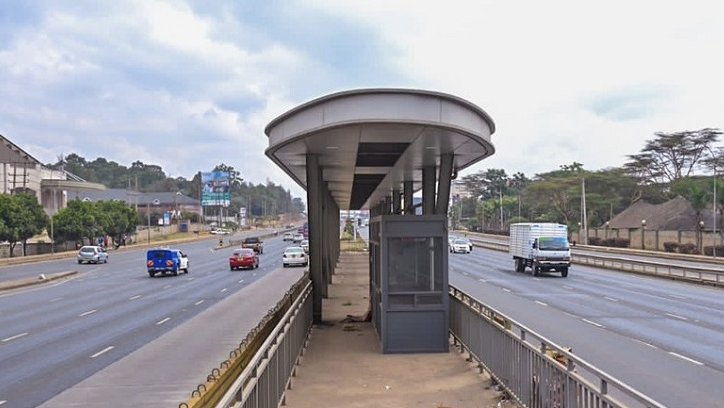

KeNHA has announced renewed progress on Bus Rapid Transit (BRT) Line 2, the Thika Superhighway corridor that has been stuck in various stages of planning and partial construction since 2019.
The announcement followed a joint inspection on June 26, 2026, by KeNHA Acting Director General Luka Kimeli and officials from the Nairobi Metropolitan Area Transport Authority (NaMATA). Electric buses are proposed for the 27.4-kilometre route, which will run from Ruiru in Kiambu County through Nairobi's Central Business District to Kenyatta National Hospital.
Infrastructure along the corridor will include segregated dedicated lanes, elevated boarding stations, and integrated park-and-ride facilities. A depot is planned at Ruiru, with a terminal at Kenyatta National Hospital.
Line 2, known as Simba, is one of five BRT corridors gazetted for the Nairobi Metropolitan Area. Previous attempts at its implementation included the painting of red lanes on Thika Road that were later abandoned, leaving public confidence in the project severely dented.
Nairobi's BRT programme has faced chronic underfunding, overlapping jurisdictional responsibilities between KeNHA and NaMATA, legal challenges, and repeated delays. Traffic congestion currently costs the Nairobi economy an estimated Ksh100 billion annually in lost productivity.
Line 5, running along Outer Ring Road from Allsops to Taj Mall, is currently the most advanced of the five lines, with a contract signed in March 2026 with Korean contractor YOUNGJIN Joint Venture, funded through a Ksh7.6 billion loan from the Export-Import Bank of Korea.
Line 3, known as Chui, is being developed under a EUR347.6 million agreement with the European Commission, with plans for a 12.4-kilometre electric bus corridor from Dandora to Kenyatta National Hospital.
Comments (0)
Leave a Comment
No comments yet. Be the first to share your thoughts!