
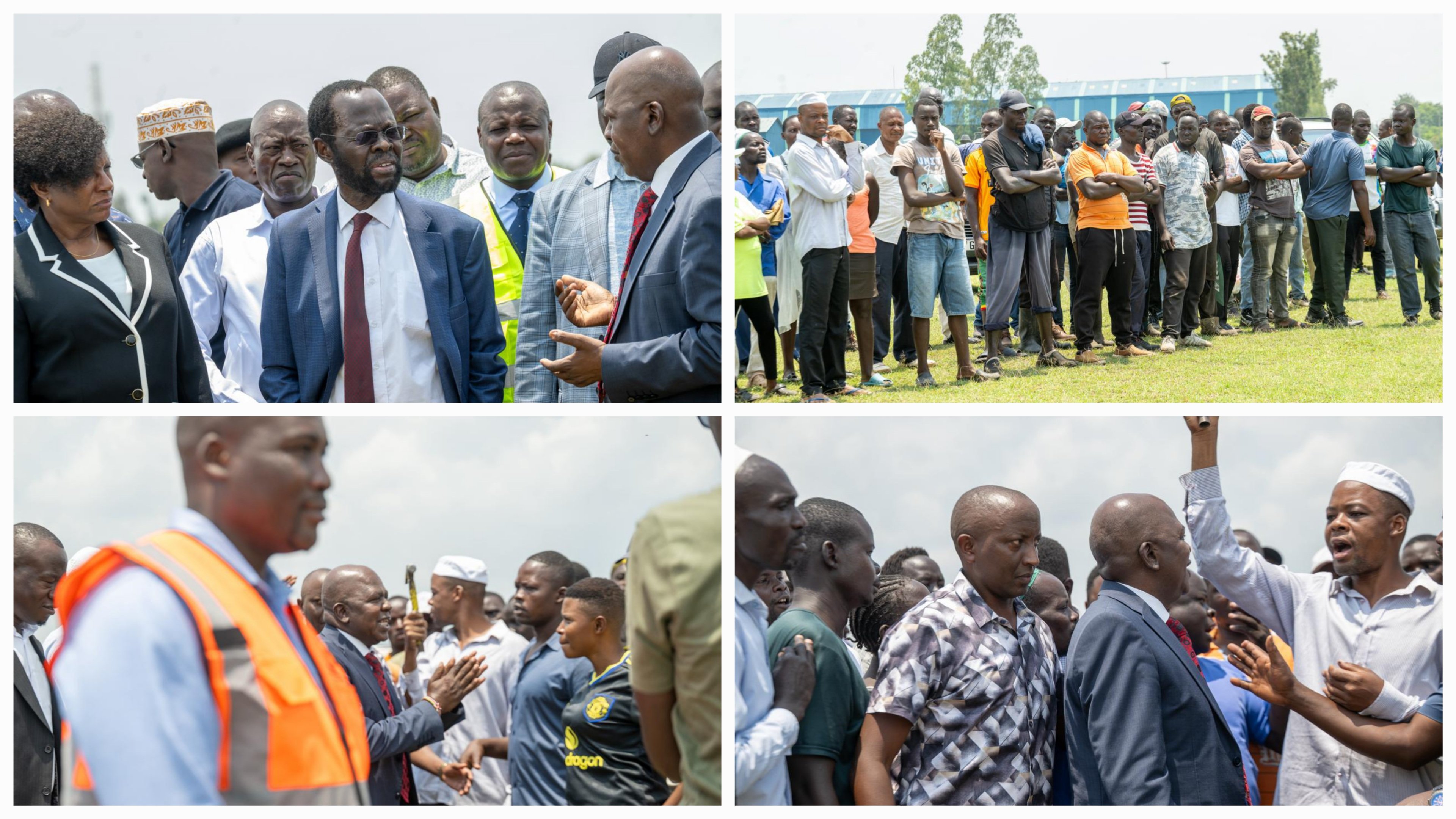

Officials from Kenya Railways and the Kisumu County government have conducted a joint site inspection at the proposed Standard Gauge Railway (SGR) terminus in the Kibos area. The delegation, led by Kisumu Governor Anyang’ Nyong’o and technical experts, visited the site on Tuesday to evaluate the grounds for the upcoming Phase 2B infrastructure.
The visit follows a series of consultative meetings aimed at aligning the technical requirements of the railway with local land and logistical needs. Stakeholders spent the day assessing the physical location to gain direct insight into the planned scope of the terminus, which is intended to serve as a major logistical anchor for Western Kenya.
The proposed SGR Phase 2B project is expected to cover approximately 264 kilometers, providing a rail link between the existing terminal in Naivasha and the lakeside city of Kisumu. This section is designed to integrate the region into the national transport grid and eventually facilitate a smoother connection to the regional SGR network.
Engineers and surveyors at the site confirmed that the project will involve substantial civil works across the 264-kilometer corridor. The design includes the construction of 79 railway bridges with a total length of roughly 43 kilometers, alongside eight tunnels spanning more than 14 kilometers. Additionally, the route will require 376 culverts to manage drainage and terrain challenges.
The initial phase of the extension is planned to feature 26 stations. These will be categorized into one major station, six intermediate stations, and 18 crossing stations. There is also a provision for a dedicated freight port facility to handle heavy cargo, which is a core component of the project's strategy to lower the cost of doing business in the Lake Region.
A significant technical aspect of the Kisumu segment is the inclusion of an 8.68-kilometer branch line. This spur will link the main railway line directly to the Kisumu Port, creating a multimodal transport system that connects rail freight with Lake Victoria's water transport routes.
During the visit, Governor Nyong’o noted that the project is expected to act as a catalyst for investment in industrial parks and warehousing. He emphasized the importance of the rail link in strengthening agricultural value chains and supporting the local fisheries and manufacturing sectors by providing more efficient access to national markets.
Technical teams from the National Land Commission and Kenya Railways have also been engaged in mapping the project boundaries. This exercise involves the use of Global Navigation Satellite System technology to identify land parcels and ensure precise measurements for the gazettement of the railway corridor.
Local leaders used the site visit to discuss the project's impact on the community, including the relocation of affected residents and the involvement of local labor during the construction phase. Kenya Railways indicated that further grassroots consultations will be conducted as the project moves toward its next implementation stages.
Groundbreaking for the extension is anticipated to take place in March, with the government aiming for a completion date by mid-2027. Once operational, the SGR Phase 2B line will have the capacity to handle freight loads of up to 4,000 tonnes per train.
Comments (0)
Leave a Comment
No comments yet. Be the first to share your thoughts!