
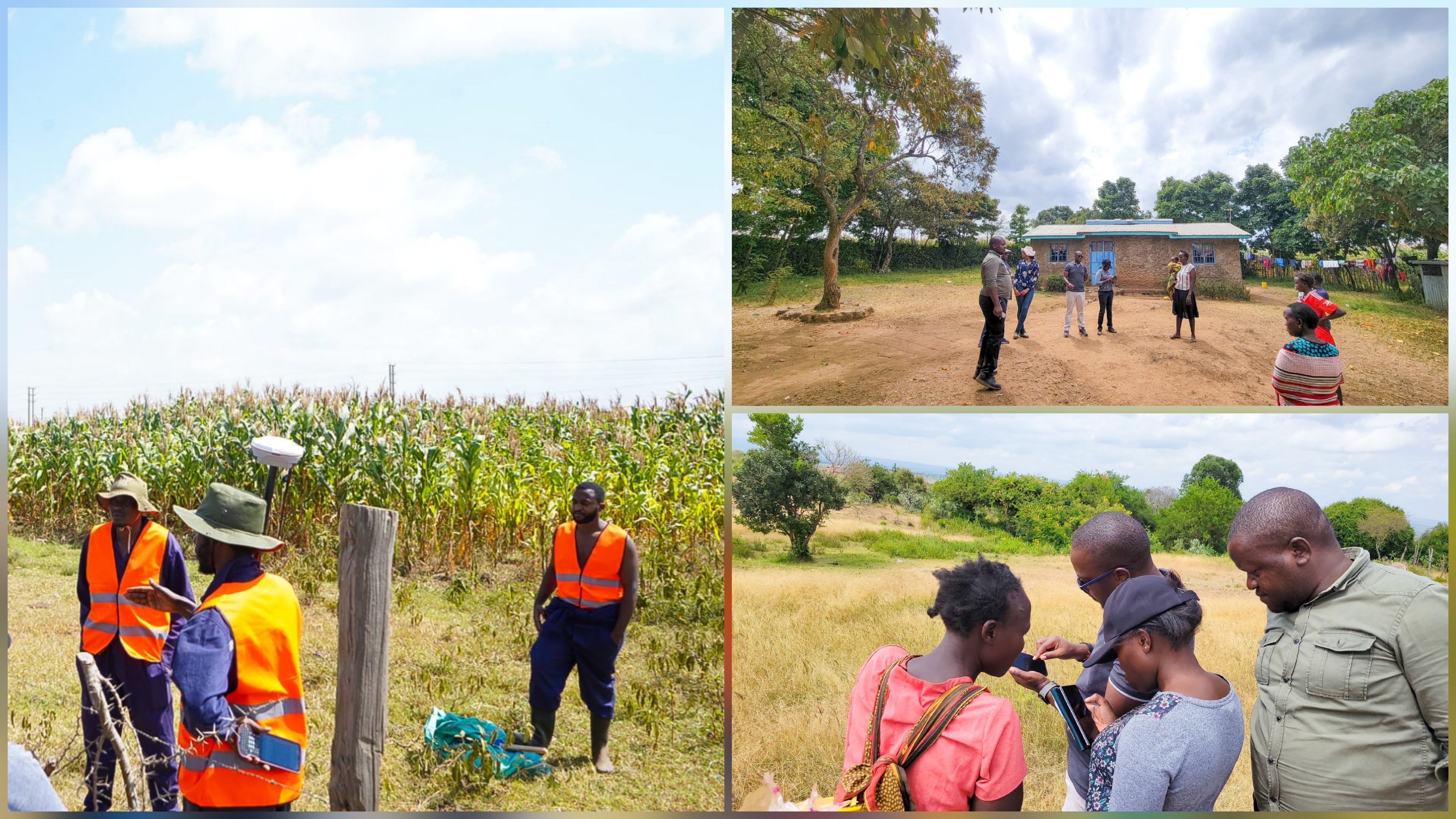

Officials from the Kenya Railways Corporation (KRC) have commenced field sensitization exercises for landowners along the route of the proposed Naivasha-Kisumu-Malaba rail link.
The state corporation confirmed that its staff visited Narok County to engage individuals classified as Project Affected Persons (PAPs), who face displacement or land acquisition due to the upcoming infrastructure development.
According to updates shared by the agency, the field engagement focused on delivering clear technical details regarding the alignment of the Standard Gauge Railway (SGR).
The interactive sessions provided a direct platform for community members to air their grievances, clarify ownership queries, and understand the statutory mechanisms governing public land acquisition.
The sensitization drive follows the historic ceremony where President William Ruto officially broke ground for the 475-kilometre extension project at the Narok Teachers Training College Grounds.
The government intends to execute the multi-billion-shilling transport project in distinct phases. Phase 2B covers the section from Naivasha to Kisumu, while Phase 2C extends further to the Malaba border post.
The National Land Commission (NLC) is collaborating with railway engineers to execute precise boundary mapping using advanced satellite tracking systems.
This boundary definition is critical for establishing the exact acreage required for the rail corridor, which traverses multiple agricultural and transit zones.
The technical design of the corridor requires vast tracts of land to accommodate six intermediate train stations. These include setups at Narok, Mulot, Bomet, Sotik, Sondu, and Ahero.
To maintain acceptable engineering gradients for heavy freight transit, teams have scheduled the construction of numerous bridges and tunnels across the western transit network.
Managing land acquisition remains a sensitive administrative phase for the infrastructure project, which experienced a multi-year pause before work resumed under new financing models.
Ensuring that landowners receive timely, transparent evaluations is viewed by local administrators as essential to keeping the final June 2027 completion target achievable.
During the Narok community meetings, property owners raised questions regarding valuation parameters, compensation schedules, and the specific timelines for physical relocation.
Railway personnel documented these concerns, explaining the legal processes that dictate how public projects acquire private properties under Kenyan land laws.
The state corporation has emphasized that continuous stakeholder engagement remains its primary strategy for mitigating localized disputes, which frequently delay large engineering contracts.
Officials intend to replicate these grassroots sensitization meetings across Bomet, Kericho, Nyamira, and Kisumu counties, as the mapping teams advance westward.
The entire extension aims to establish a reliable, high-capacity freight and passenger corridor, which connects the Port of Mombasa directly to landlocked regional neighbors.
By shifting bulk transport from regional highways to heavy rail networks, transport authorities anticipate reductions in long-term road maintenance costs and fewer traffic accidents.
Each passenger train operating along the modern line is designed to carry up to 1,096 passengers at operational speeds reaching 120 kilometres per hour.
Freight services will handle up to 4,000 tonnes per haul, moving bulk cargo at speeds of 80 kilometres per hour to maximize safety and transit efficiency.
The integration of an 8.69-kilometre branch line leading directly to the proposed Kisumu Port is expected to facilitate seamless multimodal cargo shipping across Lake Victoria.
This link will allow goods from the Indian Ocean to reach regional markets in Uganda, Rwanda, and the Democratic Republic of Congo without relying on congested highway transport.
Local administrators in Narok County have pledged to support the land acquisition process, provided that the compensation framework respects the rights of the host communities.
Further ground verification exercises are scheduled to take place over the coming weeks to finalize the formal boundary gazettement.
Comments (0)
Leave a Comment
No comments yet. Be the first to share your thoughts!