

Kenya has been ranked the third most open road freight market among the eight East African Community partner states, trailing Rwanda and Burundi in a new assessment by the World Bank and World Trade Organization.
The ranking is based on the Services Trade Restrictions Index, which measures regulatory barriers affecting road freight services and the ability of transport operators to access markets.
Kenya scored 30.4 points out of 100, compared with 21 for Rwanda and 28 for Burundi. The Democratic Republic of Congo scored 42.3, followed by Somalia at 42.9 and South Sudan at 46.9.
Uganda scored 48.7 while Tanzania recorded 49.6. On the index, zero represents a completely open transport market, while 100 represents a completely closed market.
The assessment highlights how regulations can affect the movement of freight across borders, with transport operators potentially facing restrictions on cabotage, limits on how long vehicles can remain in transit countries and, in some cases, prohibitions on providing certain services.
The World Bank and WTO note that these restrictions can vary significantly between countries, even where neighbouring states belong to the same regional economic bloc and depend on the same transport corridors.
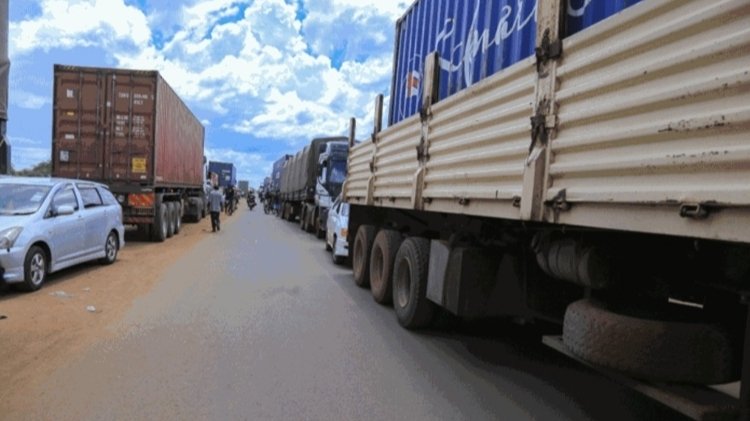
Kenya's relatively strong position therefore does not mean that freight movement through the country is free of obstacles. The Northern Corridor, linking the Port of Mombasa with landlocked EAC markets, continues to face several non-tariff barriers.
These include multiple checkpoints, bureaucratic delays, regulatory inconsistencies and transport inefficiencies that can increase the time and cost of moving cargo between Mombasa and inland destinations.
Other challenges include highway crime and cargo theft, poor road conditions on some sections and differences in working hours at border posts such as Malaba and Busia.
Delays in returning empty containers and inconsistent implementation of the Electronic Cargo Tracking System have also affected the efficiency of cargo transit.
The concerns are particularly significant because the Northern Corridor serves countries that depend heavily on the Port of Mombasa to access international markets. Delays along the route can therefore have consequences far beyond Kenya's borders.
Kenya's State Department for East African Community Affairs now plans reforms aimed at restoring the efficiency and competitiveness of the corridor.
One of the proposed measures is to reduce police roadblocks from more than 20 to fewer than five. The government also wants to halve transit time between Mombasa and Malaba.
The reforms will involve agencies including the Kenya Revenue Authority, Kenya Ports Authority and National Police Service, with the focus extending to enforcement discipline, ICT system reliability and faster responses to security incidents.
The objective is to make the corridor more competitive while reducing the costs associated with moving goods from the coast to Kenya and other EAC markets.
The wider assessment also demonstrates why road freight openness matters for regional trade. A single restrictive section along a major corridor can affect the efficiency of the entire route, even when other countries along that corridor maintain more open systems.
For Kenya, improving the Northern Corridor is therefore not simply about increasing road capacity. It also involves reducing regulatory friction and ensuring that existing infrastructure can support predictable movement of freight.
The country's third-place ranking gives it a relatively favourable position within the EAC, but the remaining gap with Rwanda and Burundi shows there is still room to make road freight services more accessible and efficient.
Source: Business Daily Africa, reporting on the World Bank and World Trade Organization Services Trade Restrictions Index.
Comments (0)
Leave a Comment
No comments yet. Be the first to share your thoughts!