
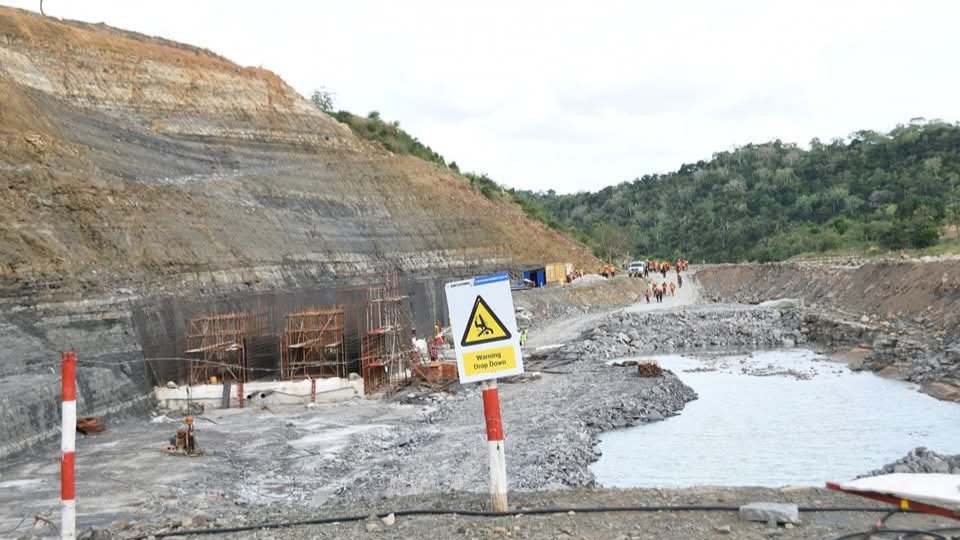

Kenya is fast-tracking the construction of several major dams across the country to strengthen water security, expand irrigation, and boost renewable energy generation. These projects are part of the government’s long-term plan to ensure sustainable access to clean water, enhance food production, and power communities through clean energy.
Across the nation, dam construction has become a sign of progress and resilience in the face of drought and rapid population growth. With more than 17 million Kenyans still lacking reliable access to safe water, the government, working with development partners, has made the construction of multipurpose dams a key pillar of its Vision 2030 development agenda.
One of the most significant projects is the Thwake Dam, located along the border of Kitui and Makueni counties. The Sh82 billion project, co-funded by the Government of Kenya and the African Development Bank, will store up to 688 million cubic meters of water, making it one of the largest dams in East Africa. Thwake is designed to supply clean water to Konza Technopolis, Nairobi, and surrounding towns. It will also generate hydropower and support irrigation, turning semi-arid areas into productive farmland and opening up new economic opportunities for local residents.
Nearby, the Ithookwe Dam in Kitui County is steadily taking shape. Though smaller, it is equally important to the region. The dam will provide reliable water for Kitui Town and nearby communities while supporting small-scale farming and irrigation. Together, Thwake and Ithookwe are transforming the face of Ukambani, bringing lasting solutions to a region that has long struggled with water scarcity.
At the Coast, the Mwache Dam in Kwale County is progressing well with funding from the World Bank and the Kenya National Treasury. Once completed, the 118-million-cubic-meter reservoir will finally address Mombasa’s long-standing water shortages. It will also supply irrigation water for farmers in Kwale, help control flooding, and create hundreds of jobs during and after construction. Mwache is expected to have a major social and economic impact on the coastal region.
In Kiambu County, the Karimenu II and Ruiru II dams are nearing completion. These projects will deliver millions of liters of treated water daily to Nairobi, Ruiru, and Juja. They are supported by the Northern Collector Tunnel, which channels water from the Aberdare ranges into Ndakaini Dam to stabilize the capital’s water supply during dry seasons. Together, these projects ensure that water and energy infrastructure keep up with the rapid growth of Nairobi and its surrounding towns.
In the Rift Valley, the Itare Dam in Nakuru County, which had previously stalled due to financial and contractual challenges, is being revived. Once completed, it will serve Nakuru City and surrounding areas, reducing water shortages and supporting urban and industrial development. In West Pokot County, the Siyoi-Muruny Dam is also under construction to provide water for irrigation and household use, benefiting communities that have long faced drought and seasonal water conflicts.
Beyond water supply, many of Kenya’s dams are designed to generate hydropower and promote renewable energy. This integrated approach reflects the country’s commitment to sustainable resource management, where one project can supply water, irrigate farms, and produce clean power at the same time. According to the Ministry of Water, Sanitation and Irrigation, the ongoing projects are also creating thousands of jobs, supporting local industries, and laying the foundation for climate-resilient development.
From Kitui’s Ithookwe Dam to Kwale’s Mwache Dam, Kenya’s investment in modern water infrastructure is shaping a more secure and sustainable future. Each project represents more than just construction work. It is a promise of better livelihoods, clean energy, and economic growth. As the nation continues to build and innovate, water remains at the center of Kenya’s story, not as a challenge to overcome but as a resource to drive progress.
Comments (0)
Leave a Comment
No comments yet. Be the first to share your thoughts!