
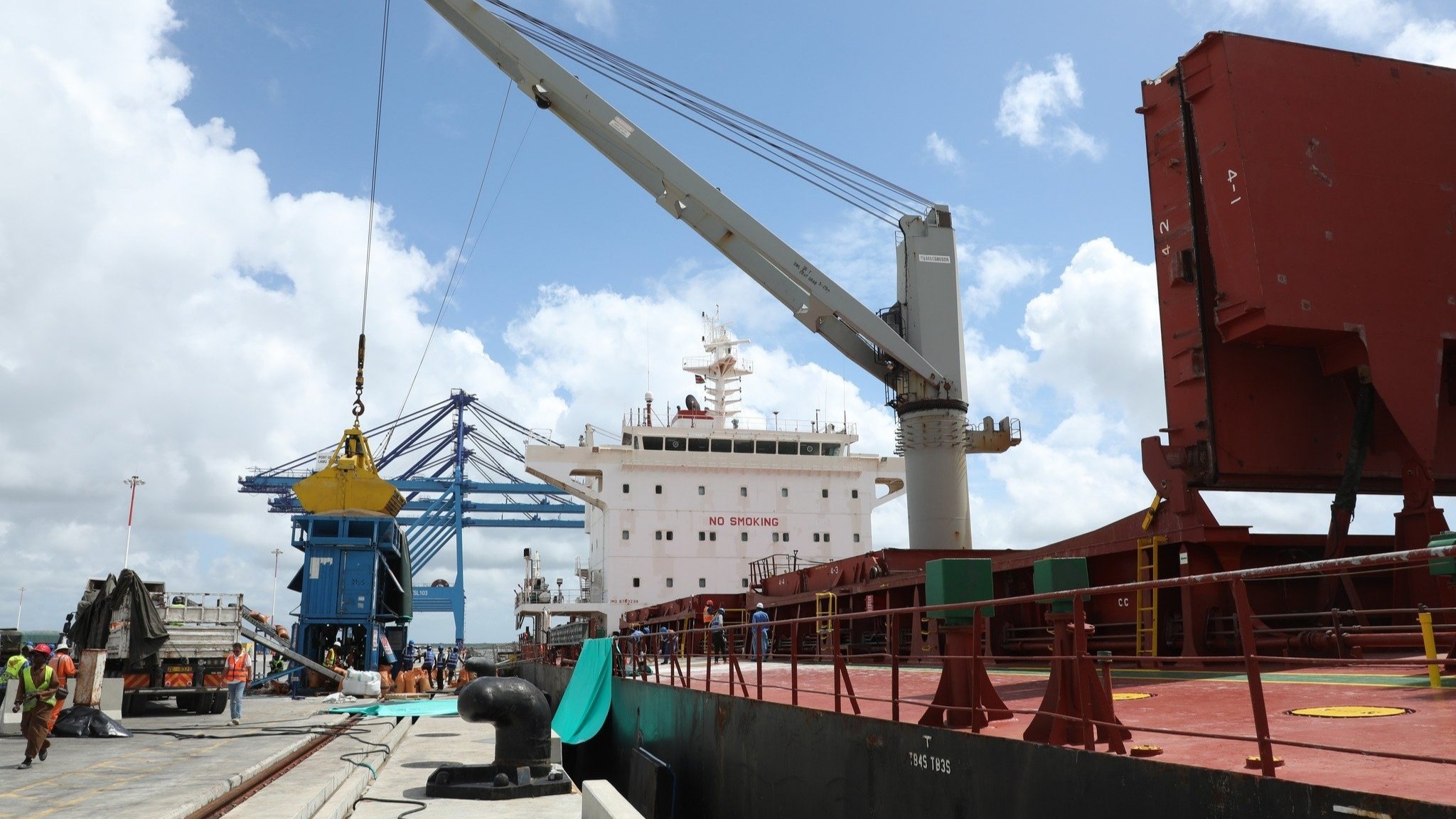

In a recent appearance on NTV Kenya's #FixingTheNation program, Cabinet Secretary Lee Kinyanjui drew attention to Lamu Port's capabilities. He noted its suitability for handling big ships and pointed out how its position close to Ethiopia could open doors to that nation's market. The statement comes as Kenya continues to push its northern infrastructure projects amid efforts to strengthen regional ties.
Lamu Port forms the core of the Lamu Port-South Sudan-Ethiopia Transport Corridor, known as LAPSSET, a multi-billion-shilling initiative launched over a decade ago. The project includes roads, railways, pipelines, and airports aimed at connecting Kenya's coast to landlocked neighbors. Construction on the port began in 2012, with the first three berths completed by 2021 at a cost of around 48 billion Kenyan shillings. China Communications Construction Company handled much of the build, financed through a mix of Kenyan government funds and loans.
The port's design allows it to manage post-Panamax vessels, those too large for the original Panama Canal locks. With depths reaching 18 meters, it stands out in East Africa for accommodating ships carrying up to 100,000 tons of cargo. This capacity addresses bottlenecks at Mombasa, Kenya's primary port, which handled over 2.1 million twenty-foot equivalent units in 2025. Lamu saw growth that year too, with vessels like the Nagoya Express docking there, marking it as the longest container ship to call at an East African harbor.
Ethiopia, with a population exceeding 120 million and no direct sea access, relies heavily on Djibouti for imports and exports. That dependency has prompted Addis Ababa to explore alternatives. In 2024, Ethiopia used Lamu for its first major shipment, offloading 60,000 metric tons of fertilizer via the vessel MV Abbay II. Officials described it as a step toward diversifying trade routes and cutting costs. The shorter distance from Lamu to parts of Ethiopia compared to other options could shave days off transit times, potentially lowering freight expenses by 20 percent or more for certain goods.
Kinyanjui's comments align with ongoing Kenyan efforts to court Ethiopian business. Last year, Kenya hosted delegations from Addis Ababa to discuss port usage, including incentives like reduced tariffs for transshipment cargo. The LAPSSET authority has marketed the corridor as a lifeline for Ethiopia's agricultural exports and industrial imports. South Sudan, another partner, stands to benefit from oil pipelines tied to the port, though civil unrest there has delayed progress.
Challenges persist. The Lamu-Ijara-Garissa road, a key link in the corridor, is only about 55 percent complete as of early 2026. Funding issues and security concerns in northern Kenya, including threats from al-Shabaab, have slowed work. Environmental groups have raised alarms over impacts on mangroves and fishing communities in Lamu County. Local fishermen displaced by dredging operations have adapted to new sites, but some report reduced catches due to altered marine habitats.
Despite these hurdles, recent milestones show momentum. In 2025, Lamu operationalized a berth dedicated to oil exports, and the Kenya Ports Authority reported handling three large oil tankers simultaneously. Plans are underway to lease the remaining 20 berths to private operators, with interest from firms like DP World. This could accelerate development and attract more international shipping lines.
Broader regional dynamics play into this. Ethiopia's 19 percent stake in Berbera Port in Somaliland, signed in 2018, and its continued heavy use of Djibouti—handling 95 percent of Ethiopian trade—mean Lamu must compete aggressively. Yet, with Ethiopia's economy growing at around 7 percent annually, demand for efficient ports is rising. Kenya's government sees Lamu as a way to capture a slice of that, estimating the full corridor could generate thousands of jobs and boost GDP by 2-3 percent.
Security remains a priority. Kenyan forces have bolstered patrols around Lamu, and joint exercises with Ethiopian counterparts aim to secure border areas. Infrastructure like the proposed railway from Lamu to Isiolo, and onward to Ethiopia, would further integrate the economies. For now, only road links exist, but feasibility studies for rail are advancing.
Kinyanjui's emphasis on Lamu's proximity—roughly 500 kilometers to the Ethiopian border versus longer hauls from Djibouti—highlights a geographic advantage. Trucks from Addis Ababa could reach Lamu in two days under improved conditions, facilitating trade in coffee, hides, and manufactured goods. Kenya, in turn, could export more tea, horticultural products, and machinery.
As East Africa integrates through bodies like the African Continental Free Trade Area, ports like Lamu could reshape supply chains. The corridor's success hinges on political will from all partners. South Sudan's oil fields, if connected via pipeline, could provide steady revenue. Ethiopia's recent reaffirmation of commitment, expressed in bilateral talks last September, suggests guarded optimism.
Local voices in Lamu add nuance. Residents welcome potential jobs but worry about cultural shifts in the UNESCO-listed old town. County officials have pushed for skills training programs to ensure benefits reach grassroots levels. Meanwhile, the port's growth in 2025, with container throughput up 15 percent, indicates it's moving beyond "white elephant" criticisms.
In sum, Kinyanjui's remarks reflect Kenya's strategic bet on Lamu. With investments topping 1.2 trillion shillings for the full corridor, the payoff could transform northern Kenya from a marginalized region into a trade powerhouse. Progress will depend on completing links, securing the area, and convincing neighbors like Ethiopia to shift cargo southward.
Comments (0)
Leave a Comment
No comments yet. Be the first to share your thoughts!