
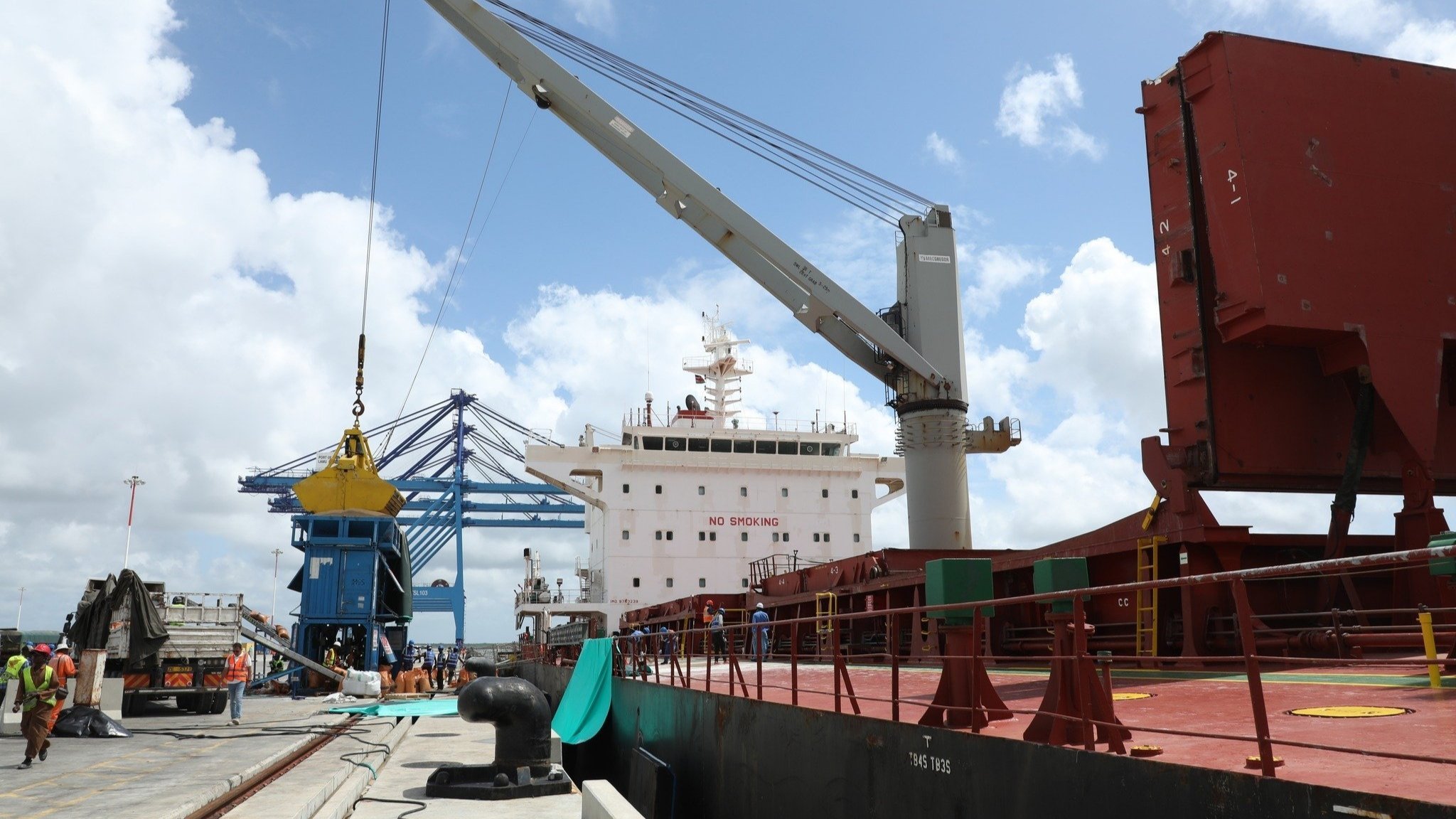

Kenya’s deep-water Lamu Port faces an operational test as geopolitical tensions in the Arabian Gulf begin to ease, following months of unexpected cargo diversion. The shipping facility previously experienced a substantial rise in vessel arrivals, because international lines rerouted fleets to avoid maritime disruptions.
During the height of the regional conflict, multiple commercial vessels altered their routes away from the volatile Strait of Hormuz. This shift brought unprecedented traffic to the Kenyan coast, where infrastructure that once experienced low utilization suddenly became an active alternative gateway for global trade.
According to recent data from the Kenya Ports Authority (KPA), the facility recorded over 799,000 metric tons of cargo, which represents a massive increase from the 74,380 metric tons handled during the previous calendar year.
The sudden windfall included specialized roll-on/roll-off (RoRo) vehicle carriers, which redirected deliveries originally destined for major Middle Eastern hubs like Jebel Ali. Vessels, such as the Grande Auckland and Grande Florida successfully offloaded thousands of vehicles, testing the operational capacity of the new berths.
While the immediate revenue gains have boosted the maritime profile of the region, sector analysts caution that long-term sustainability remains unproven. Industry experts note that temporary geopolitical crises cannot substitute for a consistent, market-driven cargo pipeline.
The ultimate survival of the facility depends heavily on the completion of the broader Lamu Port-South Sudan-Ethiopia-Transport (LAPSSET) corridor. Without efficient hinterland transport connections, the asset risks a return to low utilization levels, when normal global shipping patterns resume.
Capital investments for the ambitious LAPSSET infrastructure program require substantial financing, with budget estimates for the entire network reaching billions of dollars. The plan encompasses comprehensive rail networks, highways, and crude oil pipelines, which are designed to link East African economies.
KPA Managing Director Captain William Ruto recently commended the port workers for maintaining high discharge rates during the peak of the unexpected traffic. He noted that the team achieved competitive daily clearance volumes, which aligned closely with international maritime standards.
The deep-water facility offers unique structural advantages, including a draft exceeding 17 meters. This depth allows the port to accommodate large, high-capacity vessels, which cannot easily access the older Port of Mombasa, giving Kenya a distinct competitive edge.
Local officials, including Lamu Port General Manager Abdulaziz Mzee, emphasized that the port provided vital logistical flexibility during the shipping crisis. Consignments from international manufacturing hubs were securely held, redirected, or transshipped onward to alternative destinations.
However, the recent drop in Gulf hostilities means shipping lines are gradually returning to traditional transit routes. Maritime experts emphasize that infrastructure value must be built on long-term regional integration, rather than transient windfalls from international blockades.
As global trade lanes stabilize, the focus shifts back to domestic infrastructure execution. The Kenyan government must now accelerate road and rail connections, if the northern corridor is to retain its newfound status as a vital continental hub.
Contractors and engineers continue working on various administrative and security facilities around the harbor site, which have reportedly achieved high completion rates. These auxiliary structures are crucial for modern logistics management, but the core challenge remains the extensive overland transport network.
With international shipping operators continuously monitoring risk profiles, the next few months will reveal whether the port can maintain its momentum. Permanent growth will require dedicated domestic cargo allocations, which would ensure steady operations independent of foreign conflicts.
Comments (0)
Leave a Comment
No comments yet. Be the first to share your thoughts!