
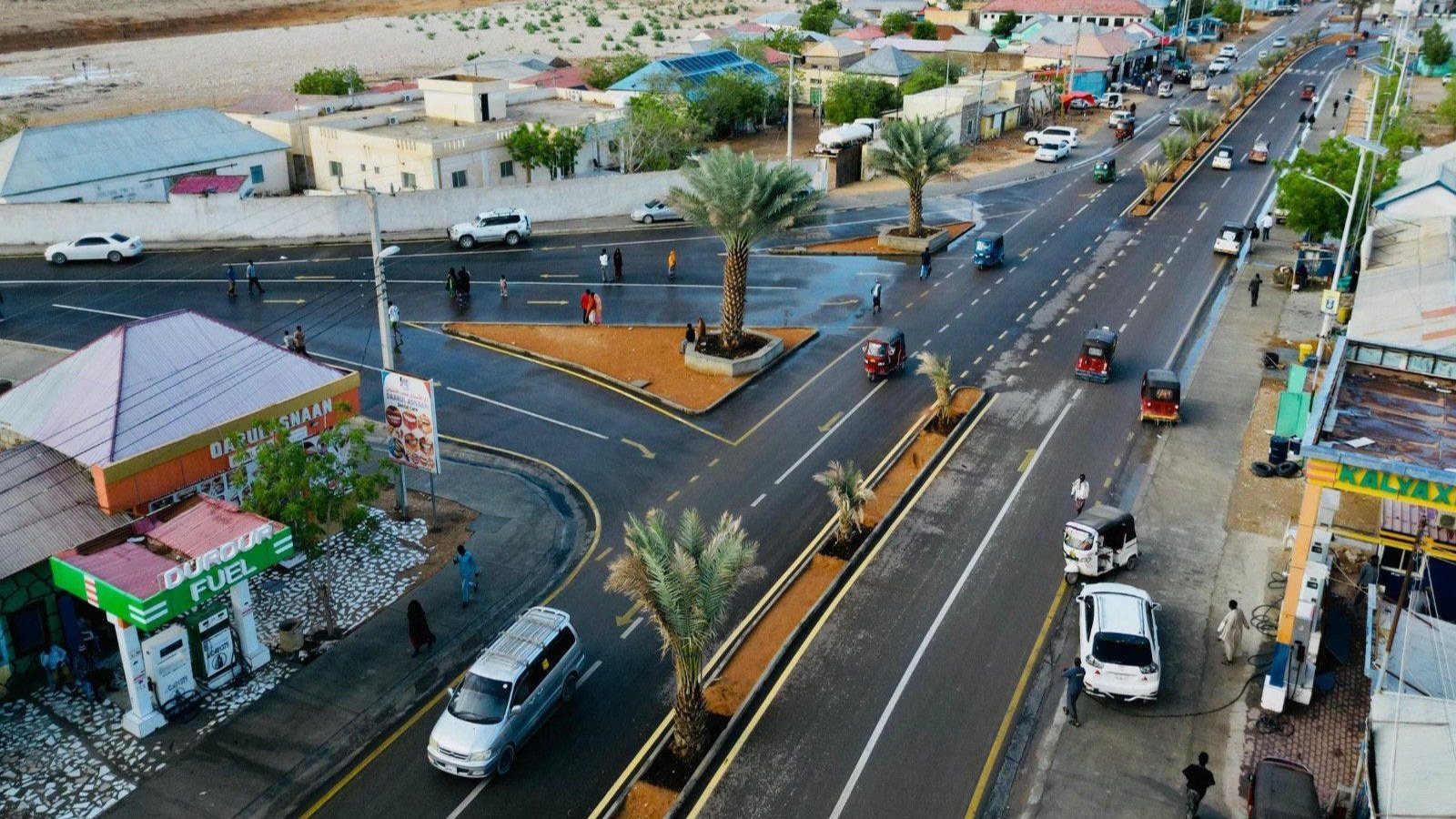

The World Bank released comprehensive updates detailing infrastructure progress under the Somalia Urban Resilience Project Phase II (SURP-II), which outlines massive expansions in local urban development across the country.
Infrastructure delivery now reaches seven distinct municipal areas across federal member states, and these locations include Mogadishu, Garowe, Baidoa, Kismayo, Dhusamareb, Beledweyne, and Hargeisa.
Official data shows that 39 kilometers of roads and 45 kilometers of pedestrian walkways are fully completed, but contractors continue working on an additional 51 kilometers under active construction to improve climate-resilient transport links for nearly 700,000 direct beneficiaries.
Host communities make up 87 percent of total project beneficiaries, although Internally Displaced Persons (IDPs) represent 13 percent of the targeted population, providing broad social coverage across municipalities.
Women account for 51 percent of individuals receiving direct benefits from these major municipal upgrades.
Local labor markets received substantial support, and the multi-city infrastructure initiative generated over 526,000 person-days of employment for local construction workers. More than 15,000 local workers secured employment through these civil upgrades, which helped mitigate urban unemployment and severe economic stagnation in vulnerable regional hubs.
Youth participation reached 70 percent of the total hired workforce, although IDPs comprised 16 percent, and women accounted for 12 percent of the construction teams.
More than 1,700 women secured employment in infrastructure civil works, and 44 individuals successfully advanced from unskilled to skilled roles through continuous on-the-job training programs.
Municipal drought response initiatives provided health and nutrition services to more than 450,000 people, which targeted the most vulnerable urban centers during recent climate shocks.
Women and girls made up 68 percent of healthcare recipients, and IDPs constituted 77 percent of the population accessing these vital services.
Over 16,000 people received direct cash assistance through municipal drought response mechanisms, which offered immediate financial cushions during environmental crises.
Female-headed households accounted for 86 percent of cash relief recipients, and IDPs made up 100 percent of the individuals receiving these direct monetary distributions.
Land tenure security advanced significantly as municipal authorities issued formal title deeds to nearly 16,000 displaced individuals, who previously lacked legally recognized property rights.
The project delivered 1,500 transitional shelters to house displaced families, which helped stabilize informal settlements that are highly vulnerable to regular flooding and seasonal fires.
Nearly 9,000 citizens participated directly in community consultations, which informed local investment prioritization and monitoring across all participating urban centers.
Female participation remained high at 44 percent during these public consultation forums, which ensured that local women directly influenced neighborhood project selection.
Local officials highlighted the newly constructed Gambol Bridge in Garowe City as a major success, although it requires careful ongoing municipal maintenance.
The bridge enhances safe transport to local schools and universities, which demonstrates how targeted civil investments deliver immediate daily benefits to fragile urban communities.
Project coordinators noted that civil works in conflict-affected regions require adaptive management, especially when unexpected flooding, supply chain blockages, and localized security threats disrupt timetables.
Municipalities manage daily execution within their mandates, but the federal government retains strategic policy, regulatory oversight, and technical guidance over the project framework.
The World Bank began this resilient urban initiative in only two cities in 2016, but it gradually expanded operations across all federal member states using a phased approach.
In 2026, contractors will accelerate works to meet the remaining 90-kilometer collective road target, and they will advance high-priority municipal drainage trunk designs in Mogadishu to mitigate flood fatalities.
Comments (0)
Leave a Comment
No comments yet. Be the first to share your thoughts!