
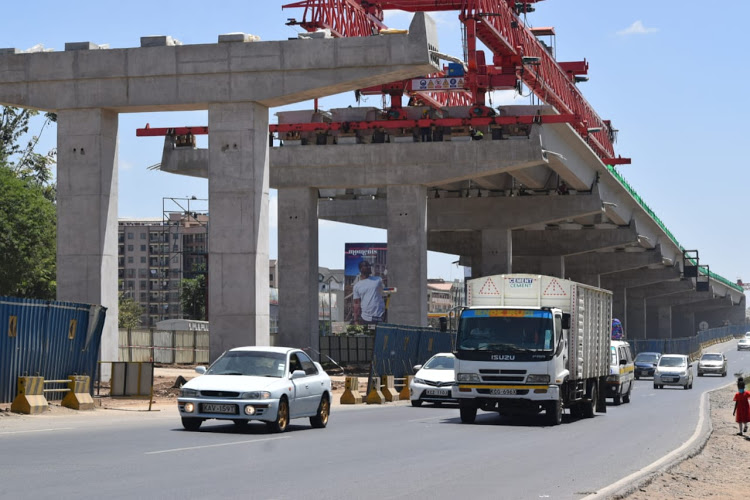

Nairobi, Kenya - The fate of the ambitious Nairobi-Mombasa Usahihi Expressway project, a Sh468 billion initiative led by American firm Everstrong Capital, hangs in the balance. While the government has officially rejected the initial feasibility study, Everstrong Capital has been quick to push back, asserting that the project is not dead but rather under "active review" and undergoing a crucial restructuring.
The Kenya National Highways Authority (KeNHA) recently announced that the National Treasury’s Public-Private Partnership (PPP) Committee had rejected the project's development report. The official reason cited was that the proposal did not meet the "relevant criteria" as per the PPP Act, 2021. While the government's notice did not specify the exact failings, reports from sources close to the project and in the media suggest that the rejection was based on several key factors, not just the exit of a single firm.
Sources indicate that the PPP Committee had concerns about the project's financial viability, particularly the proposed toll charges. The estimated Sh12.9 billion in potential tolls was seen as potentially unaffordable for road users, raising questions about the project's long-term sustainability. Additionally, there were procedural issues with the initial proposal, including gaps in land use and land acquisition details, as well as the overall risk allocation. The government also reportedly preferred an expansion of the existing A8 highway over a completely new "greenfield" expressway, which was the focus of the initial proposal.
While not the official reason for the rejection, the exit of the Portuguese construction giant Mota-Engil was a significant complication for the project. Mota-Engil was a key technical and financial partner, and its departure left a major gap that Everstrong Capital had not been able to fully address by the time the feasibility study was submitted.
The complication arose from Mota-Engil's ownership structure, which includes a 32.41% stake held by China Communications Construction Company (CCCC). This link to a Chinese state-owned enterprise reportedly created unease among potential American financiers, including the U.S. Export-Import Bank. In a context of geopolitical rivalry between the US and China for influence in Africa's infrastructure, the involvement of a Chinese-linked firm was a major point of friction for Everstrong Capital's American backers. To comply with the demands of its financiers and to proceed with the project, Everstrong had to seek a replacement for Mota-Engil.
Despite the rejection, Everstrong Capital remains determined. The firm has publicly clarified that the project has not been terminated and has already submitted a revised feasibility study to the government. The company's new strategy involves a hybrid model that will incorporate a new expressway alongside an expansion of the existing A8 highway, directly addressing one of the PPP Committee's key concerns.
To overcome the gap left by Mota-Engil, Everstrong is actively in discussions to assemble a new consortium of international contractors from countries such as India (Larsen & Toubro), South Korea (Samsung), and Turkey (IC Holding). The company is also working with financial arrangers like JP Morgan to secure funding from a diverse range of investors.
The future of the Usahihi Expressway now hinges on the government's review of the revised proposal. The project's journey is a high-profile example of the complex challenges facing major infrastructure deals in Kenya, where procedural requirements, financial viability, and international geopolitical dynamics all play a critical role.
Comments (0)
Leave a Comment
No comments yet. Be the first to share your thoughts!