
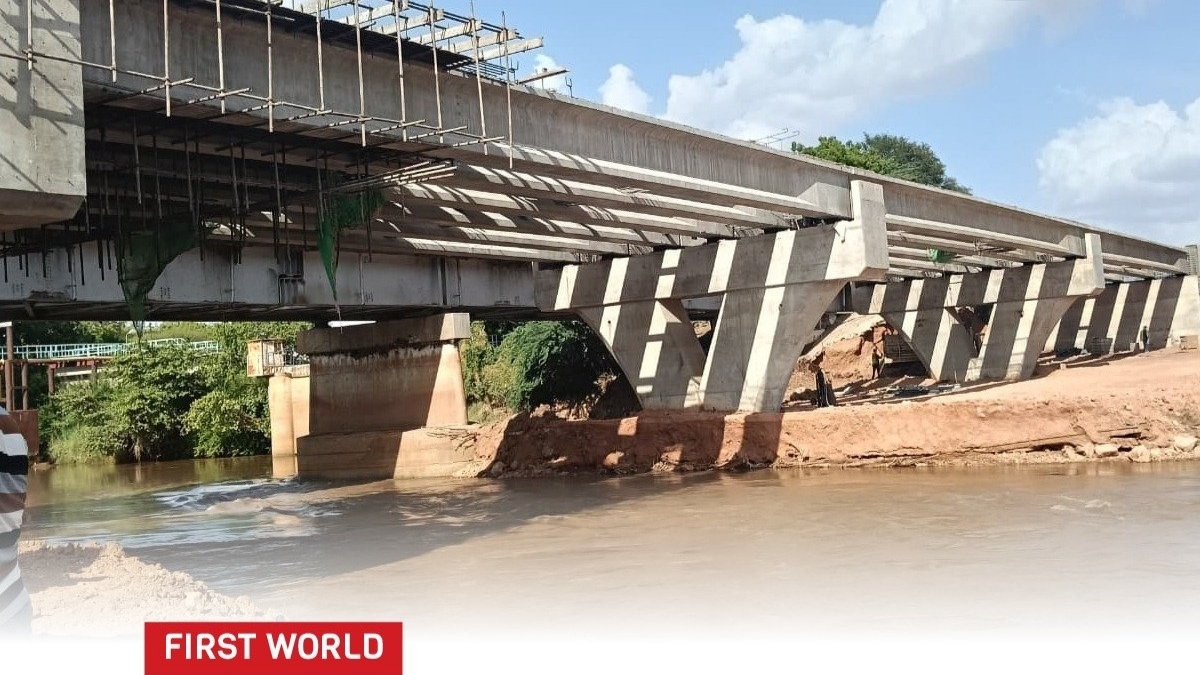

Work on the new Tana River Bridge in Garissa continues at a steady clip, with the project now standing at 76 percent complete. This update comes from the Kenya Broadcasting Corporation, which shared images of the site showing concrete spans taking shape over the river. The bridge, budgeted at KSh 1.8 billion, forms part of efforts to upgrade transport links in Kenya's North Eastern region.
President William Ruto launched the construction in February 2025 during a visit to Garissa, where he also kicked off other government initiatives. At the time, officials pegged the cost at around KSh 1.7 billion, though recent reports have cited the slightly higher figure. The structure measures 150 meters in length and includes approach roads along the Ukasi-Garissa-Modika section of the A3 highway. This route serves as a vital artery connecting Garissa, Wajir, and Mandera counties to the rest of the country.
The existing bridge, built 43 years ago, has long struggled with heavy traffic and seasonal flooding from the Tana River. During rainy periods, overflows have repeatedly disrupted travel, stranding vehicles and complicating trade. In late 2023, for instance, the river burst its banks, marooning parts of Garissa town and prompting evacuations. Similar incidents occurred in April 2024 and March 2025, when authorities closed the Nairobi-Garissa road due to rising waters. Garissa Governor Nathif Jama urged national intervention last year, highlighting the need for durable infrastructure to handle the river's swells.
Kenya National Highways Authority (KeNHA) oversees the project, which aims to redirect most vehicular traffic to the new bridge once finished. The old one will then accommodate pedestrians, motorbikes, and livestock, reducing wear and congestion. Photos from the site depict girders and supports in place, with scaffolding still visible against a backdrop of reddish soil and sparse vegetation. Workers have made progress on the viaduct portions, which extend the total span including approaches to about 820 meters in some descriptions, though the core bridge remains 150 meters.
By December 2025, earlier inspections showed the work at 55 percent, with officials like Regional Implementation Coordinator Erastus Otieno expressing confidence in meeting the original timeline. However, the latest assessment in early February 2026 indicates a push toward completion in the coming months. Project Director Pablo Acosta has stated the bridge could be ready by June 2026, allowing for any final adjustments. This timeline aligns with broader government pushes to bolster road networks, which have seen investments in dualling sections like the Rironi-Naivasha-Mau Summit road starting late last year.
The Tana River, Kenya's longest at over 1,000 kilometers, originates in the Aberdare Mountains and flows to the Indian Ocean. It supports agriculture and hydropower but poses flood risks in low-lying areas like Garissa. Historical data from the Kenya Red Cross shows heavy rains in 2024 displaced over 10,000 households nationwide, with Tana River County among the hardest hit. Building a sturdier crossing addresses these vulnerabilities, potentially cutting accident risks and improving emergency access.
Local residents and traders anticipate relief from the frequent disruptions. The A3 highway carries goods from Nairobi to the northern frontiers, including essentials like food and fuel. Delays at the current bridge have added hours to journeys, inflating costs for transporters. With the new setup, heavier loads can cross without strain on the aging structure, which dates back to the early 1980s under former President Daniel arap Moi's administration.
KeNHA's involvement draws on its track record with similar projects, such as bridges over other major rivers. The authority has emphasized safety features in the design, incorporating elements to withstand higher water levels. Construction employs local labor where possible, providing jobs in a region where unemployment remains a challenge. Garissa, with its population of about 120,000 in the urban center, relies on such developments to spur growth.
As the project nears its end, attention turns to maintenance plans. Past infrastructure in the area has suffered from neglect, leading to calls for sustained funding. The Senate has scrutinized county facilities in Garissa, including the referral hospital, over ownership and upkeep issues, underscoring the importance of clear oversight.
This bridge stands as one piece in Kenya's wider infrastructure puzzle. Recent years have brought expansions to key corridors, aiming to integrate remote areas. In Garissa, it complements other launches like water and health projects from Ruto's 2025 tour. While timelines have shifted slightly, the 76 percent milestone signals tangible headway.
Officials have not detailed specific contractors, but the work follows standard procurement under KeNHA guidelines. Funding likely comes from national budgets, possibly with donor support, though no foreign partners have been named in recent updates. As crews push forward, the structure promises to reshape daily life along the Tana.
The river's role in Kenya's ecosystem cannot be overstated. It irrigates farms in downstream counties and powers dams like those in the Seven Forks scheme. Yet, its floods have caused humanitarian concerns, with the Red Cross often leading rescue efforts. In April 2024, passengers were trapped when a driver attempted to ford a swollen section near the bridge, highlighting the perils.
With completion in sight, the new bridge could mitigate such dangers. It represents practical engineering tailored to local conditions, from seismic considerations to flood resilience. Garissa's position as a trade hub stands to benefit, linking pastoral communities to markets.
Progress reports from outlets like the Kenya News Agency echo the KBC update, confirming the 76 percent figure and a four-month horizon to wrap up. This puts the opening around mid-2026, barring unforeseen setbacks like weather delays.
In the meantime, traffic continues on the old bridge, with advisories issued during rains. The project's advancement offers a glimpse of improved connectivity for North Eastern Kenya, where roads remain a lifeline amid arid landscapes.
Comments (0)
Leave a Comment
No comments yet. Be the first to share your thoughts!