
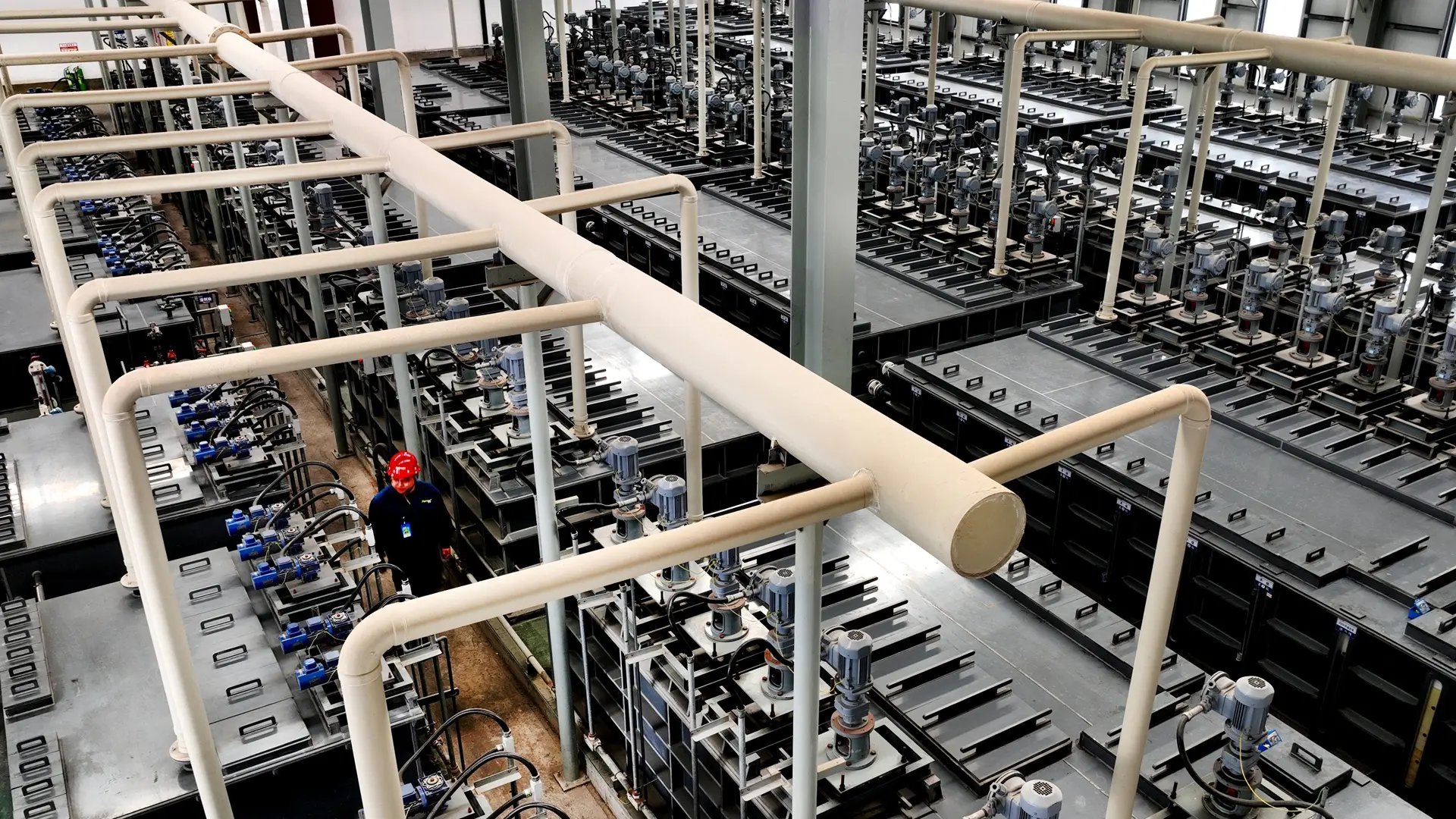

Massachusetts Institute of Technology (MIT) spinout company Found Industries has opened an industrial extraction facility in Cambridge, Massachusetts.
The site focuses on extracting critical minerals from byproduct streams, moving extraction processes out of laboratory settings toward full commercial deployment.
The facility targets the recovery of gallium, an essential element used in semiconductors, military radar systems, and modern communications infrastructure.
Global supply constraints have pushed domestic processors to seek secondary sourcing options. Processing industrial waste streams presents an immediate alternative to primary mining operations.
Industrial waste streams from smelting and manufacturing often contain trace amounts of high-value elements that traditional operations discard.
Extracting these materials locally reduces dependency on foreign processing networks, which currently control most of the refined mineral market.
The Cambridge plant serves as a scaling bridge to validate industrial-scale operations before larger infrastructure rollout.
Technical teams will evaluate processing throughput, efficiency rates, and environmental controls under continuous operating conditions. Successful deployment in Massachusetts will inform future commercial-scale installations.
Beyond gallium, the proprietary process developed by the enterprise isolates several secondary elements critical for high-tech construction and energy infrastructure.
Recovering these materials locally addresses structural supply risks across global industrial sectors. Industry observers view secondary recovery infrastructure as a key component of resilient supply chains.
Domestic critical mineral projects have gained attention as trade dynamics shift global material sourcing. Extraction technology operating at scale allows industrial operators to transform environmental liabilities into domestic resources.
The Cambridge deployment tests whether secondary processing can reliably meet commercial volume demands.
Scaling industrial chemical processes requires rigorous monitoring of operational throughput and energy consumption.
Engineers at the plant will collect performance data to refine extraction loops, ensuring the technology scales efficiently. Commercial developers plan to integrate similar units alongside existing manufacturing and refining facilities nationwide.
Transitioning from laboratory testing to functional production units requires steady access to feedstocks.
Found Industries works with industrial partners to secure supply agreements for mineral-bearing byproducts, creating a closed-loop system for domestic critical minerals.
Comments (0)
Leave a Comment
No comments yet. Be the first to share your thoughts!