
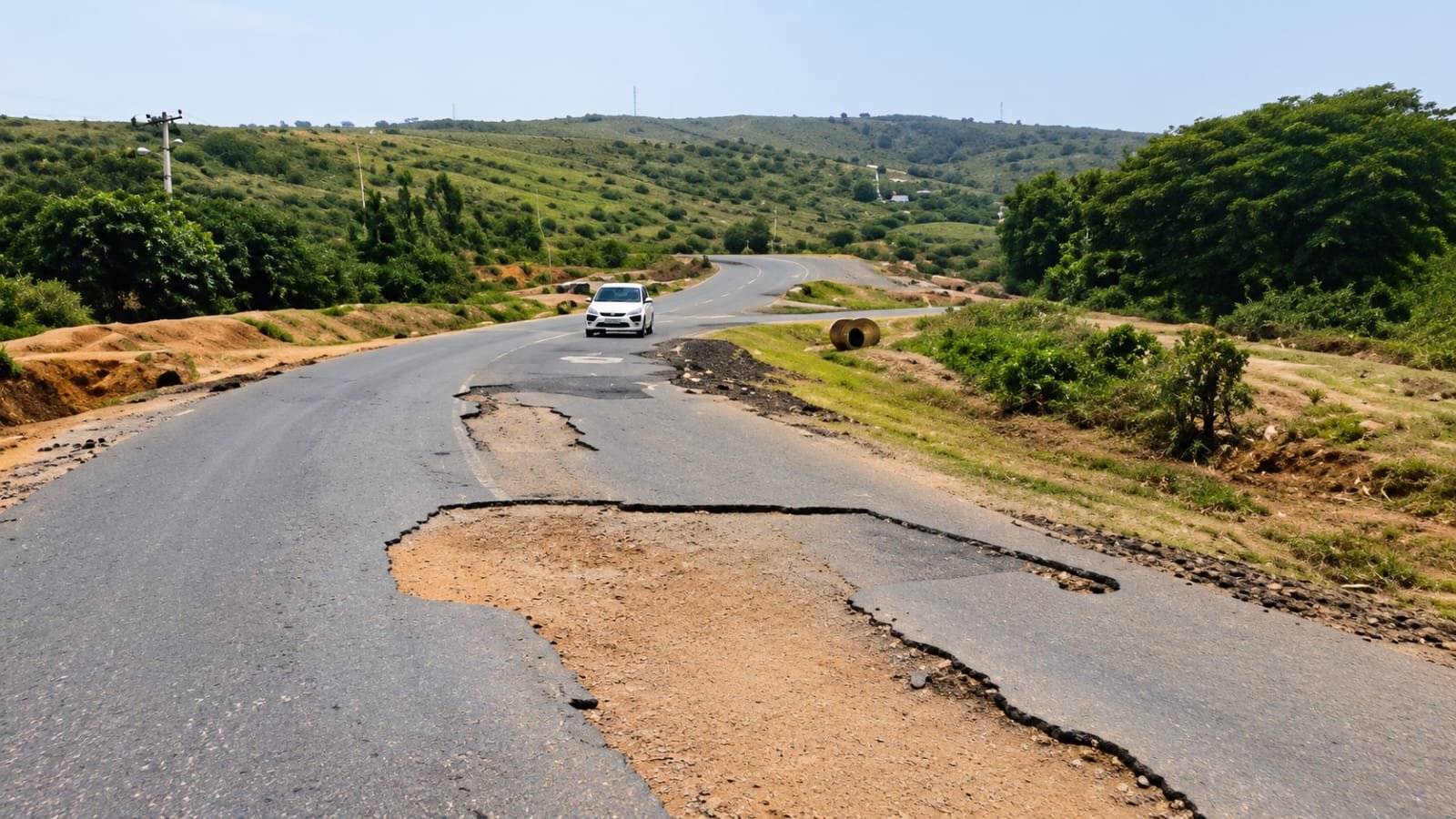

A video circulating online shows the current condition of the recently commissioned Ngong-Suswa highway. The 70-kilometre road, built at a cost of over Sh4 billion, is developing numerous potholes and surface damage within months of completion.
The footage reveals both regularly shaped potholes and irregular failures along sections of the carriageway. Such patterns often indicate that repairs were started but not completed, or that the underlying layers were not properly prepared before surfacing.
Road construction follows a strict sequence of layers. The subgrade must be compacted to the required density. A sub-base and base layer are then placed and compacted before the binder and wearing courses are applied. Failure in any of these layers can lead to early deterioration.
Proper bonding between layers is critical. A tack coat is normally applied between the base and the asphalt layers to ensure they act as one unit. Absence or poor application of tack coat is frequently cited when new roads develop potholes quickly.
Drainage also plays a major role. Water that infiltrates through cracks or poor edges can weaken the sub-base and cause the surface to break up under traffic. Sections of the Ngong-Suswa road appear to be affected by this process.
The road falls under a defects liability period after commissioning. During this time the contractor is normally responsible for rectifying defects arising from poor workmanship or materials. Questions are now being raised about supervision and quality control during construction.
Engineers and road users have pointed to possible issues with material quality, compaction standards and drainage design. Volcanic soil in parts of the area can also pose challenges if not properly stabilised.
The highway was intended to improve connectivity and safety in the region. Early failure raises concerns about value for money and the durability of recently completed projects.
Technical assessments by the relevant agencies are expected to determine the exact causes and the remedial measures required. Proper investigation and transparent reporting remain essential for future road projects.
Comments (0)
Leave a Comment
No comments yet. Be the first to share your thoughts!