
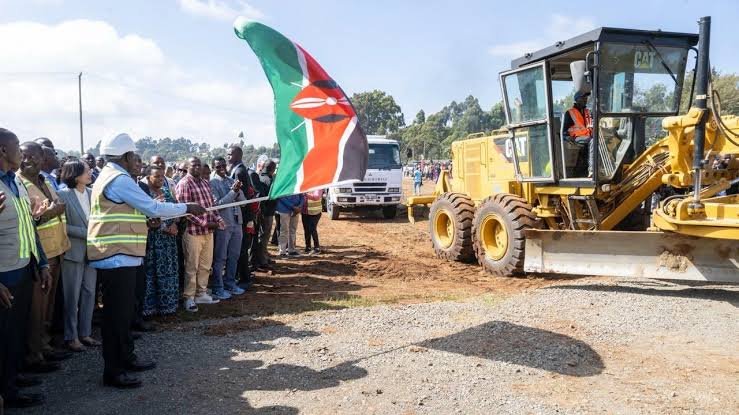

In a move to overhaul how major capital projects are financed, President Ruto has formally appointed the board members of the National Infrastructure Board. This new body is tasked with the stewardship of a KSh. 5 trillion fund.
The establishment of the board follows a policy shift by the executive to seek alternative financing models. The administration aims to move away from the traditional reliance on high-interest commercial loans and bilateral debt that previously funded roads, dams, and rail.
By centralizing the management of this vast pool of capital, the government expects to streamline the implementation of flagship projects. The fund is intended to act as a buffer and a primary source of internal financing for long-term development goals.
According to the appointment notice, the board will be responsible for overseeing the strategic allocation of resources. This includes ensuring that the KSh 5 trillion is utilized in a manner that provides value for money and adheres to strict timelines.
The shift comes at a time when Kenya is facing significant pressure to manage its debt-to-GDP ratio. By leveraging this fund, the state hopes to maintain the momentum of the Big Four Agenda and the subsequent Bottom-Up Economic Transformation Agenda without straining the national treasury.
The National Infrastructure Board will also coordinate with various ministries, such as Transport and Energy, to identify priority areas. This coordination is expected to reduce the instances of stalled projects that often arise from funding delays or bureaucratic bottlenecks.
Industry experts noted that the success of the board will depend on its ability to attract private sector participation. The fund is structured to encourage public-private partnerships, allowing for a shared risk model that has been used successfully in other emerging markets.
The locals stand to benefit from more consistent project delivery if the fund operates as envisioned. Reliable funding usually translates to faster completion of essential services like water systems and bypasses, which are often hit by budget cuts mid-construction.
President Ruto has emphasized that the board must maintain high standards of transparency. Given the scale of the KSh 5 trillion fund, the oversight role of this board will be under constant scrutiny from both the public and international financial institutions.
While the specific names of all appointees were released in the official gazette, the focus remains on the professional diversity of the team. The board includes individuals with backgrounds in finance, engineering, and law to cover the multidisciplinary nature of infrastructure.
As the board takes office, its first task will be to review the existing pipeline of projects. The goal is to determine which ones will transition from the current exchequer-funded model to the new framework managed by the National Infrastructure Board.
Comments (0)
Leave a Comment
No comments yet. Be the first to share your thoughts!